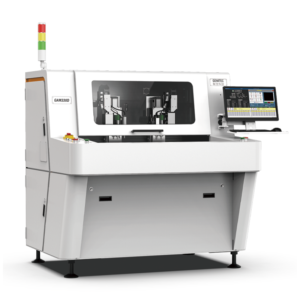

This guide compares the two technologies head-to-head across 9 evaluation criteria used by EMS engineers and OEM process owners, then gives you a practical decision matrix for matching technology to your board mix, volume, and tolerance band. If you are still deciding between the two, you will have a clear recommendation by the end.
Quick Answer: Which Depaneling Technology Wins?
| Criterion | PCB Router Machine | PCB Laser Depaneling | Edge |
|---|---|---|---|
| Edge stress on components | Low–Medium (mechanical) | Very low (non-contact) | Laser |
| Cycle time per board | 8–45 sec typical | 10–60 sec typical | Router (high volume) |
| Tooling cost (per part family) | Very low (CAD → program) | None | Laser |
| Per-cut consumable cost | ~$0.05–$0.30 (bit wear) | $0 (no consumable) | Laser |
| Initial capex (entry-level) | From ~$15,000 | From ~$80,000 | Router |
| Capital cost (high-mix inline) | From ~$45,000 | From ~$150,000 | Router |
| Kerf width | 0.8–2.0 mm | 0.05–0.20 mm | Laser |
| Suitable for thin / flex PCBs | Limited (low-vibration fixtures) | Excellent | Laser |
| Throughput for large panels | High (single-spindle or dual) | Medium (scanning pattern) | Router |
For most high-volume SMT lines running FR-4 boards thicker than 0.6 mm, the PCB router machine offers a stronger ROI. For flex, rigid-flex, ceramic, or ultra-miniaturized assemblies with tight cut tolerance, the PCB laser depaneling approach is hard to beat. The detailed walkthrough below shows you exactly when to pick which.
How a PCB Router Machine Works (Mechanical Depaneling)
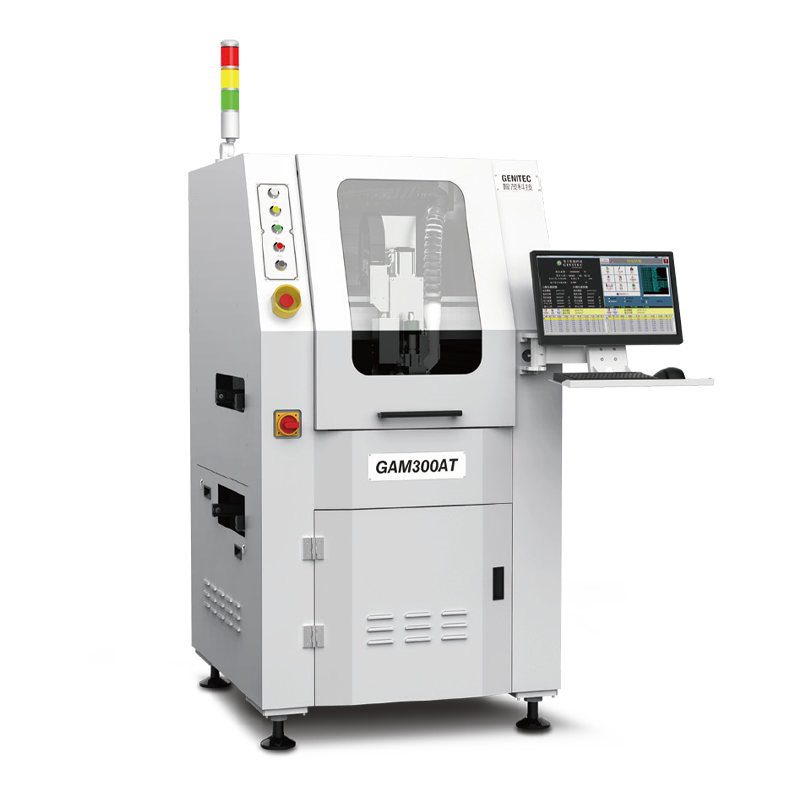
A PCB router machine uses a high-speed rotating milling bit — typically 40,000–80,000 RPM — to trace the perimeter of each individual board on a populated or unpopulated panel. The spindle moves along X/Y axes guided by a CAM-generated path derived from your Gerber or CAD files. Vacuum fixturing holds the panel flat while dust-collection removes debris.
Modern inline routers add a third axis for Z control, an automatic tool-changer for small-diameter bits (0.6–1.2 mm), CCD vision for fiducial alignment, and broken-bit detection that pauses the cycle automatically. Throughput for a typical 200×150 mm smartphone board is 10–18 seconds per cut.
Strengths
- Lowest cost per cut on long production runs
- Proven process — robust against humidity and ambient temperature shifts
- Easy fixturing for FR-4 panels up to 6 mm thick
- Compatible with all common panelization patterns: mouse bites, V-scores, tab-routing
Limitations
- Burrs on cut edge for materials > 35% fiberglass content (rare)
- Mechanical stress on components within 1 mm of cut line
- Slower for very dense, small-outline-perimeter boards (chips, BGAs)
- Periodic bit replacement adds maintenance overhead
How PCB Laser Depaneling Works (Non-Contact Cutting)
A PCB laser depaneling machine focuses a pulsed fiber or CO₂ laser onto the laminate surface. Material is ablated or vaporized along the programmed cut path. Because no mechanical force is applied, there is no tool wear, no cutting stress, and an extremely narrow kerf. The same system can cut FR-4, flex, ceramic, aluminum-backed, and even coverlay/membrane stacks.
Strengths
- Zero mechanical stress — ideal for BGAs, µBGAs, ceramic capacitors
- Cut width as narrow as 50 µm
- No consumables — only electricity
- Compact cutting footprint — opens space for very dense panels
Limitations
- Higher upfront capex (3–10× router)
- Carbonization residue on FR-4 edges requires post-cleaning for some applications
- Smoke & fume extraction mandatory
- Top-speed on FR-4 only matches router when board outline is short
Comparing the Two on Total Cost of Ownership
Two factors that decide TCO are often missed: fixturing amortization and downtime cost. A router uses a low-cost vacuum fixture (~$600 per part number) and a single bit (~$30–90) lasting 30,000–100,000 cuts. A laser shares fixturing across multiple part numbers and has no consumable, but extraction filter replacement adds ~$2,000 every 6–12 months.
For a mid-volume EMS running 200,000 boards per month on 12 part numbers, an inline router typically pays back in 7–14 months; a laser for the same volume pays back in 14–24 months. The numbers flip when part numbers drop to 2–3 with very high volume per SKU.
When a PCB Router Machine is the Better Choice
- You depanel FR-4 panels 0.8 mm and thicker — the router’s sweet spot.
- Most boards are simple rectangles or gentle curves — milling is faster than laser scanning.
- Your tolerances on cut edge are ±0.2 mm or looser — router precision is sufficient.
- You are running medium-to-high volume on a moderate part-number mix — fixture cost amortizes quickly.
- Capital budget is constrained — entry-level routers start at ~$15,000 vs. ~$80,000 for lasers.
For an integrated, low-stress inline router that drops into an SMT line, see Seprays’ PCB router machine series.
When a PCB Laser Depaneling Machine is the Better Choice
- You cut flex or rigid-flex boards — laser delamination is clean; routing risks stress-whitening.
- Components sit within 0.5 mm of the cut line — zero mechanical force eliminates fracture risk.
- You need ±0.05 mm cut precision — laser beats router by an order of magnitude.
- Materials include ceramic, aluminum substrate, or PTFE — laser cuts dissimilar stacks that wear bits quickly.
- Your panel design uses long, narrow flex tails — laser avoids the vibration artifacts that routes would produce.
For a non-contact solution suited to flex, rigid-flex and ceramic, see the Seprays laser depaneling machine family.
Decision Matrix: Pick Your Technology in 60 Seconds
| If your priority is… | Pick |
|---|---|
| Lowest unit cost on FR-4 (≥0.6 mm) | PCB Router |
| Zero-stress cut on flex / ceramic | PCB Laser |
| Sub-100 µm cut tolerance | PCB Laser |
| Highest throughput for ≥200K parts/month, simple outlines | Dual-spindle PCB Router |
| Capital under $30K | PCB Router |
| Components within 0.3 mm of cut | PCB Laser |
| Mixed FR-4 + flex in same cell | Hybrid cell (router + laser) |
| Mid-mix (8–30 part numbers) | Inline PCB Router with auto-fixture |
| Long, narrow flex cutouts | PCB Laser |
| Quickest setup, off-line production | PCB Laser |
Hybrid Cells: When a Factory Uses Both
Large EMS facilities increasingly deploy both technologies in the same SMT cell. A typical layout runs the PCB router machine on the FR-4 cut-out station and the laser depaneling unit downstream for any flex tails or ceramic sub-boards. Modern machine controllers share fieldbus protocols (PROFINET, EtherNet/IP), so a single MES tracks both stations.
If you are scaling past 500,000 cuts per month, design the cell from day one for hybrid operation — it is cheaper than retrofitting after the fact.
Conclusion
For the majority of SMT production lines running FR-4 at ≥0.6 mm thickness, the PCB router machine remains the best blend of throughput, cost, and flexibility. For flex, rigid-flex, ceramic, or ultra-precise cuts, the PCB laser depaneling approach earns its premium. When in doubt, contact a supplier who supplies and supports both — like Seprays — so that the recommendation is technology-driven, not catalog-driven.
Frequently Asked Questions
1. What is the most important spec when comparing a PCB router vs. a laser depaneling machine?
Cut edge stress on near-edge components is the most important criterion. Mechanical routers impose measurable lateral force; lasers do not. If you cut BGAs or µBGAs closer than 0.5 mm to the edge, the laser is almost always the right choice. For everything else, throughput and capital cost typically decide it.
2. Can a router handle flex PCBs?
It can, with reduced spindle speed, low-vibration fixtures, and sharp bits. However, for high-yield flex depaneling (especially coverlay or adhesive stacks) a laser depaneling machine is significantly more reliable and cheaper per part on long runs.
3. How much does a PCB router cost vs. a laser?
An entry-level offline PCB router machine starts at ~$15,000. Inline production routers are $45,000–$120,000. PCB laser depaneling machines start around $80,000 for entry-level CO₂ systems and rise to $250,000+ for high-power fiber-laser inline cells.
4. Does laser depaneling require fume extraction?
Yes. FR-4 ablation releases fine particulate and carbonized fumes. A quality laser depaneling machine includes integrated extraction with HEPA/carbon filters; the replacement cycle is typically 6–12 months under continuous duty.
5. Can the same fixture work on both technologies?
In hybrid cells, yes — vacuum fixtures with magnetic backing plates can be moved between a router station and a laser station with minor adapter plates. Most modern fixtures are designed cross-compatible when purchased from a single supplier.
About Seprays Precision Machinery
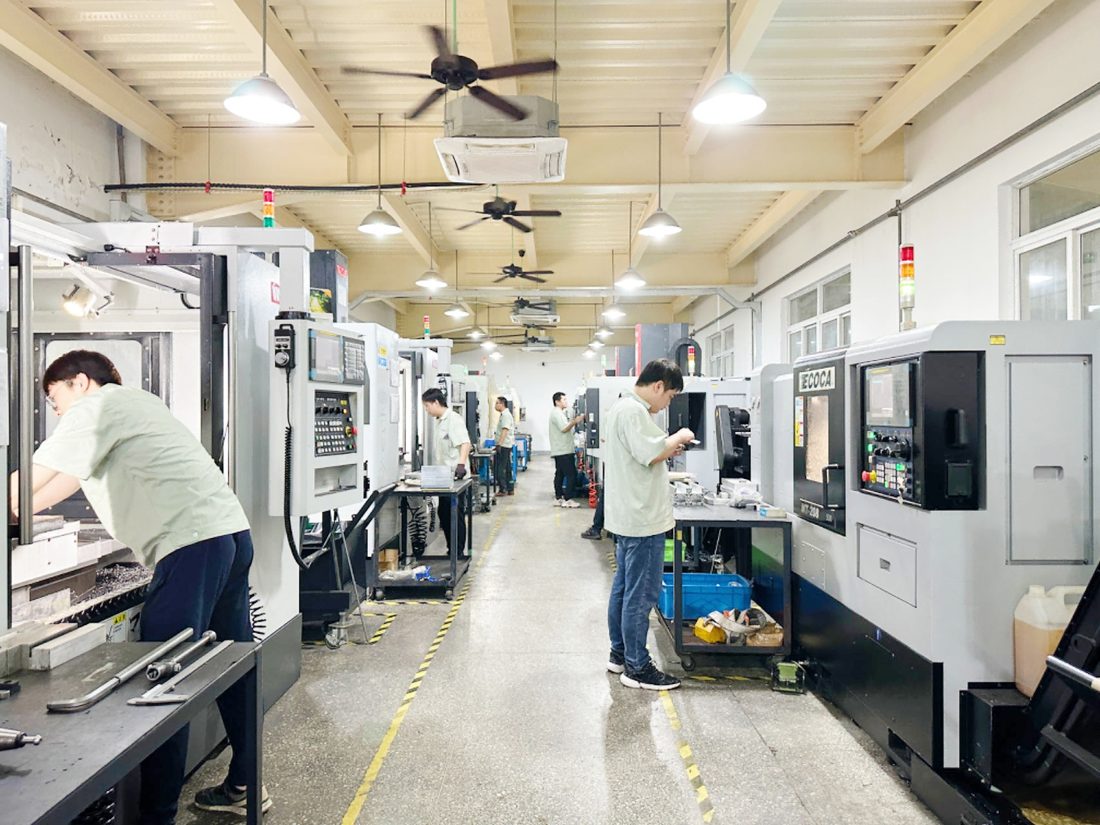
Founded in 1993, Seprays Precision Machinery has over 30 years of expertise in PCB depaneling solutions. With two manufacturing facilities totaling 26,000 m², 9 service centers across China, and clients in 31 countries — including Foxconn, Flex, Luxshare, Bosch, and CRRC — Seprays delivers equipment that consistently meets the demanding tolerances of automotive, medical, aerospace, and consumer electronics production lines.
Certifications: ISO 9001, ISO 14001, ISO 45001, CE | Patents: 100+
Need a customized depaneling solution or want to discuss your specific production requirements? Our technical team is ready to help.
jimmy@seprays.com · PCB Router Machine · PCB Laser Depaneling