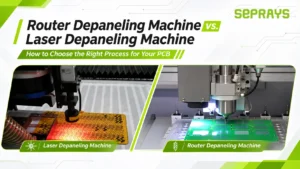

Irregular PCBs often have curved edges, internal openings, or components close to the cutting path.
The following steps can help you quickly judge whether a router machine is suitable for your irregular PCB.
1. What Should You Check First for an Irregular PCB?
For irregular PCB routing, start with four factors:
Cutting Path → Component Spacing → Positioning Accuracy → Stable Routing
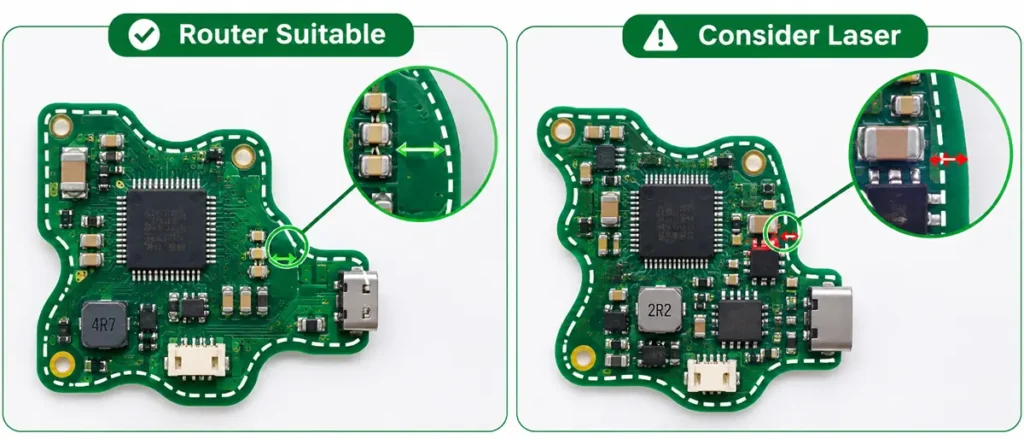
Before comparing machine specifications, confirm that the router bit can reach the full cutting path and that there is enough clearance around nearby components.
If the cutting space is too narrow for safe router-bit access, laser depaneling should also be considered.
2. Use This Simple 4-Step Selection Method
The selection process can be simplified into four steps:
Step 1 → Check the Cutting Path
Step 2 → Check Component Spacing
Step 3 → Check Positioning Accuracy
Step 4 → Confirm the Machine Can Handle the Required Contour
These four checks are usually enough to rule out unsuitable machine options before you compare detailed specifications.
3. Can the Router Follow the Complete Irregular Cutting Path?
Irregular PCB designs may include curves, arcs, circles, L-shapes, U-shapes, internal openings, or narrow transitions.
The main question is simple:
Can the router bit physically reach the complete path without getting blocked by the board structure or nearby components?
Router-bit diameter also matters because narrower paths may require a smaller tool.
For irregular PCBs, path accessibility is usually more important than maximum spindle speed.
4. Is There Enough Space Between the Cutting Path and Components?
For irregular PCBAs, component spacing can directly determine whether routing is practical.
You mainly need to check:
- distance between components and the cutting path;
- top-side and bottom-side clearance;
- router-bit and spindle clearance.
If the available space is sufficient, routing remains a practical option.
If the spacing is too narrow for the router bit or machine structure to pass safely, laser depaneling should be considered.
5. How Much Positioning Accuracy Does an Irregular PCB Need?
The closer the cutting path is to components or board edges, the more important positioning accuracy becomes.
CCD vision can help correct PCB position before cutting, while good repeatability helps the machine follow the same contour consistently during production.
Smaller routing margins require better positioning accuracy and repeatability.
That is usually the key point buyers need to confirm.
6. Real SEPRAYS Sample Test: GAM336AT for Irregular PCB Routing
The best way to judge whether a router can handle an irregular PCB is to test the actual product.
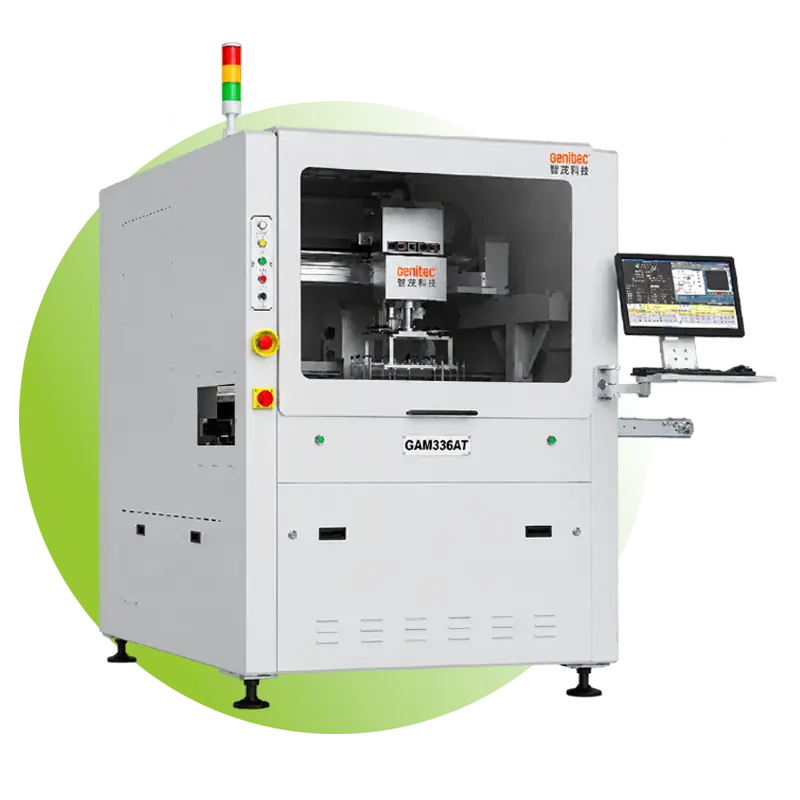
The SEPRAYS GAM336AT can be used as one example.
Three specifications are especially relevant for irregular PCB routing:
- Cutting functions: straight line, L-shape, U-shape, circle, and arc
- Cutting precision: ±0.05 mm
- Repeat precision: ±0.01 mm
These functions allow the machine to process different non-standard contours, while the cutting and repeat precision provide a useful reference for paths close to board edges or components.
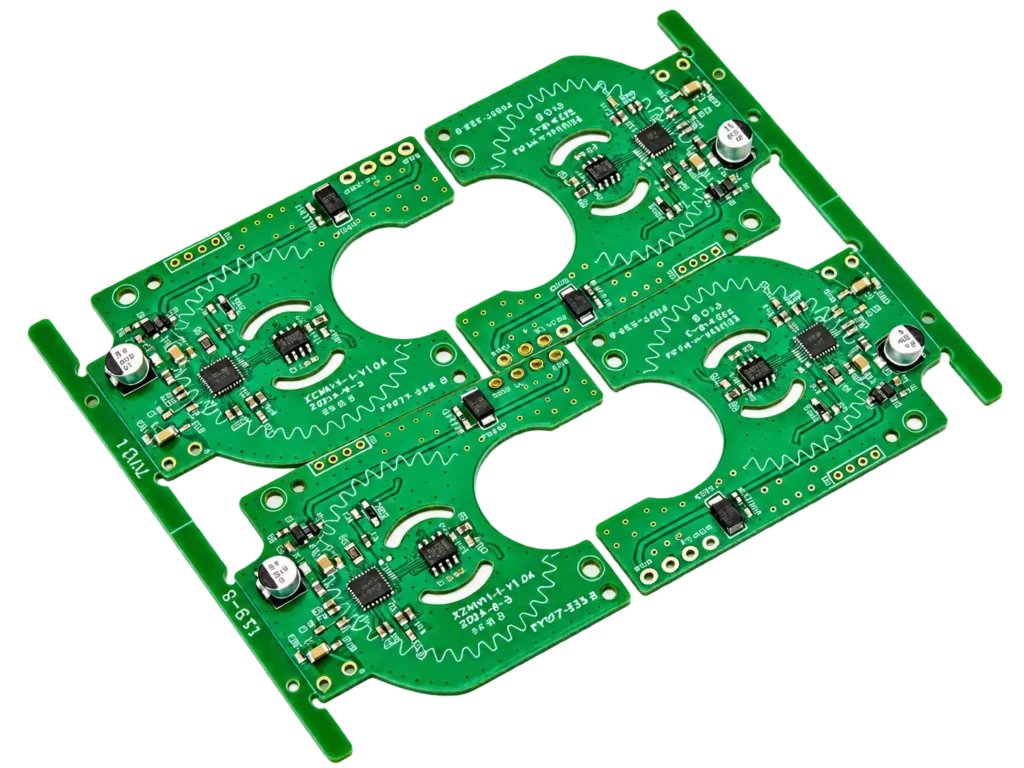
Actual sample-cut photos can then be used to check:
- whether the complete contour can be routed;
- whether nearby components have enough clearance;
- whether the finished edge meets the required quality.
Have an irregular PCB? Send your sample or Gerber / DXF file to SEPRAYS for a routing evaluation.
7. Which Irregular PCB Applications Are Suitable for Router Depaneling?
The table below provides a quick reference for common irregular PCB structures.
| Irregular PCB Application | What to Check | Router Suitable? |
|---|---|---|
| Curved or arc-shaped PCB | Router bit can follow the complete contour | Usually yes |
| L-shape or U-shape PCB | Corner access and path width | Usually yes |
| PCB with internal cutouts | Router bit can enter the opening | Depends on opening size |
| PCB with components near the edge | Component clearance | Depends on spacing |
| PCB with very narrow component spacing | Router-bit and spindle clearance | Consider laser |
| PCB with complex fine contours | Path width and required precision | Router or laser depending on design |
This table is useful for quick screening, but complex products should still be verified with an actual sample test.
8. Conclusion
For irregular PCBs, the most important factors are cutting-path accessibility, component spacing, positioning accuracy, and stable contour processing.
If the router bit can safely reach the complete path and maintain enough clearance from nearby components, router depaneling can be a good solution. If the cutting space is too narrow, laser depaneling should also be considered.
If you are unsure which process fits your irregular PCB, contact SEPRAYS for a quick evaluation.
Email:millie@seprays.com
WhatsApp:+86 139 2552 7370