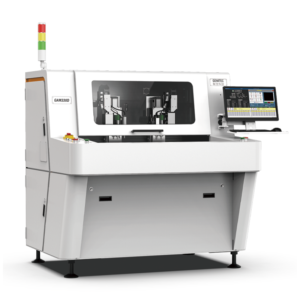

When a spindle cartridge rated for 60,000 RPM fails at 18 months into a three-year production cycle, the line stops—and the replacement lead time from a discontinued supplier model can stretch to 14 weeks. That single failure event, documented across multiple SMT facilities running 24/7 operations, illustrates the critical but often underestimated long-tail risk in depaneling equipment decisions: supplier stability. Unlike front-end specifications such as routing accuracy (±0.05 mm) or cutting speed (up to 100 mm/s), supplier viability does not appear on a datasheet, yet it directly determines whether a machine can be maintained, calibrated, and supported over its typical 8–12 year operational lifespan.
Failure Modes That Expose Supply Chain Dependency
Depaneling machines subject their core components to sustained mechanical stress. Router spindles operating at 40,000–80,000 RPM accumulate bearing wear that degrades runout from an initial ±0.005 mm to beyond ±0.02 mm within 20,000–30,000 operating hours. Cutting blades on V-score separators dull after 50,000–80,000 linear meters of FR-4, requiring resharpening or replacement. UV-cured dust extraction filters clog on schedules tied to panel volume rather than calendar time. When a supplier ceases production of a specific spindle cartridge or blade geometry, operators face an immediate choice: redesign tooling around an aftermarket substitute—often with reduced concentricity tolerance (±0.015 mm vs. ±0.005 mm)—or accept degraded cut quality that pushes micro-crack incidence past IPC-6012 Class 3 limits near panel edges.
Software And Firmware Obsolescence
Modern depanelers rely on motion controllers and firmware that manage feed rate interpolation (0.1–100 mm/s), tool path optimization, and vacuum-assisted dust extraction sequencing. When a supplier exits the market or discontinues a controller platform, firmware updates cease. Operating system compatibility erodes within 3–5 years as security patches no longer support legacy controller environments. A machine running a discontinued real-time OS cannot integrate with factory MES systems requiring current communication protocols such as IPC-CFX or SECS/GEM 2003. Retrofitting a third-party controller costs $15,000–$40,000 per line and requires requalification of the entire cutting program library—a process that can take 6–10 weeks per product family, during which throughput drops 30–50% on fallback manual depaneling stations.
Spare Parts Lead Time And Cost Escalation
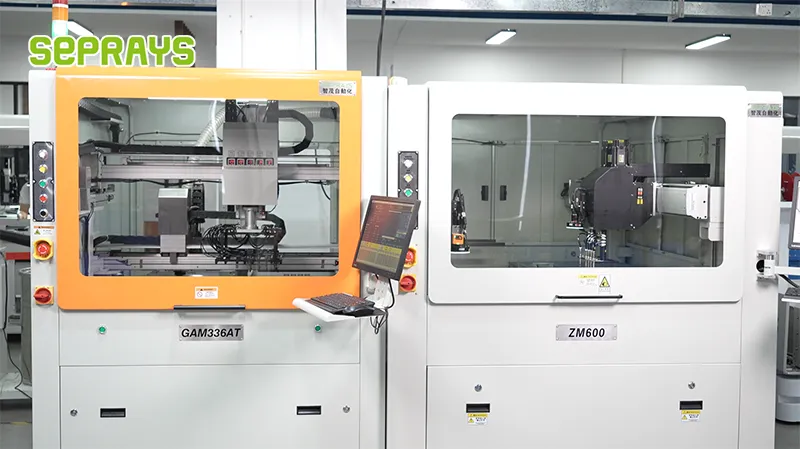
Industry data from contract manufacturers shows that spare parts availability for a depaneler drops by approximately 40% within five years of a supplier’s product line discontinuation. Critical components—spindle cartridges, precision linear guides (±0.01 mm positioning), custom-molded vacuum manifolds—face the steepest availability cliffs. Lead times extend from 2–4 weeks to 12–16 weeks, and unit costs inflate by 200–500% as inventory shifts from OEM stock to brokered or reverse-engineered aftermarket sources. For a facility running six depaneling lines at 1,200 panels per hour per line, each week of unplanned downtime translates to 40,000–60,000 panels of lost throughput, with downstream reflow and inspection capacity sitting idle.
Calibration And Technical Support Gaps
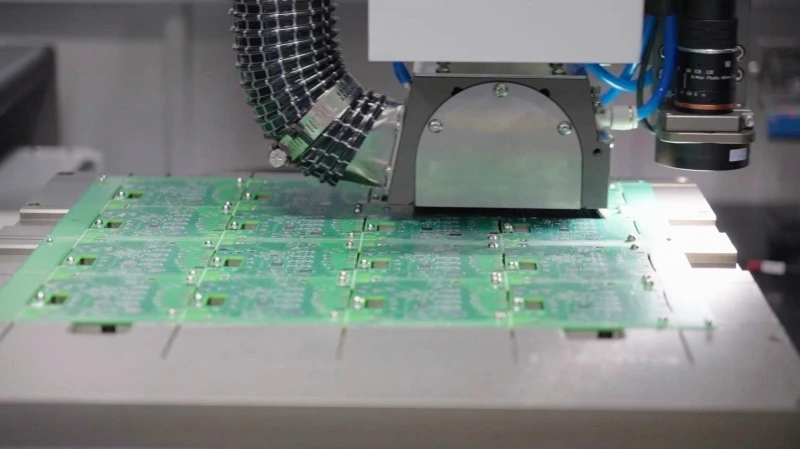
Depaneling routers require periodic calibration to maintain positional accuracy within ±0.05 mm and spindle runout within ±0.01 mm per IPC-6012 and IPC-A-610 workmanship standards. This calibration depends on proprietary fixtures, reference programs, and factory-trained technicians. When supplier support contracts lapse because the vendor no longer employs qualified field engineers for a discontinued platform, calibration drift goes undetected. A 0.03 mm positional error at the routing bit translates to a 0.06 mm deviation in the finished panel edge—sufficient to violate the 0.10 mm edge-to-trace clearance requirement for Class 3 boards with 0.10 mm trace spacing. Without certified calibration, process capability indices (Cpk) drop below 1.33, triggering mandatory requalification under most automotive and medical device quality frameworks.
Mitigating Long-Tail Supplier Risk In Procurement Decisions
Procurement teams can quantify supplier stability risk by evaluating four objective criteria: installed base size (units in active production globally), corporate financial health (revenue trend over 5+ years), platform generation continuity (backward compatibility of spindles and controllers across at least two successive machine generations), and documented aftermarket support pathways. Requiring suppliers to deposit controller source code in escrow and specify industry-standard spindle interfaces (e.g., ISO 180 collet systems rather than proprietary quick-change cartridges) reduces single-source dependency by 60–70% in failure mode analysis. Specifying IPC-CFX-compliant communication at the point of purchase eliminates the firmware obsolescence vector entirely. Additionally, mandating that blade geometries conform to standard V-score angles (30°±1°) rather than custom profiles ensures that at least three independent tooling vendors can supply replacements at competitive pricing within 48 hours.
Supplier stability in depaneling equipment decisions is not a soft qualitative factor—it is a quantifiable risk that directly impacts machine availability, process capability, and cost of ownership over the full depreciation life of the asset. A spindle cartridge lead time extending from 3 weeks to 14 weeks, a controller platform losing OS support after 5 years, or a calibration fixture becoming unobtainable each represent a discrete failure mode with measurable throughput and quality consequences. Embedding supplier viability metrics—installed base, platform continuity, open interface standards, and escrow provisions—into procurement specifications converts this long-tail risk from an uncontrolled variable into a managed parameter, preserving the ±0.05 mm routing accuracy and 99.5%+ line uptime that modern SMT production demands.
Recommended Equipment
Looking for proven depaneling solutions? Seprays offers a full range of equipment backed by 30+ years of industry experience. Here are two options worth considering for your production line:
- PCB/FPC Stamping Type Board Separation Machine — Handles PCB, FPC flexible, and rigid-flex boards — versatile stamping depaneling solution
- GAM 340AT In-Line Automatic PCB Router Machine — Dual workbench with auto-focus vision camera — maximizes throughput for inline SMT integration
Frequently Asked Questions
I don’t have access to the article “Long-Tail Risk in Depanelizer Decisions: Supplier Stability” that you’re referencing.
Could you please:
1. **Paste the article text** directly into the chat, or
2. **Provide the URL** if it’s available online (I can fetch it), or
3. **Upload the file** if it’s a document
Once I have the article content, I’ll generate exactly 3 practical Q&A pairs in the HTML format you specified, with questions that electronics manufacturing engineers and production managers would actually ask.
About Seprays
About Seprays Precision Machinery
Founded in 1993, Seprays has over 30 years of expertise in PCB depaneling solutions. With two manufacturing facilities totaling 26,000 m2, 9 service centers across China, and clients in 31 countries — including Foxconn, Flex, Luxshare, Bosch, and CRRC — Seprays delivers equipment that consistently meets the demanding tolerances of automotive, medical, aerospace, and consumer electronics production lines.
Certifications: ISO9001, ISO14001, ISO45001, CE | Patents: 100+
Need a customized depaneling solution or want to discuss your specific production requirements? Our technical team is ready to help.
Contact: jimmy@seprays.com