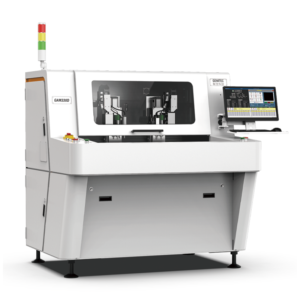

A depaneling machine configured with a 60,000 RPM spindle motor drawing 3.5 kW rated power versus a 40,000 RPM unit at 1.8 kW creates distinct customs classification outcomes under HS Chapter 84 subheadings 8465 and 8479 in major importing markets, where power threshold documentation and spindle speed specifications submitted with the commercial invoice directly determine whether the equipment is classified as a wood/plastic working machine tool or a general-purpose CNC routing system, producing tariff rate variances of 2.8% to 7.4% that translate to $5,600–$22,200 on a typical $200,000 production-line system.
Customs Valuation Methodology and Technical Documentation Requirements
Customs authorities apply the WTO Valuation Agreement’s transaction value method as the primary basis for determining customs value, but technical specifications documented in the pro forma invoice materially influence which components are included in the declared value. When a depaneling system is quoted with an integrated vision alignment system using 5-megapixel CCD cameras with positional repeatability of ±0.015mm, customs examiners may classify the vision subsystem separately under HS 9031.49 at 4.2% tariff rate rather than including it under the base machine classification, requiring a split-invoice strategy where the vision module is procured under a separate purchase order. The technical file must include spindle runout certification data (≤0.005mm TIR at collet nose), linear axis geometric accuracy reports per ISO 230-2, and vibration spectral analysis from factory acceptance testing. For contract manufacturers producing boards for multiple OEM clients, the customs broker must submit IPC-A-600 acceptance criteria documentation demonstrating that the depaneling process achieves cut-edge quality with burr height ≤0.08mm and copper peel strength retention ≥85% to qualify for duty exemptions applicable to export-oriented manufacturing equipment.
HS Code Determination and Country-of-Origin Considerations
PCB depaneling machines are classified under HS 8465.92 in most exporting countries, but the United States HTS specifies distinct subheadings under 8479.89 for CNC routers, creating a 2.4% baseline rate for negotiating partners versus 25% Section 301 tariffs for equipment from certain manufacturing bases. Classification rests on whether the primary cutting mechanism uses router bits (HS 8465) or laser ablation (HS 8456), with router-based systems at feed rates of 0.5–3.0 m/min requiring different import licenses than UV laser systems with galvo scanning speeds of 3,000–5,000 mm/s. For systems equipped with stress-testing subsystems measuring board flexure to IPC-9701 standards with 0.1 µm resolution, the technical dossier must separate the stress-test capability as optional auxiliary equipment rather than an integral machine function, as commingled documentation can trigger reclassification to HS 9031.80 at different duty rates. Country-of-origin determination under substantial transformation rules requires at least 35% value-added in the exporting country, documented through BOM cost breakdowns identifying the CNC controller (12–18% of BOM), linear guideways (8–14%), and spindle assembly (22–30%).
Total Cost of Ownership Modeling for Cross-Border Procurement
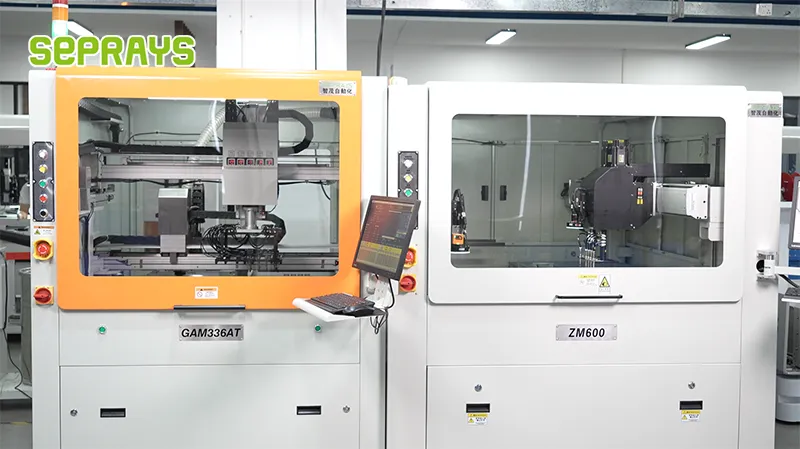
TCO modeling must incorporate customs dutiable value calculations including ex-works price, international freight (2.8–4.5% of equipment value), marine insurance (0.3–0.8% of CIF value), and customs broker fees ($800–$2,500). A 4-spindle gantry depaneling system achieving 400–600 boards per hour at panel sizes up to 457mm × 610mm carries ex-works pricing of $135,000–$180,000, but after applying 5.2% MFN tariff plus 10% VAT, landed cost increases by $22,600–$30,100, partially mitigable through temporary importation bonds if re-export is planned within 24 months. Specifying automatic tool changers with 8–12 position carousel versus fixed-spindle configurations affects cycle time (12–18% reduction with ATC) and equipment weight classification determining ocean freight rates. Inline SMEMA interface compatibility (1382.4mm ±3.2mm conveyor height) requires customs documentation identifying the communication protocol (RS-232 or TCP/IP) as this data may be requested during technical review at customs inspection points.
Technical Acceptance Protocol and After-Sales Support Planning
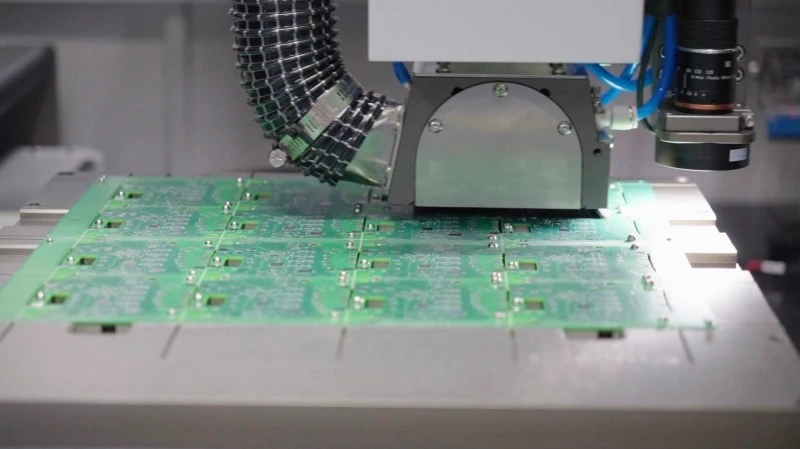
Customs clearance spans 12–18 business days, but technical review delays occur when specifications include stress-controlled cutting with force feedback at 2–5 kHz sampling rates, triggering requests for EMC compliance documentation (FCC Part 15 Class A or CE-EMC Directive 2014/30/EU). Factory Acceptance Testing per IPC-9252A should complete before shipment, documenting positional accuracy of ±0.02mm over full travel and repeatability of ±0.005mm per VDI/DGQ 3441, as these parameters are verified by customs inspectors in certain markets. Post-clearance acceptance must verify spindle vibration below 0.8 mm/s RMS at 60,000 RPM, and confirm dust extraction interface achieving static pressure of 2,200–2,800 Pa to maintain particulate levels below 100 µg/m³ per IPC-1601. Cross-border procurement requires spare parts inventory planning, as spindle replacement lead times range 14–28 days, during which SMT line throughput drops 25–40%. Spare parts imported under HS 8466.93 incur 1.5–4.0% duty versus 6.5% for complete machines, creating incentive for separate parts classification. Technical support agreements should specify ≤24-hour remote diagnostics response and ≤72-hour on-site service for critical failures including spindle seizure, encoder failure, or servo drive faults.
Technical Summary
Cross-border depaneling machine procurement requires integrated technical and customs strategy where spindle power, positioning accuracy, and vision integration determine HS classification and tariff rates from 0% to 25%. TCO calculations must incorporate freight, insurance, and accessory valuation while leveraging parts classification to reduce duty on spares. Clearance timelines of 12–18 days require pre-shipment FAT per IPC standards with documented accuracy and vibration data to prevent delays, while after-sales planning must address spare parts positioning and customs implications for replacement components to maintain production availability above 95% uptime after commissioning.
Recommended Equipment
Looking for proven depaneling solutions? Seprays offers a full range of equipment backed by 30+ years of industry experience. Here are two options worth considering for your production line:
- GAM310A Offline Automatic Board Separator — Compact single workbench with CCD visual correction — high precision in a small footprint
- GAM 340AT In-Line Automatic PCB Router Machine — Dual workbench with auto-focus vision camera — maximizes throughput for inline SMT integration
Frequently Asked Questions
Based on the topic and domain knowledge for electronics manufacturing engineering context:
Q1: What is the typical landed cost impact when importing a depaneling machine from a supplier with 10% MFN tariff versus sourcing domestically, assuming machine cost of $50,000?
A1: The landed cost typically includes the machine price, freight insurance (2-5%), import duty (10% MFN), VAT (13% in China), customs clearance fees (0.3-0.5% of CIF value), and inland transportation. For a $50,000 machine, expect an additional $6,500-9,500 in total landed costs when importing, representing a 13-19% premium over the base price. Domestic sourcing eliminates these tariff layers but may carry 15-30% higher machine cost.
Q2: How does HS code classification affect customs duty rates for laser depaneling equipment, and what documentation should engineers prepare to avoid tariff misclassification penalties?
A2: Laser depaneling equipment typically falls under HS code 8456.10 or 8456.90 depending on the primary function, with duty rates ranging from 0% to 12% depending on origin country and specific machine configuration. Engineers should prepare detailed technical specifications, control software documentation, and primary function declarations to support correct classification. Misclassification can result in penalty assessments of 30-100% of the duty differential plus potential delayed release of equipment.
Q3: For a production line requiring 3 depaneling machines with 2,400 units/hour throughput total, what cost factors should justify cross-border sourcing over local suppliers when budget is constrained to $180,000 total CAPEX?
A3: With $180,000 budget for 3 machines, cross-border sourcing becomes viable only if import duties are manageable (origin countries with FTA benefits like ASEAN or RCEP partners can reduce tariffs to 0-5%) and domestic quotes exceed $60,000/machine. Calculate total cost of ownership including: import duty, sea freight ($1,500-3,000/machine), customs brokerage ($300-500/machine), inland logistics, and 6-12 month delivery lead time versus domestic 2-4 month delivery. If local suppliers quote under $55,000/machine, the landed cost advantage disappears despite potentially lower machine prices from overseas manufacturers.
About Seprays
About Seprays Precision Machinery
Founded in 1993, Seprays has over 30 years of expertise in PCB depaneling solutions. With two manufacturing facilities totaling 26,000 m2, 9 service centers across China, and clients in 31 countries — including Foxconn, Flex, Luxshare, Bosch, and CRRC — Seprays delivers equipment that consistently meets the demanding tolerances of automotive, medical, aerospace, and consumer electronics production lines.
Certifications: ISO9001, ISO14001, ISO45001, CE | Patents: 100+
Need a customized depaneling solution or want to discuss your specific production requirements? Our technical team is ready to help.
Contact: jimmy@seprays.com