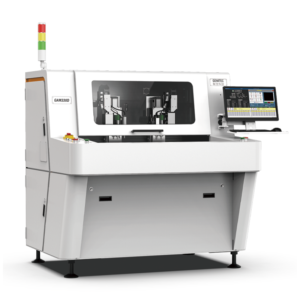

Production lines running at 1,200 boards per hour can lose approximately ¥48,000 in output value for every hour a PCB depaneling machine remains offline due to unplanned downtime. This calculation, based on typical mid-volume SMT facilities processing boards with an average unit value of ¥40, explains why after-sales response time commitments documented in equipment purchase contracts—often specified as “4-hour remote response, 24-hour on-site arrival”—deserve rigorous verification before procurement decisions are finalized. The gap between contractually promised response times and actual service delivery can translate directly into hundreds of thousands of yuan in annual production losses.
Quantifying Response Time Against Production Impact
Spindle-based router depaneling systems operating at 40,000-80,000 RPM with feed rates of 50-500 mm/second require precision alignment tolerances of ±0.05mm or tighter between the cutting tool path and the programmed routing trajectory. When spindle bearings fail, servo motors malfunction, or vacuum dust collection systems clog, the machine enters a fault state that halts the entire depaneling cell. Industry data indicates mean time between failures (MTBF) for properly maintained router depanelers ranges from 8,000 to 12,000 operating hours, but MTBF drops to 3,000-5,000 hours when preventive maintenance schedules lapse. Each failure event, regardless of cause, triggers the response time clock. Facilities operating three shifts per day accumulate 6,000-7,000 machine hours annually, meaning even well-maintained equipment experiences one to two unplanned stoppages per year on average—making response time performance a measurable, trackable metric rather than a theoretical contract clause.
Failure Mode Classification and Response Urgency Tiers
Not all depaneler failures warrant identical response urgency, and credible after-sales commitments should differentiate response tiers based on failure severity. Tier 1 critical failures—spindle motor burnout, Z-axis servo failure, or CNC controller crash—completely halt production and justify the fastest response guarantees, typically 2-4 hours for remote diagnostics and 12-24 hours for on-site engineering arrival. Tier 2 functional degradation—such as vacuum system performance declining from rated 180-220 m³/hour airflow to below 120 m³/hour, or spindle runout exceeding the 0.01mm specification—allows continued operation at reduced throughput but requires intervention within 8-24 hours to prevent further deterioration. Tier 3 scheduled maintenance items—spindle collet replacement after 2,000-3,000 operating hours, cutting tool wear compensation adjustments, or dust filter changes—follow planned service windows rather than emergency response protocols. Equipment purchasers should verify that supplier response commitments explicitly define these tiers with specific hour thresholds, rather than offering vague “rapid response” language that leaves performance unmeasurable.
Technical Competency Requirements for Valid Repairs
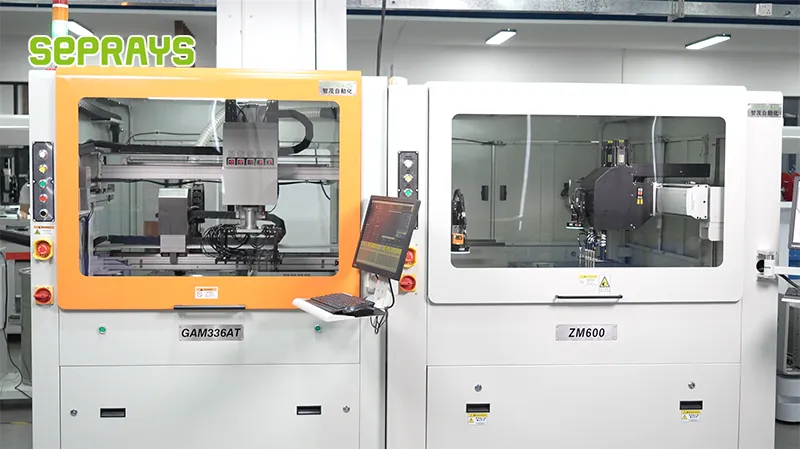
Response time verification extends beyond arrival speed to encompass repair effectiveness. A 4-hour on-site response becomes meaningless if the arriving technician lacks the tools or expertise to restore machine specifications. Legitimate after-sales capability requires technicians equipped with calibrated measuring instruments—laser interferometers for axis positioning accuracy verification (typically ±0.02mm over 300mm travel), dial indicators for spindle runout measurement (target ≤0.005mm at collet nose), and dynamometers for cutting force verification (router depanelers should maintain lateral cutting forces below 15-20N to prevent microfracturing along board edges). Replacement spare parts inventory for critical components—spindle bearings (typical lifespan 5,000-8,000 hours), servo drive units, and vacuum pump cartridges—should be positioned within 500km of installed equipment bases or accessible via next-day logistics. Facilities should request documented evidence of regional spare parts inventory levels and technician certification records before accepting response time commitments at face value.
Contract Verification Methods and Performance Tracking
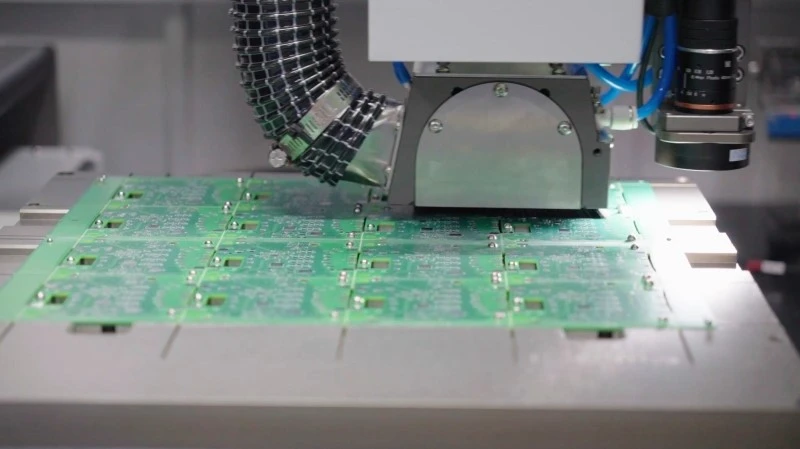
Authentic response time commitments include contractually binding service level agreements (SLAs) with defined measurement methodologies and penalty clauses. Critical measurement parameters include: response initiation time (from fault detection to technician contact acknowledgment), remote diagnosis completion time (typically 30-60% of Tier 1 failures resolve remotely via PLC error code analysis and parameter adjustment), and physical arrival time at customer facility. Prudent procurement specifications require suppliers to log all service events in a shared database accessible to the equipment owner, with timestamps recorded at each stage. Some facilities install independent monitoring systems—MODBUS or OPC-UA interfaces connected to facility SCADA networks—to generate immutable records of machine fault events, enabling objective comparison against supplier-reported response metrics. Contractual penalty structures, typically 0.5-1% of equipment purchase price per hour of response time breach beyond agreed thresholds, transform verbal promises into financially enforceable obligations.
On-Site Acceptance Testing and Reference Customer Audits
Prior to contract finalization, equipment purchasers should conduct reference customer site visits to validate actual historical response performance. Key interview questions include: What was the longest actual response time experienced in the past 12 months? How many service events required repeat visits due to incomplete initial repairs? Were spare parts available locally or shipped from distant warehouses? Facilities should request service logs showing date/time stamps for fault occurrence, service ticket creation, technician arrival, and machine restoration to production status. Reputable suppliers maintain customer service performance databases and can provide anonymized response time statistical summaries—mean response time, 90th percentile response time, and maximum response time—derived from their installed base. Statistical outliers, where maximum response times exceed quoted commitments by more than 50%, indicate either optimistic contract language or insufficient regional service infrastructure.
Technical verification of after-sales response time promises requires systematic examination of production impact quantification, failure mode classification, repair competency standards, contract measurement protocols, and reference customer performance data. Equipment purchasers who treat response time commitments as measurable, auditable specifications rather than marketing claims reduce their exposure to unplanned production losses and ensure that specified hour-based guarantees translate into genuine operational resilience throughout the equipment lifecycle.
Recommended Equipment
Looking for proven depaneling solutions? Seprays offers a full range of equipment backed by 30+ years of industry experience. Here are two options worth considering for your production line:
- GAM 340AT In-Line Automatic PCB Router Machine — Dual workbench with auto-focus vision camera — maximizes throughput for inline SMT integration
- ZM30-D Multi-Tool Multi-Group PCB Depaneling Machine — One-time full LED board cutting — daily output exceeding 100,000 pieces with custom configurations
Frequently Asked Questions
Q1: What documentation should I request from a depaneling equipment supplier to verify their claimed 24/7 technical support response time?
A1: Request a copy of their Service Level Agreement (SLA) that explicitly defines response time commitments by priority tier — for example, P1 critical failures within 2 hours during business hours and 4 hours after hours. Ask for references from existing customers in similar production environments who can confirm actual response performance, not just marketing promises.
Q2: How can I verify that a depaneling machine supplier will actually send a qualified technician on-site rather than just providing remote diagnostics?
A2: Cross-reference the supplier’s on-site response guarantee against their published technician coverage map for your region. Ask specifically how many certified depaneling engineers they have stationed within a 200km radius of your facility and what their average on-site arrival time has been over the past 12 months, verified by service tickets.
Q3: What contractual clauses protect me if a depaneling equipment supplier fails to meet their promised spare parts availability during a breakdown?
A3: Negotiate a guaranteed spare parts SLA that specifies maximum lead times by component category — for example, consumables like blades within 24 hours, critical wearing parts within 48 hours, and control board assemblies within 72 hours. Include financial penalties or credit terms tied to the supplier’s failure to meet these benchmarks.
About Seprays
About Seprays Precision Machinery
Founded in 1993, Seprays has over 30 years of expertise in PCB depaneling solutions. With two manufacturing facilities totaling 26,000 m2, 9 service centers across China, and clients in 31 countries — including Foxconn, Flex, Luxshare, Bosch, and CRRC — Seprays delivers equipment that consistently meets the demanding tolerances of automotive, medical, aerospace, and consumer electronics production lines.
Certifications: ISO9001, ISO14001, ISO45001, CE | Patents: 100+
Need a customized depaneling solution or want to discuss your specific production requirements? Our technical team is ready to help.
Contact: jimmy@seprays.com