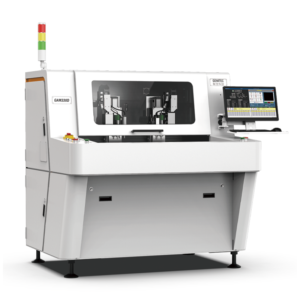

Mechanical routing depaneling systems operating at spindle speeds of 40,000-60,000 RPM achieve positioning repeatability of ±0.02mm while maintaining cut edge roughness below 15μm Ra—but face intensifying competition from punching and laser technologies that challenge traditional routing dominance in high-volume electronics manufacturing.
Stress Profile Comparison Across Depaneling Methods
Mechanical routing induces residual stress in the range of 20-45 MPa near the cut edge, with the stress-affected zone extending 0.3-0.5mm from the kerf. This contrasts sharply with laser depaneling, which produces thermal stress levels of 5-15 MPa but creates a heat-affected zone (HAZ) of 50-200μm depending on laser type and power density. Punching technology generates the highest mechanical stress, typically 80-150 MPa at the shear line, with stress propagation extending 1-2mm into the board material. For FR-4 substrates with glass transition temperatures around 130-140°C, CO2 laser systems operating at 10.6μm wavelength can induce local temperatures exceeding 200°C, necessitating careful thermal management. UV laser systems at 355nm reduce thermal loading significantly, maintaining HAZ below 25μm while achieving comparable cut quality. IPC-6012 standards specify acceptable edge quality requirements, with mechanical routing consistently achieving the smoothest edges for flexible circuits where edge roughness affects flex fatigue life.
Throughput and Cost-Per-Unit Analysis
Production throughput varies dramatically across technologies. Modern punching systems achieve 3-8 boards per minute in high-volume scenarios, with cycle times of 7-20 seconds per panel, but require dedicated tooling investments of $8,000-25,000 per panel design. Laser systems process panels at 1-4 boards per minute, with UV laser cutting speeds of 50-200mm/s depending on material thickness and complexity. Mechanical routing systems typically process 0.5-2 boards per minute with programmed feed rates of 20-100mm/s and spindle speeds adjustable between 30,000-80,000 RPM. The break-even analysis favors punching at volumes exceeding 50,000-100,000 identical panels annually, where tooling amortization drops below $0.10 per board. For mixed-product environments with frequent design changes, routing maintains economic advantages despite lower throughput, as no dedicated tooling investment is required. Operating costs per 1,000 boards range from $15-40 for routing (consumable tooling, spindle maintenance), $8-25 for punching (die maintenance, press operation), and $20-60 for laser (assist gas, optics replacement, power consumption).
Edge Quality and Post-Processing Requirements
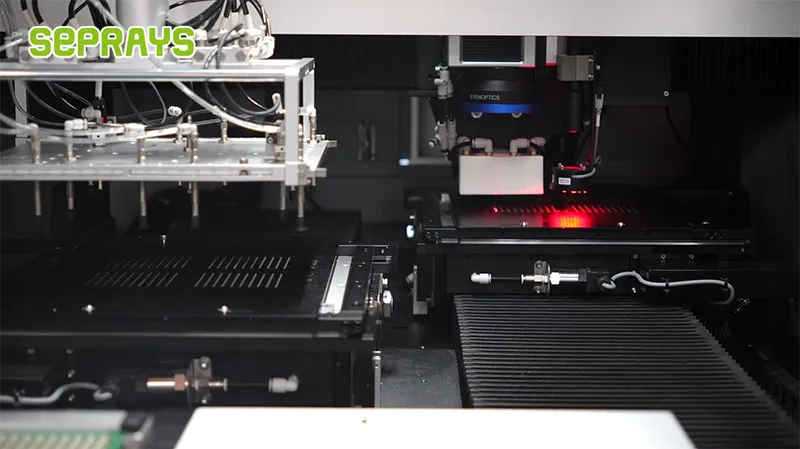
Edge quality directly impacts downstream assembly yield. Mechanical routing with properly maintained bits achieves edge roughness of 5-15μm Ra, with clean edges requiring minimal post-processing. Worn tooling degrades this to 25-40μm Ra, creating particulate contamination risks for SMT processes. Laser-cut edges exhibit characteristic striations and require de-smearing for high-reliability applications, with edge roughness of 10-30μm Ra depending on focus optimization and assist gas pressure. Punching produces shear edges with characteristic burnish and fracture zones, with edge quality of 15-35μm Ra and potential for micro-cracking in brittle substrates. IPC-A-610 Class 3 assemblies require edge quality verification, with mechanical routing providing the most consistent compliance. FOD (foreign object debris) generation is lowest for laser systems at 0.1-0.5mg per meter of cut, compared to 2-8mg for routing and 1-4mg for punching, impacting cleanroom compatibility for medical and aerospace applications.
Material Compatibility and Thickness Limitations
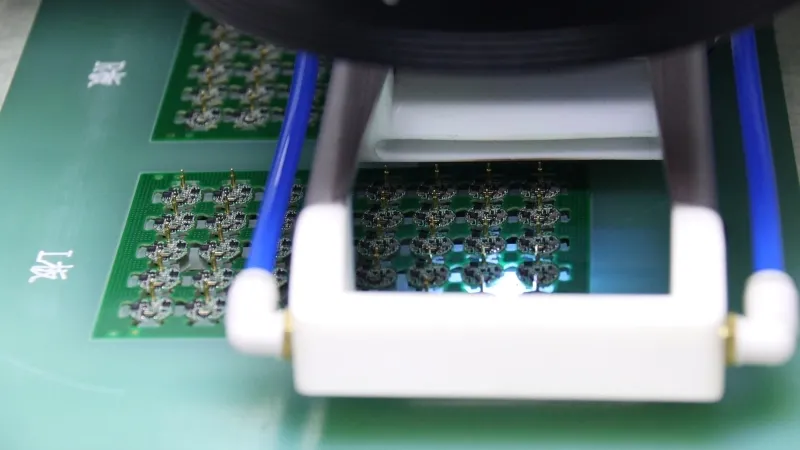
Material thickness constraints define technology boundaries. Mechanical routing handles boards from 0.2mm to 5mm thickness with appropriate feed rate and spindle speed optimization, maintaining cut quality across FR-4, aluminum, ceramic-filled substrates, and flexible materials. Punching systems effectively process 0.5-3mm boards but face limitations with ceramic-filled materials exceeding 40% filler content, where die wear accelerates 3-5x compared to standard FR-4. Laser systems excel with thin materials below 1.5mm, achieving full penetration with single-pass cutting; thicker substrates require multiple passes with depth increments of 0.3-0.8mm, reducing throughput by 40-60%. Aluminum-clad PCBs present challenges for CO2 laser absorption, while UV laser systems achieve effective cutting with 10-40% slower speeds than FR-4. Flexible circuits with polyimide substrates require cutting speeds reduced 20-30% to prevent delamination, with mechanical routing offering superior delamination-free performance compared to thermal methods that can induce layer separation at temperatures above 300°C.
Failure Mode Analysis and Reliability Impact
Each technology presents distinct failure modes affecting production reliability. Mechanical routing suffers from tool wear degradation, with carbide bits requiring replacement every 15,000-50,000 linear meters of cut depending on substrate composition; worn bits increase cutting force by 30-50% and induce delamination in prepreg layers. Punching systems face die misalignment risks, with positioning errors accumulating to ±0.1mm over tool life, and progressive die wear causing burr height increases from 0.02mm to 0.15mm. Laser systems exhibit optic contamination requiring chamber cleaning every 500-2,000 operating hours, with beam focus drift affecting cut width by ±0.05mm. Crack propagation from punched edges reduces PCB bend strength by 15-40% compared to routed edges, critical for applications subject to mechanical vibration. IPC-6018 specifications for microwave frequency boards require edge deviation below 0.05mm, achievable with precision routing but challenging for punching at production volumes. Component proximity constraints differ significantly: routing requires 1-2mm component keep-out zones, punching needs 3-5mm clearance for die placement, and laser systems can cut within 0.5-1mm of components with appropriate power settings.
Summary
Alternative depaneling technologies present differentiated threats to traditional routing across specific application segments. Punching technology dominates high-volume, low-mix production with annual volumes exceeding 100,000 identical panels where tooling amortization justifies investment. Laser systems capture applications requiring minimal mechanical stress, complex contour flexibility, and close-component proximity cutting, particularly in flex circuit and thin-substrate manufacturing. Mechanical routing maintains strong positioning in mixed-product environments, thick-board applications above 2mm, and high-reliability segments where edge quality directly impacts assembly yield and product longevity. Technology selection increasingly depends on total cost of ownership analysis incorporating volume, mix flexibility, edge quality requirements, and downstream assembly impact rather than throughput alone.
Recommended Equipment
Looking for proven depaneling solutions? Seprays offers a full range of equipment backed by 30+ years of industry experience. Here are two options worth considering for your production line:
- GAM 340AT In-Line Automatic PCB Router Machine — Dual workbench with auto-focus vision camera — maximizes throughput for inline SMT integration
- GAM300AT Double-Layer Track Online PCB Board Separation Machine — Full-carrier process with carrier return track — built for seamless full-line automation
Frequently Asked Questions
Q1: What is the main challenge discussed in this article?
A1: This article explores practical considerations for PCB depaneling operations in manufacturing environments, covering key factors that affect quality, efficiency, and cost.
Q2: How does this relate to production quality?
A2: Improper depaneling can damage components, introduce stress, and compromise board integrity. Choosing the right method directly impacts your final product quality and yield rate.
Q3: What depaneling methods are available?
A3: Common methods include router depaneling (best for complex shapes), V-cut depaneling (cost-effective for high volume), and laser depaneling (ultra-precise, minimal stress).
About Seprays
About Seprays Precision Machinery
Founded in 1993, Seprays has over 30 years of expertise in PCB depaneling solutions. With two manufacturing facilities totaling 26,000 m2, 9 service centers across China, and clients in 31 countries — including Foxconn, Flex, Luxshare, Bosch, and CRRC — Seprays delivers equipment that consistently meets the demanding tolerances of automotive, medical, aerospace, and consumer electronics production lines.
Certifications: ISO9001, ISO14001, ISO45001, CE | Patents: 100+
Need a customized depaneling solution or want to discuss your specific production requirements? Our technical team is ready to help.
Contact: jimmy@seprays.com