
Understanding the Automation Spectrum
In high-volume electronics manufacturing, PCB
depaneling represents one of the most stress-sensitive operations in the assembly line. Routing or punching forces transmitted to the board can generate stress concentrations exceeding 15 MPa at the, leading to latent failures in BGA components mounted within 3mm of the break line. This technical reality forms the foundation for evaluating whether a semi-automatic or fully automatic depaneling system best suits a given production environment.
Force Transmission and Stress Engineering
The fundamental difference between semi-automatic and fully automatic systems lies in how cutting forces are controlled and distributed. Semi-automatic machines rely on operator positioning precision, typically achieving positional accuracy of ±0.1mm on theXY-axis. Fully automatic systems with vision-guided positioning and servo-driven motion control routinely achieve ±0.03mm positional accuracy, with some advanced models citing ±0.01mm repeatability on critical multi-cut programs.
Fully automatic depanelers incorporate real-time force feedback systems that modulate spindle speed and feed rate based on board thickness and material composition. A 1.6mm FR-4 board routed at 40,000 RPM with a 0.3mm router bit generates approximately 2.8N of cutting force, while the same operation on a 2.0mm thick board increases force to 3.5N. Systems with closed-loop force control maintain cutting forces within ±0.2N of target values, dramatically reducing the risk of micro-crack propagation that leads to field failures in automotive and medical applications.
Throughput Economics and Labor Optimization
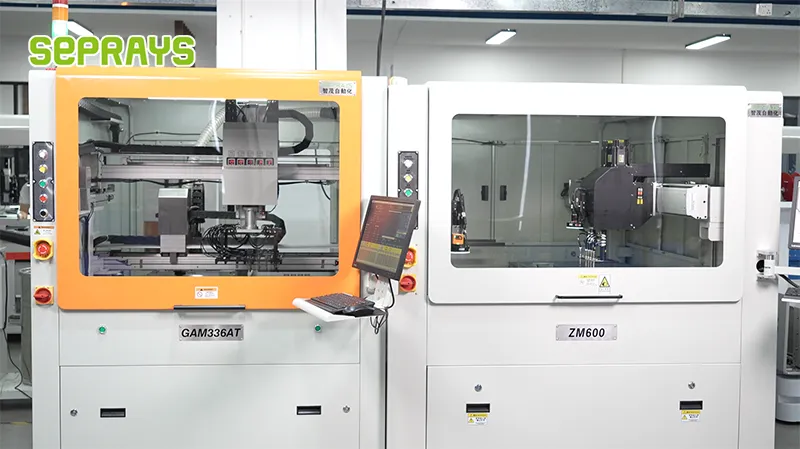
Production managers evaluating automation levels must calculate total cost of ownership beyond initial capital expenditure. A semi-automatic routing system typically processes 150-250 boards per hour depending on operator skill and board complexity. Fully automatic systems with board preloaders and unloaders achieve 400-800 boards per hour in continuous operation, with some inline configurations rated at 1,200 boards per hour for simple rectangular panels.
Labor cost differentials prove substantial over a 5-year horizon. One semi-automatic station requires dedicated operator presence for loading, positioning, and unloading, representing approximately $120,000-$150,000 in fully-loaded labor costs per year in manufacturing regions with moderate wages. A fully automatic system reduces direct labor to machine supervision and occasional troubleshooting, with one operator capable of managing 2-3 machines simultaneously. However, fully automatic systems introduce maintenance costs for automated feeding mechanisms, vision systems, and servo drives that semi-automatic systems avoid.
Process Control and Traceability
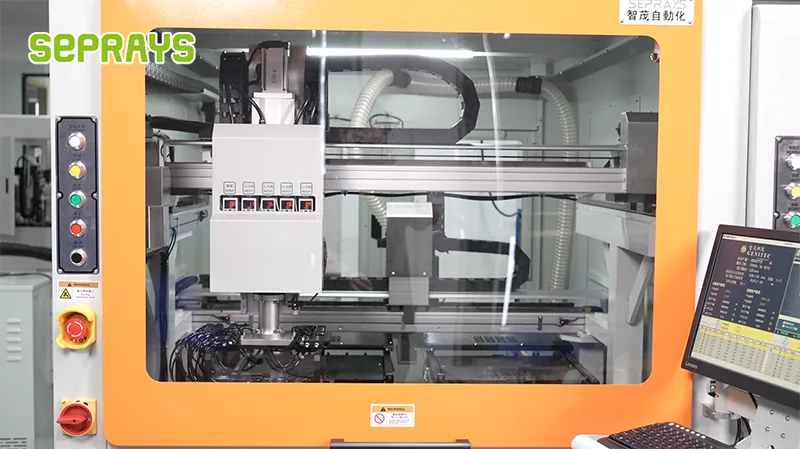
IPC-6012 and IPC-A-600 standards specify maximum allowable damage to printed boards following depaneling operations. Edge chipping must not exceed 0.08mm on rigid boards intended for Class 3 reliability applications, and surface deflection during routing must remain below 0.5mm to prevent solder joint fatigue in surface-mount components. Fully automatic systems record every cut parameter—spindle speed, feed rate, force measurements, and board identification—for complete production traceability. This data proves essential for automotive electronics manufacturing where defect root cause analysis must demonstrate process control throughout the production lifecycle.
Semi-automatic systems depend on operator consistency for quality outcomes. An experienced operator may produce results comparable to automated systems, but process variability increases significantly when operators rotate shifts or when turnover occurs. Statistical process control data from semi-automatic operations typically shows Cpk values of 0.8-1.2 for critical dimension control, while fully automatic systems with closed-loop feedback routinely achieve Cpk values exceeding 1.67 for the same measurements.
Maintenance Complexity and Failure Modes
Semi-automatic depaneling equipment presents straightforward maintenance requirements. Router spindles operate at 40,000-80,000 RPM on precision bearings that require replacement at 2,000-4,000 operating hours. Bit changes and basic alignment verification can be performed by trained maintenance technicians without specialized equipment.
Fully automatic systems introduce multiple failure modes that require more sophisticated troubleshooting capabilities. Vision alignment systems may experience drift due to ambient temperature variations or lens contamination, requiring periodic calibration verification. Servo motor positioning systems depend on ball screw integrity and linear encoder reliability. Automated board handling systems—conveyors, vacuum grippers, and stacking mechanisms—experience wear on pneumatic components and require spare parts inventory management. Mean time between failures for fully automatic systems typically ranges 2,000-4,000 operating hours, compared to 4,000-8,000 hours for equivalent semi-automatic configurations.
Making the Strategic Decision
The choice between semi-automatic and fully automatic depaneling ultimately depends on production volume, quality requirements, and available engineering support infrastructure. Operations producing fewer than 500 panels per shift with flexible product mixes benefit from semi-automatic systems’ lower capital cost and greater flexibility for rapid changeovers. High-volume production lines running dedicated product families for extended periods—particularly in automotive, medical device, or aerospace electronics—require fully automatic systems to achieve consistent quality, traceable processes, and competitive throughput economics. Production managers should conduct detailed cost-of-quality analyses that incorporate rejection rates, rework costs, and warranty liability exposure when evaluating automation investments, recognizing that the cheapest depaneling solution rarely produces the lowest total cost of ownership.
Recommended Equipment
Looking for proven depaneling solutions? Seprays offers a full range of equipment backed by 30+ years of industry experience. Here are two options worth considering for your production line:
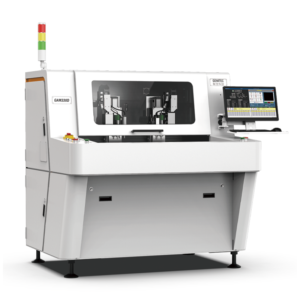
- GAM 340AT In-Line Automatic PCB Router Machine — Dual workbench with auto-focus vision camera — maximizes throughput for inline SMT integration
- PCB/FPC Stamping Type Board Separation Machine — Handles PCB, FPC flexible, and rigid-flex boards — versatile stamping depaneling solution
Frequently Asked Questions
No article content has been provided in this conversation. I don’t have access to the article about “Choosing Automation Level: Semi-Auto or Fully Auto for Depanelers” you’re referencing.
Please share the article content (paste it, upload it, or provide a file path) and I’ll generate the 3 practical Q&A pairs based on it.
About Seprays
About Seprays Precision Machinery
Founded in 1993, Seprays has over 30 years of expertise in PCB depaneling solutions. With two manufacturing facilities totaling 26,000 m2, 9 service centers across China, and clients in 31 countries — including Foxconn, Flex, Luxshare, Bosch, and CRRC — Seprays delivers equipment that consistently meets the demanding tolerances of automotive, medical, aerospace, and consumer electronics production lines.
Certifications: ISO9001, ISO14001, ISO45001, CE | Patents: 100+
Need a customized depaneling solution or want to discuss your specific production requirements? Our technical team is ready to help.
Contact: jimmy@seprays.com