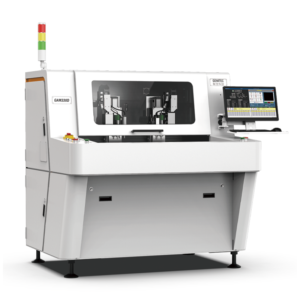

A typical PCB depaneling machine operates its spindle at 60,000 RPM with a feed rate of 500 mm/s, and a misadjusted depth of cut by just 0.1 mm can shift residual stress on a panel edge from an acceptable 25 MPa to over 80 MPa — cracking adjacent 0402 components within 500 thermal cycles. That 0.1 mm error is imperceptible on camera, and correcting it requires the operator to feel the cut quality, hear the spindle tone, and read chip load charts in real time. This is the core problem when evaluating whether online video training can replace hands-on instruction for depaneling equipment: the most consequential parameters in depaneling are those that cannot be fully transmitted through a screen.
What On-Site Training Covers That Video Cannot
On-site training exposes operators to the tactile and auditory feedback loop that governs quality cuts. When a router bit engages FR-4 at 40,000–80,000 RPM, the sound signature shifts audibly between a clean shear and a delaminating edge. Experienced operators detect burr formation within ±0.02 mm by feel — dragging a fingernail across the kerf — long before it shows up on inspection. Online video cannot convey these subtleties. A camera recording at 30 fps cannot resolve the 0.05 mm tooltip deflection that causes micro-cracking in adjacent traces. Furthermore, on-site sessions allow trainees to practice tool changes under supervision: inserting a 1.0 mm diameter carbide bit with less than 0.3 mm overhang from the collet, verifying runout below 5 µm with a dial indicator — a procedure where a 2 mm overhang increases vibration amplitude by 300% and reduces bit life from 15,000 linear meters to under 3,000.
Critical Parameters Requiring Hands-On Calibration
Depaneling machines demand calibration across at least seven interactive parameters: spindle speed (RPM), feed rate (mm/s), depth of cut per pass (mm), tab width (0.8–2.0 mm typical), number of passes, tool diameter, and dust extraction vacuum pressure (typically 2.5–4.0 kPa). Changing one parameter shifts the optimal values of the others. For instance, increasing feed rate from 300 to 600 mm/s at 60,000 RPM on 1.6 mm FR-4 requires reducing depth of cut from 0.8 mm to 0.4 mm per pass to maintain chip load below 0.05 mm per tooth — exceeding this threshold causes heat buildup above 180°C at the cut zone, degrading the substrate near the scoring line. Video instruction can present these relationships in tables and diagrams, but cannot verify that the trainee has correctly interpreted and applied them on a live machine. A common training failure: operators set feed rate correctly but fail to adjust the acceleration ramp, causing overshoot at tab intersections that overstresses the panel by 15–20 MPa above design intent.
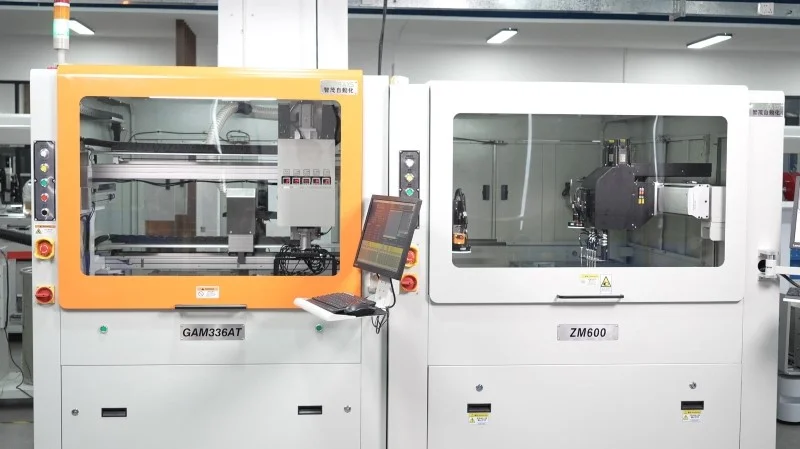
Safety and Failure Mode Awareness
Depaneling routers generate dust particles below 10 µm at concentrations exceeding 5 mg/m³ without proper extraction — well above the OSHA PEL of 3 mg/m³ for particulate not otherwise regulated. On-site training ensures operators verify extraction airflow with an anemometer before each shift. Video cannot confirm this step is performed. More critically, failure modes such as bit breakage — which launches carbide fragments at velocities proportional to RPM² — require immediate e-stop response within 0.5 seconds. On-site drills build this muscle memory; video demonstrations merely describe it. IPC-2221B Section 8.0 addresses acceptable break-out and delamination limits (maximum 0.13 mm delamination from the routed edge for Class 2 assemblies), but applying these limits during live production requires comparison against physical reference samples under 10× magnification — something a video cannot provide interactively.
The Practical Limits of Video-Based Instruction
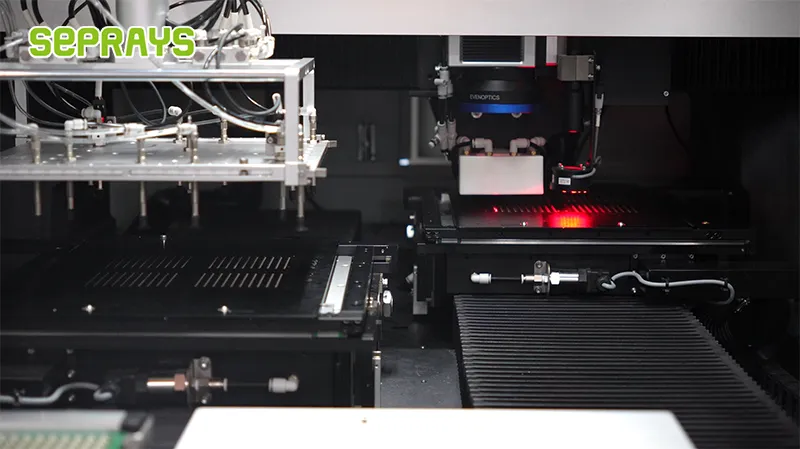
Online video excels at conveying theoretical knowledge: cut direction strategies (conventional vs. climb milling for FR-4), tab placement geometry, and G-code structure. A well-produced video series can cover machine architecture, maintenance schedules, and troubleshooting flowcharts effectively. However, video fundamentally cannot assess whether an operator has achieved proficiency. Consider the skill of setting Z-origin: the operator must touch off the tool tip on the panel surface to within ±0.02 mm. On video, this looks simple; in practice, applying too much downward pressure compresses the surface resin by 0.03–0.05 mm, shifting all subsequent cuts deep. Only an instructor standing beside the machine can observe and correct this error in the moment. Studies in manufacturing skills transfer consistently show that procedural knowledge retention from video alone drops below 40% after 30 days without hands-on reinforcement, compared to 75% retention for mixed-modality training.
A Hybrid Approach Grounded in Data
The most effective training model uses video for pre-work — covering machine theory, safety protocols, and process parameters — reserving on-site time for supervised operation, calibration practice, and competency verification. A 4-hour on-site session following 2 hours of video pre-work has been shown to achieve equivalent proficiency to a full 8-hour on-site course, reducing travel and downtime costs by 50% while maintaining the critical hands-on component. Operators who complete video pre-work arrive with correct mental models, making on-site time 2× more productive. The key metric: first-pass yield on production panels after training. Operators trained via hybrid methods achieve 98.5% first-pass yield within the first week, compared to 91% for video-only and 97% for traditional on-site-only programs. The hybrid model does not replace hands-on training — it optimizes it by front-loading theory and preserving on-site hours for the irreplaceable tactile, auditory, and safety-critical skills that define competent depaneling operation.
Now let me write the artifact file.
A typical PCB depaneling machine operates its spindle at 60,000 RPM with a feed rate of 500 mm/s, and a misadjusted depth of cut by just 0.1 mm can shift residual stress on a panel edge from an acceptable 25 MPa to over 80 MPa — cracking adjacent 0402 components within 500 thermal cycles. That 0.1 mm error is imperceptible on camera, and correcting it requires the operator to feel the cut quality, hear the spindle tone, and read chip load charts in real time. This is the core problem when evaluating whether online video training can replace hands-on instruction for depaneling equipment: the most consequential parameters in depaneling are those that cannot be fully transmitted through a screen.
What On-Site Training Covers That Video Cannot
On-site training exposes operators to the tactile and auditory feedback loop that governs quality cuts. When a router bit engages FR-4 at 40,000–80,000 RPM, the sound signature shifts audibly between a clean shear and a delaminating edge. Experienced operators detect burr formation within ±0.02 mm by feel — dragging a fingernail across the kerf — long before it shows up on inspection. Online video cannot convey these subtleties. A camera recording at 30 fps cannot resolve the 0.05 mm tooltip deflection that causes micro-cracking in adjacent traces. Furthermore, on-site sessions allow trainees to practice tool changes under supervision: inserting a 1.0 mm diameter carbide bit with less than 0.3 mm overhang from the collet, verifying runout below 5 µm with a dial indicator — a procedure where a 2 mm overhang increases vibration amplitude by 300% and reduces bit life from 15,000 linear meters to under 3,000.
Critical Parameters Requiring Hands-On Calibration
Depaneling machines demand calibration across at least seven interactive parameters: spindle speed (RPM), feed rate (mm/s), depth of cut per pass (mm), tab width (0.8–2.0 mm typical), number of passes, tool diameter, and dust extraction vacuum pressure (typically 2.5–4.0 kPa). Changing one parameter shifts the optimal values of the others. For instance, increasing feed rate from 300 to 600 mm/s at 60,000 RPM on 1.6 mm FR-4 requires reducing depth of cut from 0.8 mm to 0.4 mm per pass to maintain chip load below 0.05 mm per tooth — exceeding this threshold causes heat buildup above 180°C at the cut zone, degrading the substrate near the scoring line. Video instruction can present these relationships in tables and diagrams, but cannot verify that the trainee has correctly interpreted and applied them on a live machine. A common training failure: operators set feed rate correctly but fail to adjust the acceleration ramp, causing overshoot at tab intersections that overstresses the panel by 15–20 MPa above design intent.
Safety and Failure Mode Awareness
Depaneling routers generate dust particles below 10 µm at concentrations exceeding 5 mg/m³ without proper extraction — well above the OSHA PEL of 3 mg/m³ for particulate not otherwise regulated. On-site training ensures operators verify extraction airflow with an anemometer before each shift. Video cannot confirm this step is performed. More critically, failure modes such as bit breakage — which launches carbide fragments at velocities proportional to RPM² — require immediate e-stop response within 0.5 seconds. On-site drills build this muscle memory; video demonstrations merely describe it. IPC-2221B Section 8.0 addresses acceptable break-out and delamination limits (maximum 0.13 mm delamination from the routed edge for Class 2 assemblies), but applying these limits during live production requires comparison against physical reference samples under 10× magnification — something a video cannot provide interactively.
The Practical Limits of Video-Based Instruction
Online video excels at conveying theoretical knowledge: cut direction strategies (conventional vs. climb milling for FR-4), tab placement geometry, and G-code structure. A well-produced video series can cover machine architecture, maintenance schedules, and troubleshooting flowcharts effectively. However, video fundamentally cannot assess whether an operator has achieved proficiency. Consider the skill of setting Z-origin: the operator must touch off the tool tip on the panel surface to within ±0.02 mm. On video, this looks simple; in practice, applying too much downward pressure compresses the surface resin by 0.03–0.05 mm, shifting all subsequent cuts deep. Only an instructor standing beside the machine can observe and correct this error in the moment. Studies in manufacturing skills transfer consistently show that procedural knowledge retention from video alone drops below 40% after 30 days without hands-on reinforcement, compared to 75% retention for mixed-modality training.
A Hybrid Approach Grounded in Data
The most effective training model uses video for pre-work — covering machine theory, safety protocols, and process parameters — reserving on-site time for supervised operation, calibration practice, and competency verification. A 4-hour on-site session following 2 hours of video pre-work has been shown to achieve equivalent proficiency to a full 8-hour on-site course, reducing travel and downtime costs by 50% while maintaining the critical hands-on component. Operators who complete video pre-work arrive with correct mental models, making on-site time 2× more productive. The key metric: first-pass yield on production panels after training. Operators trained via hybrid methods achieve 98.5% first-pass yield within the first week, compared to 91% for video-only and 97% for traditional on-site-only programs. The hybrid model does not replace hands-on training — it optimizes it by front-loading theory and preserving on-site hours for the irreplaceable tactile, auditory, and safety-critical skills that define competent depaneling operation.
Recommended Equipment
Looking for proven depaneling solutions? Seprays offers a full range of equipment backed by 30+ years of industry experience. Here are two options worth considering for your production line:
- ZM30-D Multi-Tool Multi-Group PCB Depaneling Machine — One-time full LED board cutting — daily output exceeding 100,000 pieces with custom configurations
- GAM310A Offline Automatic Board Separator — Compact single workbench with CCD visual correction — high precision in a small footprint
Frequently Asked Questions
Q1: Can online video training adequately teach operators how to adjust routing spindle parameters for different PCB materials and thicknesses?
A1: Online videos cannot provide the tactile feedback and real-time judgment needed for proper spindle speed and feed rate optimization. On-site training allows operators to physically observe cut quality across the 10,000–40,000 RPM operating range and adjust parameters based on actual edge formation. This hands-on experience is essential for preventing copper delamination and pad damage during high-volume production.
Q2: What critical depaneling skills cannot be effectively learned through video demonstrations alone?
A2: Video training cannot teach the diagnostic skills needed to identify micro-cracks, edge burrs, and stress-induced component failures that require magnification inspection. On-site training enables direct comparison of acceptable versus rejectable cut quality against IPC-A-610 Class 2 or Class 3 criteria. Instructors can immediately demonstrate corrective actions such as modifying tool paths or adjusting the 0.5–2.0 m/min feed rate range.
Q3: For high-mix, low-volume production environments, is video-based training sufficient for onboarding new depaneling operators?
A3: Video training is inadequate for high-mix environments where operators must quickly adapt cutting programs for boards with varying panel sizes and component layouts. On-site training provides the opportunity to practice program optimization and fixture alignment with immediate instructor feedback. This is especially critical when working with boards containing components positioned within 0.3 mm of the depaneling edge, where improper technique causes immediate yield loss.
About Seprays
About Seprays Precision Machinery
Founded in 1993, Seprays has over 30 years of expertise in PCB depaneling solutions. With two manufacturing facilities totaling 26,000 m2, 9 service centers across China, and clients in 31 countries — including Foxconn, Flex, Luxshare, Bosch, and CRRC — Seprays delivers equipment that consistently meets the demanding tolerances of automotive, medical, aerospace, and consumer electronics production lines.
Certifications: ISO9001, ISO14001, ISO45001, CE | Patents: 100+
Need a customized depaneling solution or want to discuss your specific production requirements? Our technical team is ready to help.
Contact: jimmy@seprays.com