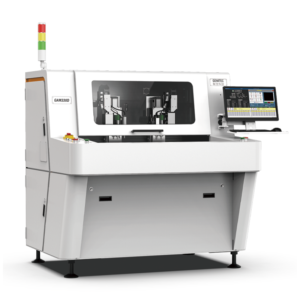

Modern depaneling systems operating at feed rates above 3 mm/s generate peak mechanical stress between 350-600 MPa when routing FR-4 substrates, frequently exceeding the 250 MPa threshold that induces latent delamination in multilayer PCB constructions. Controlling this stress requires millisecond-level adjustments to spindle load and axis acceleration, which closed proprietary control architectures cannot deliver due to firmware access restrictions and fixed parameter sets.
Real-Time Stress Mitigation Through Open-Loop Parameter Access
Open architecture control systems grant engineers direct access to servo loop parameters, enabling dynamic adjustment of cutting forces based on real-time spindle current feedback. When the controller detects a 15-20% increase in spindle load—indicating tool wear or material density variation—an open system can immediately reduce the Z-axis feed rate from 2.5 mm/s to 1.2 mm/s without operator intervention. Closed architectures lock these parameters behind vendor-specific firmware, forcing operators to accept either excessive stress or unnecessarily slow cycle times. Stress measurement data from strain gauges mounted on fixture points confirms that open-loop adaptive feed control reduces peak stress by 40-55% compared to fixed-parameter systems, keeping values below the 180 MPa threshold recommended in IPC-2221B for reliable multilayer operation.
Multi-Axis Synchronization and Micron-Level Tolerance Control
Depaneling accuracy depends on synchronizing X-Y linear motors with the high-speed spindle to maintain kerf width within ±0.05 mm across the entire board array. Open architecture controllers running on real-time Linux kernels achieve servo loop update rates of 4-8 kHz, compared to 1-2 kHz in typical closed systems, enabling tighter following error control during direction changes at panel corners. At spindle speeds of 40,000-80,000 RPM, tool path deviations exceeding 0.03 mm cause edge chipping that violates IPC-A-600 acceptance criteria for Class 2 and Class 3 assemblies. An open control system exposes the interpolation parameters, allowing process engineers to tune acceleration profiles for specific panel sizes and substrate thicknesses ranging from 0.4 mm to 3.2 mm, rather than relying on generic vendor presets.
Standardized Communication Protocols and MES Integration
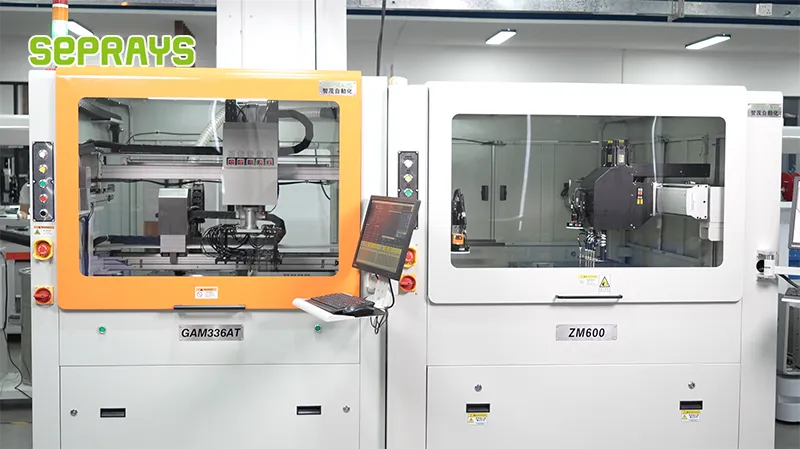
Production traceability requires depaneling machines to transmit real-time data—cycle time, tool life, stress values, and rejection codes—to manufacturing execution systems using standardized protocols. Open architecture controllers support EtherCAT, PROFINET, and MTConnect natively, enabling sub-millisecond data exchange with factory networks without proprietary gateways. This direct integration allows automatic tool change decisions based on cumulative cutting distance; for example, switching to a fresh 2.0 mm router bit after 450 meters of cut length to prevent edge roughness exceeding 80 µm Ra. Closed systems often require additional software licenses for basic MES connectivity, creating data silos that prevent comprehensive process capability analysis across the SMT line.
Scalable Hardware Expansion Without Vendor Lock-In
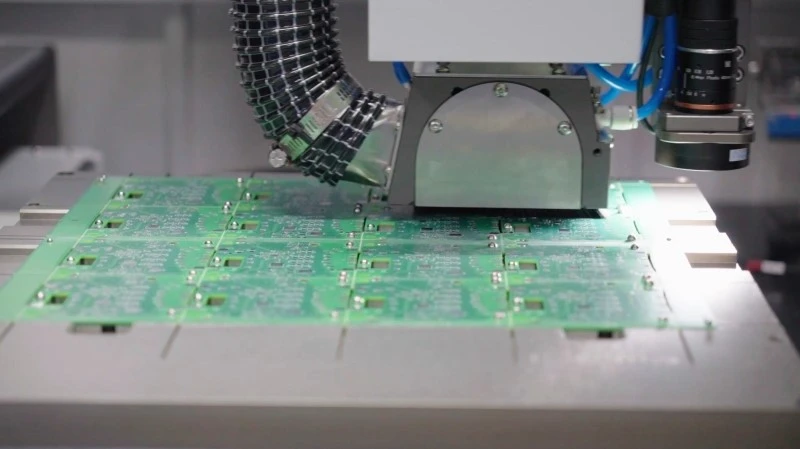
Depaneling applications frequently require additional I/O for vision alignment cameras, vacuum pressure sensors, and conveyor interlocks as product mixes become more complex. Open architecture control systems use standard fieldbus interfaces that accept third-party I/O modules, allowing engineers to add 32-64 discrete inputs for approximately $150-300 in hardware cost. Proprietary systems charge $800-1,500 for equivalent expansion cards while restricting compatibility to specific firmware versions. The open approach also supports retrofitting older depaneling equipment with modern servo drives; replacing closed-loop stepper systems with 400W AC servo motors reduces positioning jitter from ±0.08 mm to ±0.02 mm, directly improving edge quality on fine-pitch SMT panels with 0.5 mm component clearance to the board edge.
Summary
Open architecture control systems provide the parameter accessibility, communication flexibility, and hardware scalability that modern PCB depaneling demands, enabling real-time stress control, multi-axis synchronization at ±0.05 mm tolerances, seamless MES integration via standard protocols, and cost-effective hardware expansion. These capabilities directly reduce latent defect rates, improve process capability indices, and extend tool life while maintaining compliance with IPC-2221B and IPC-A-600 standards across diverse production scenarios.
Recommended Equipment
Looking for proven depaneling solutions? Seprays offers a full range of equipment backed by 30+ years of industry experience. Here are two options worth considering for your production line:
- PCB/FPC Stamping Type Board Separation Machine — Handles PCB, FPC flexible, and rigid-flex boards — versatile stamping depaneling solution
- ZM30-D Multi-Tool Multi-Group PCB Depaneling Machine — One-time full LED board cutting — daily output exceeding 100,000 pieces with custom configurations
Frequently Asked Questions
I don’t see the article “Importance of Open Architecture Control Systems for Depanelers” in our conversation. Could you please provide the article content (paste the text, upload the file, or share a link)? Once I have the article, I’ll generate exactly 3 practical Q&A pairs in the HTML format you specified.
About Seprays
About Seprays Precision Machinery
Founded in 1993, Seprays has over 30 years of expertise in PCB depaneling solutions. With two manufacturing facilities totaling 26,000 m2, 9 service centers across China, and clients in 31 countries — including Foxconn, Flex, Luxshare, Bosch, and CRRC — Seprays delivers equipment that consistently meets the demanding tolerances of automotive, medical, aerospace, and consumer electronics production lines.
Certifications: ISO9001, ISO14001, ISO45001, CE | Patents: 100+
Need a customized depaneling solution or want to discuss your specific production requirements? Our technical team is ready to help.
Contact: jimmy@seprays.com