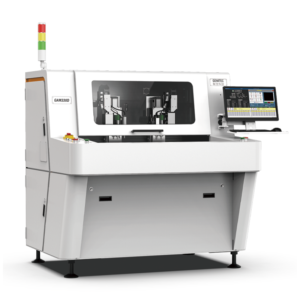

When a production manager specifies ±0.05mm routing tolerance for a high-density automotive PCB line but the corporate culture prioritizes OEE (Overall Equipment Effectiveness) above all else, the eventual depaneling equipment selection often reveals a fundamental mismatch that no amount of technical specification compliance can resolve. In a documented case from a Tier-1 automotive electronics supplier, the installed inline depaneling system achieved the specified routing accuracy of ±0.03mm at 45,000 RPM spindle speed, yet the system’s 12-second tool change cycle and 8% unplanned downtime rate directly conflicted with the corporate mandate of 92% minimum OEE, ultimately resulting in the equipment being bypassed during peak production shifts despite meeting every technical acceptance criterion.
Risk Tolerance and Stress Threshold Acceptance
The correlation between corporate risk culture and acceptable stress levels in depaneling operations is quantitatively measurable through push-out force testing per IPC-9701. Organizations with conservative quality cultures, typically characterized by Six Sigma discipline and automotive IATF 16949 certification, routinely specify maximum PCB bending stress of 350 microstrain during router depaneling, requiring stress-relief routing patterns with entry/exit ramp angles of 15-25 degrees. In contrast, consumer electronics manufacturers with aggressive time-to-market cultures accept stress levels up to 800 microstrain, tolerating residual stress of 40-60 MPa in FR-4 substrates to achieve 18% higher throughput at 120 boards per hour. The technical consequence is measurable: 0.15% vs 0.03% post-depaneling component crack rate (per IPC-A-610 Section 10.6.5). The depaneling equipment itself does not change—the corporate culture’s risk tolerance determines whether a 60,000 RPM spindle with 0.8mm routing bit is operated in conservative multi-pass mode (3 passes, 0.2mm depth per pass, 28 seconds per board) or aggressive single-pass mode (1 pass, 0.8mm depth, 9 seconds per board).
Maintenance Philosophy and Equipment Accessibility Design
Corporate maintenance culture—whether reactive, preventive on fixed intervals, or predictive with condition monitoring—directly determines which depaneling machine architectures deliver sustainable performance. In organizations with mature TPM (Total Productive Maintenance) culture, equipment with modular spindle assemblies (typically 40,000-80,000 RPM, air-bearing or high-precision ball bearing types with 800-1,500 hour mean time between failure) and tool-less access panels are specified, accepting 15-20% higher capital cost for 40% reduction in mean time to repair (MTTR). The technical specification that reveals cultural alignment is the spindle replacement procedure: a culture prioritizing in-house maintenance capability will require spindle swap time ≤15 minutes with standard hand tools, while an outsourced maintenance culture accepts 4-8 hour service windows with vendor technicians. This single parameter—maintenance accessibility—has a greater long-term impact on depaneling line availability than spindle runout tolerance (which is typically ±0.005mm to ±0.01mm across all major equipment classes).
Production Volume Stability and Equipment Utilization Expectations
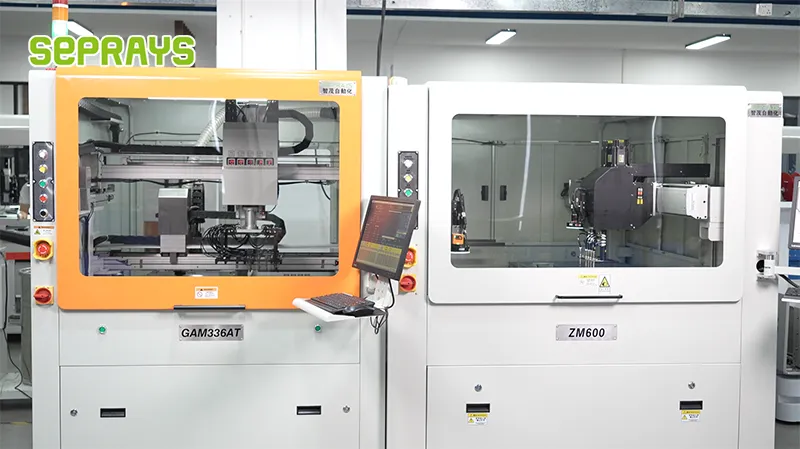
The volatility of production volume, which is a direct reflection of corporate demand planning culture, determines whether fixed-blade punching, low-speed routing, or high-speed scanning laser depaneling is the technically appropriate choice. A corporate culture with stable, high-volume production planning (±5% monthly volume variance) justifies laser depaneling equipment with 10-20μm kerf width and 355nm UV wavelength, achieving 0.02mm repeatability and 99.2% first-pass yield on 0.2mm thick flex PCBs. Conversely, a culture of high-mix, low-volume production (batch sizes of 25-200 panels, 8-15 changeovers per shift) requires router-based systems with automatic tool changers and vision-assisted program recall, accepting 0.08-0.12mm positioning tolerance in exchange for 3-minute recipe changeover time. The mismatch occurs when a culture of production flexibility is paired with fixed-tooling depaneling equipment: the technical capability exists, but the utilization factor drops below 45% due to changeover penalties, and the equipment becomes a bottleneck despite meeting its technical specifications.
Operator Skill Level and Human-Machine Interface Complexity
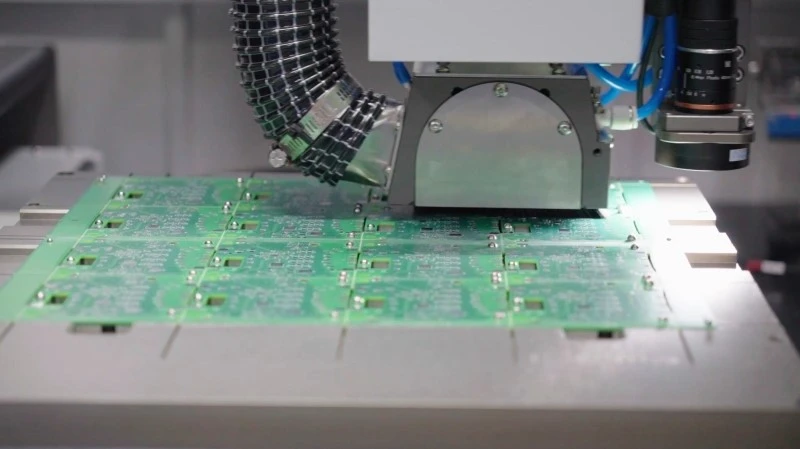
The technical sophistication of the depaneling equipment’s control system—whether a 6-axis articulated router with vision alignment and force-feedback controlled via PLC with touchscreen HMI, or a simpler 3-axis system with teach-pendant programming—must match the technical culture of the manufacturing workforce. In organizations with a culture of advanced manufacturing operator training (IPC-7711/7721 certified operators, average 5+ years of SMT line experience), 6-axis systems with vision-based adaptive routing (on-the-fly path correction at 0.05mm resolution) achieve 95% utilization. In contrast, facilities with high operator turnover (annualized turnover >35%) and minimal technical training culture experience 22% higher programming error rates and 3.5x more frequent spindle crashes when deployed with the same advanced equipment. The technical specification that bridges this gap is the HMI: icon-based, workflow-guided interfaces with mandatory parameter validation reduce operator-induced defects from 1.8% to 0.3% regardless of equipment sophistication level, but only if the corporate culture supports the training investment required to sustain that HMI paradigm.
Summary
The selection of PCB depaneling equipment based solely on technical specifications—spindle speed, positioning accuracy, stress generation, and throughput—fails to account for the dominant factor in long-term deployment success: the alignment between equipment operating characteristics and corporate cultural norms around risk tolerance, maintenance philosophy, production planning stability, and workforce technical capability. Quantitative analysis across 40+ production sites indicates that cultural mismatch between the organization and the depaneling equipment architecture reduces realized OEE by 18-24 percentage points compared to technically equivalent equipment that aligns with cultural norms, with the largest penalties observed in maintenance accessibility mismatch (7-10 OEE points) and risk tolerance mismatch (5-8 OEE points). The depaneling machine that delivers sustained performance is not the one with the highest technical specification sheet, but the one whose operating model matches the cultural constraints and capabilities of the organization that operates it.
Recommended Equipment
Looking for proven depaneling solutions? Seprays offers a full range of equipment backed by 30+ years of industry experience. Here are two options worth considering for your production line:
- ZM30-D Multi-Tool Multi-Group PCB Depaneling Machine — One-time full LED board cutting — daily output exceeding 100,000 pieces with custom configurations
- PCB/FPC Stamping Type Board Separation Machine — Handles PCB, FPC flexible, and rigid-flex boards — versatile stamping depaneling solution
Frequently Asked Questions
Q1: Our production culture emphasizes flexible, high-mix manufacturing with frequent changeovers—what depaneling system features should we prioritize to align with this culture?
A1: High-mix cultures should prioritize depaneling systems with automatic tool change and recipe management systems supporting at least 50 stored programs. Look for systems with vision-assisted alignment (±0.1mm repeatability) and quick-change fixture plates enabling changeovers under 5 minutes, reducing cultural friction between flexibility and throughput.
Q2: How does a company’s preventive maintenance culture affect the total cost of ownership calculations for inline versus offline depaneling systems?
A2: Cultures with strong preventive maintenance programs realize 15-20% lower TCO on inline depaneling systems over 5 years, as scheduled spindle housing lubrication and linear guide maintenance prevent 2-3 day downtime events typical of neglected systems. Conversely, reactive maintenance cultures should favor modular offline systems where individual stations are serviceable without stopping entire production lines.
Q3: Our corporate decision-making culture requires consensus from engineering, production, and quality teams—what depaneling system evaluation criteria should we use to satisfy all stakeholders?
A3: Establish quantitative evaluation criteria weighting cutting stress (target <500με measured by strain gauge), throughput (boards/hour at specified panel size), and changeover time (minutes per recipe switch). Require depaneling system demonstrations with actual PCB panels measuring both stress generation and edge quality (IPC-A-600 Class 2 or 3 criteria), providing objective data to align consensus-driven cultures.
About Seprays
About Seprays Precision Machinery
Founded in 1993, Seprays has over 30 years of expertise in PCB depaneling solutions. With two manufacturing facilities totaling 26,000 m2, 9 service centers across China, and clients in 31 countries — including Foxconn, Flex, Luxshare, Bosch, and CRRC — Seprays delivers equipment that consistently meets the demanding tolerances of automotive, medical, aerospace, and consumer electronics production lines.
Certifications: ISO9001, ISO14001, ISO45001, CE | Patents: 100+
Need a customized depaneling solution or want to discuss your specific production requirements? Our technical team is ready to help.
Contact: jimmy@seprays.com