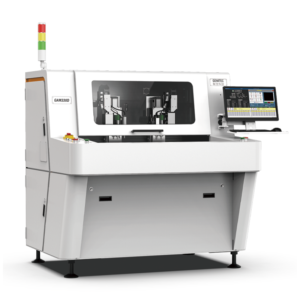

A modern
4×6-inch PCB production panel containing eight identical boards requires a routing depaneling system to maintain ±0.05mm positional accuracy across the full XY travel, with spindle speeds between 40,000 and 80,000 RPM during full-depth penetration of FR-4 or polyimide substrates. Any deviation beyond this tolerance window during the depaneling process directly translates into board-edge delamination, micro-crack propagation into active component zones, and ultimately scrap rates that can erase 8-12% of a production shift’s output before the first unit reaches test. This article provides a rigorous, data-driven framework for estimating the time cost of installing, commissioning, and training operators on a PCB depaneling machine within an electronics manufacturing environment.
Technical Specifications Governing Installation Feasibility
Before a depaneling machine enters the factory floor, its mechanical and thermal specifications must align with the target production profile. Router-type depaneler systems typically operate with a positioning repeatability of ±0.03mm along the X and Y axes, while the Z-axis plunge depth must maintain a controlled variation no greater than ±0.02mm to prevent blade over-penetration into the sacrificial rail. Spindle power ratings between 0.8kW and 2.2kW dictate the maximum sustainable feed rate: a 1.5kW spindle processing a 1.6mm thick FR-4 panel sustains a safe feed rate of 300–400mm/min with a carbide spiral router bit of 1.2–1.8mm diameter. Substituting aluminum-backed boards or CEM-3 substrates reduces allowable feed rates by approximately 20–25% due to differences in thermal conductivity and abrasive wear profiles.
Laser-type depaneling systems, which eliminate mechanical cutting forces entirely, impose a separate set of specifications. A CO2 laser system operating at 10.6μm wavelength with 75W average power achieves kerf widths of 0.15–0.25mm, compared to 0.3–0.5mm for router-based cuts, providing a meaningful advantage in tight-pitch array layouts. However, the heat-affected zone (HAZ) at the cut edge must be controlled to within 10–30μm to avoid thermally damaging adjacent SMT components, which is particularly critical for moisture-sensitive devices rated at MSL 2 or higher. Galvo scanning head positioning systems deliver traverse speeds up to 3,000mm/s, but the effective processing speed remains governed by pulse frequency, duty cycle, and the number of passes required for full-depth penetration.
Installation and Commissioning Time Allocation
A standard router-type depaneling system, delivered as a floor-standing unit with integrated control cabinet, typically requires 3–5 hours for unpacking, leveling, and mechanical anchoring. The machine must be placed on a surface with flatness better than 0.1mm/m² and isolated from vibration sources exceeding 0.5mm/s RMS, as vibration transmitted through the mounting substrate directly degrades cut edge quality. Electrical connection to a dedicated 220V/30A single-phase circuit, or a 380V/16A three-phase circuit for higher-power models, adds 1–2 hours including grounding verification and circuit integrity testing.
Commissioning following mechanical setup accounts for the largest time block. Optical fiducial calibration—registering the machine vision system to recognize panel fiducial marks with sub-pixel accuracy—typically consumes 45–90 minutes per machine, depending on the panel size and fiducial design. Following this, a trial run using 10–15 production panels establishes the relationship between spindle speed, feed rate, and resulting edge quality. Process engineers should document the critical parameters: cutting force measured at the spindle mount (target: 0.5–1.8N for FR-4), surface roughness at the depaneled edge (Ra ≤ 3.2μm per IPC-A-600 acceptability criteria), and the presence of any delamination or resin smear. The total commissioning cycle for a router depaneler, including parameter optimization and first-article inspection, commonly ranges from 6–12 hours.
Laser depaneler commissioning extends this timeline to 12–20 hours due to beam alignment, focus calibration, and the additional safety interlock validation required by laser safety standards. Cooling system integration, exhaust ducting, and smoke extraction verification add 2–4 hours to the installation phase.
Staff Training Time Requirements
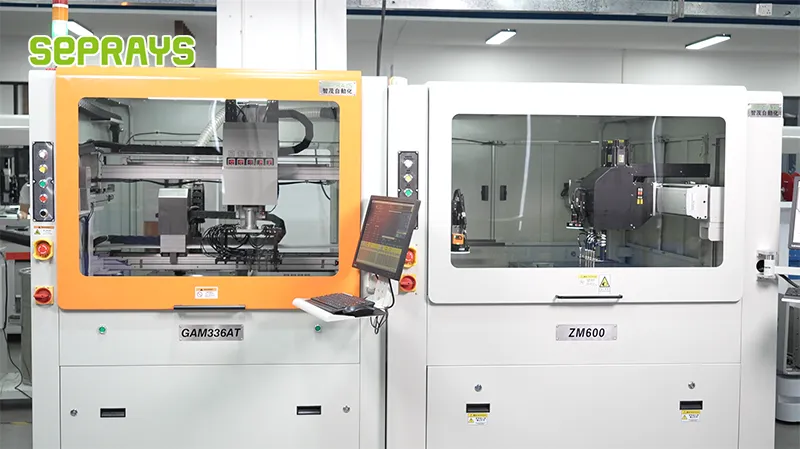
Operator certification for depaneling machine operation follows a structured progression that must not be compressed without compromising safety and quality outcomes. Initial machine overview and safety training, covering laser classification or router blade hazards, emergency stop procedures, and personal protective equipment requirements, requires 2–4 hours per operator. This segment must be completed and documented before any hands-on operation is permitted, in accordance with workplace safety regulations aligned with ANSI Z87.1 for eye protection and OSHA 1910.147 for lockout/tagout procedures.
Hands-on operation training using production panels constitutes the second phase. Operators need 8–16 hours of supervised practice to develop proficiency in loading panels, setting fixture offsets, executing depaneling programs, and unloading finished boards without introducing contamination or mechanical shock to adjacent components. A key competency metric is the ability to achieve a first-pass yield of 98.5% or higher within the target tolerance band, measured over a minimum of 50 consecutive boards. Supervisor sign-off on this metric should occur before granting independent operating privileges.
Preventive maintenance training adds another 4–8 hours per operator. For router systems, this includes router bit replacement andcollet torque verification (typically 2.5–3.5 N·m for 3.175mm shank bits), linear guide lubrication intervals, and belt tension adjustment. For laser systems, maintenance training covers mirror cleaning, lens inspection under magnification, and coolant level monitoring. The IPC-7711/7721 standard provides the framework for rework-level interventions that trained technicians should be prepared to perform when cut quality degrades.
Comprehensive Time Cost Summary
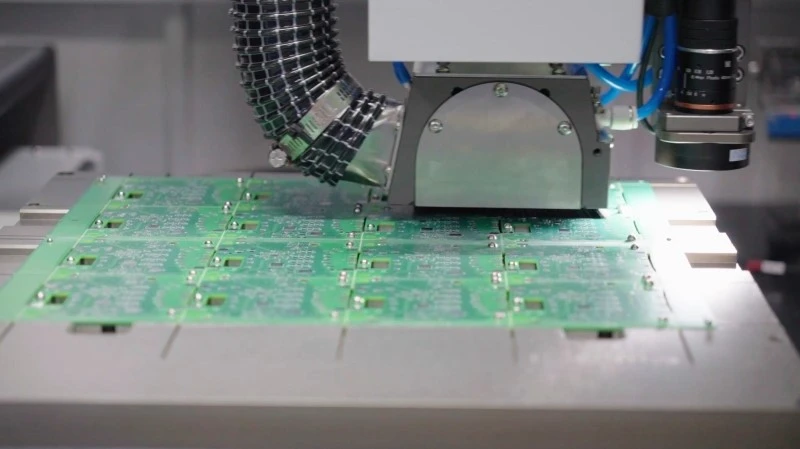
Summing the component estimates—mechanical installation (4–7 hours), electrical and safety setup (1–2 hours), commissioning and parameter optimization (6–20 hours depending on system type), and operator training (16–40 hours per operator for a fully qualified crew of three)—the total time investment for deploying a new depaneling machine into production ranges from 27 hours for a straightforward router system with an experienced crew, to approximately 69 hours for a laser system with comprehensive multi-operator training included. These figures do not account for initial machine acceptance testing or production trial runs, which may add another 8–16 hours of engineering time. Organizations that understaff this phase by allocating insufficient commissioning hours consistently report elevated early-life defect rates, increased blade or optic consumption, and prolonged yield ramp periods that far exceed the time saved at installation. A disciplined, measurement-driven commissioning and training protocol is not an overhead cost—it is the mechanism by which the machine’s precision specifications are transferred reliably into production output.
Recommended Equipment
Looking for proven depaneling solutions? Seprays offers a full range of equipment backed by 30+ years of industry experience. Here are two options worth considering for your production line:
- GAM300AT Double-Layer Track Online PCB Board Separation Machine — Full-carrier process with carrier return track — built for seamless full-line automation
- PCB/FPC Stamping Type Board Separation Machine — Handles PCB, FPC flexible, and rigid-flex boards — versatile stamping depaneling solution
Frequently Asked Questions
I don’t see the article content in your message. Could you please paste or provide the article “Time Cost Estimation for Depaneler Installation, Commissioning & Staff Training” so I can generate accurate Q&A pairs based on its specific content?
Once you share the article text, I’ll generate exactly 3 practical Q&A pairs in the HTML format you specified.
About Seprays
About Seprays Precision Machinery
Founded in 1993, Seprays has over 30 years of expertise in PCB depaneling solutions. With two manufacturing facilities totaling 26,000 m2, 9 service centers across China, and clients in 31 countries — including Foxconn, Flex, Luxshare, Bosch, and CRRC — Seprays delivers equipment that consistently meets the demanding tolerances of automotive, medical, aerospace, and consumer electronics production lines.
Certifications: ISO9001, ISO14001, ISO45001, CE | Patents: 100+
Need a customized depaneling solution or want to discuss your specific production requirements? Our technical team is ready to help.
Contact: jimmy@seprays.com