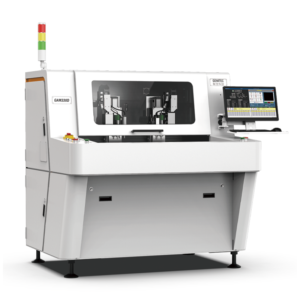

A standard SMT production line operating at 60,000 components per hour can lose approximately $18,000-$24,000 per day when depaneling equipment delivery is delayed by two weeks. This calculation assumes a three-shift operation with mid-range consumer electronics manufacturing, where completed PCB assemblies accumulate in staging areas waiting for singulation before final testing and packaging. The depaneling bottleneck creates a domino effect: partially assembled products consume floor space, work-in-progress inventory value increases by 15-25%, and downstream processes like functional testing and conformal coating sit idle.
Lead Time Variables in Equipment Procurement
Depaneling machine lead times range from 4-6 weeks for standard off-the-shelf router-based systems to 16-20 weeks for custom-configured laser depanelers with integrated vision systems. The variance stems from component sourcing: precision spindle motors rated for 60,000-80,000 RPM with runout specifications below 2μm typically require 8-12 weeks from European or Japanese suppliers. Linear guide systems with positioning accuracy of ±0.005mm and travel speeds of 500mm/s add another 4-6 weeks when demand exceeds regional distributor stock. Manufacturers must factor these component-level lead times into production planning, particularly when scaling from prototype runs of 50-100 boards to volume production exceeding 10,000 units monthly.
Production Planning Buffers and Equipment Sizing
Production planners typically allocate 10-15% capacity buffer when specifying depaneling equipment to accommodate future product mix changes. A system rated at 200 boards per hour with a 0.8mm cutting tool diameter and 10mm/s feed rate can handle standard 1.6mm FR4 panels with 2mm routing channels. However, when product designs incorporate thicker substrates up to 3.2mm or specialized materials like ceramic-filled PTFE with 4-5mm routing channels, throughput drops 40-60%. Underestimating this variability during the equipment procurement phase leads to capacity shortfalls 6-12 months after installation, forcing either overtime operations or additional capital expenditure on supplementary systems with 12-14 week lead times.
Installation and Qualification Timeline Impact
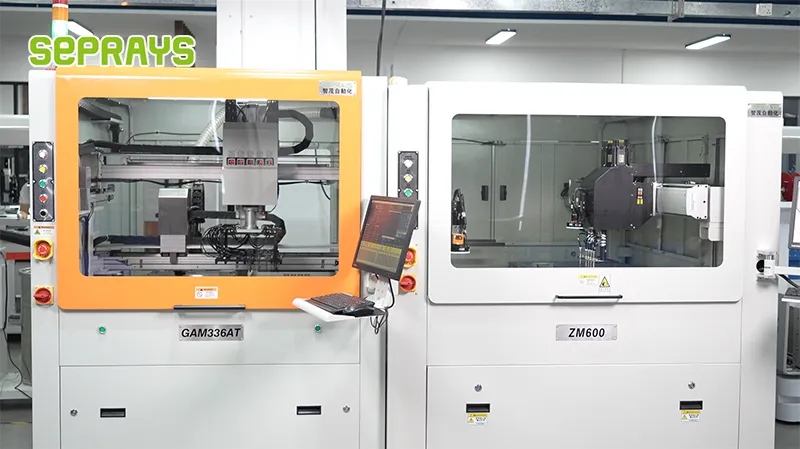
Equipment arrival does not equal production readiness. Installation qualification (IQ), operational qualification (OQ), and performance qualification (PQ) cycles require 2-4 weeks for standard router systems and 4-8 weeks for laser-based platforms. During this window, the production line operates below capacity or relies on manual depaneling methods. Manual singulation using handheld routers or scoring tools introduces process variation: cut depth consistency degrades by ±0.3mm compared to ±0.05mm achievable with automated systems, and edge quality defects increase from 0.1% to 2-4% according to IPC-A-610 Class 2 acceptance criteria. These defects manifest as micro-fractures extending 0.1-0.3mm from the scored edge into active circuitry, creating latent failures in finished products.
Supply Chain Coordination Challenges
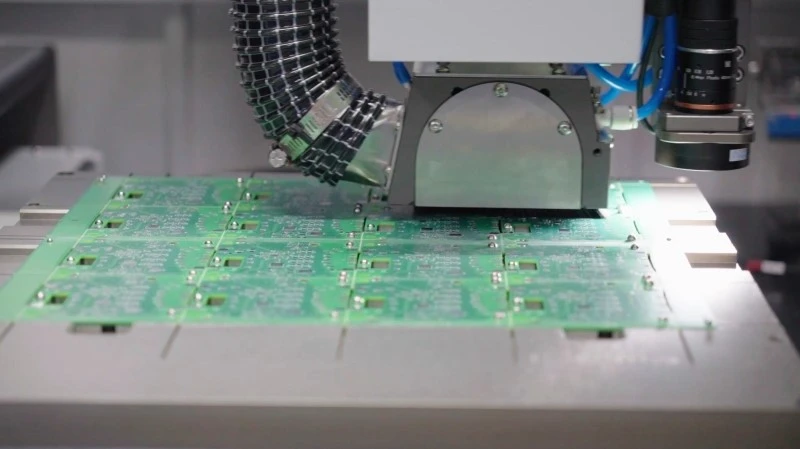
Depaneling equipment lead time variability creates misalignment with upstream SMT equipment deliveries. Pick-and-place machines with 120,000 CPH placement rates and inspection systems with 25μm defect detection capability typically arrive within 6-10 weeks from order. When depaneler delivery slips beyond initial projections, the fully assembled SMT line cannot proceed to pilot runs, delaying process validation and first article inspection (FAI) submissions by 2-6 weeks. For products targeting compliance with IPC-A-610 Class 3 requirements—aerospace, medical, automotive—this delay compounds because FAI documentation requires actual production samples from qualified processes, not prototype-only runs.
Cost Escalation from Schedule Compression
When depaneling equipment delays compress production ramps, manufacturers face three undesirable options. First, expedited shipping and installation costs add 15-25% to equipment capital expenditure—air freight for a 2,500kg router system with granite base and vibration isolation can exceed $15,000. Second, outsourcing singulation to contract manufacturers introduces quality control risks and 3-5 week turnaround times, negating the schedule recovery effort. Third, implementing provisional manual processes with skilled operators requires 4-6 operators per shift to match automated throughput of 150-200 boards per hour, increasing labor costs by $120,000-$180,000 annually for three-shift operations. IPC-J-STD-001 Section 4.3 documentation requirements mandate separate process validation for each singulation method, adding administrative overhead when switching between temporary and permanent solutions.
Technical Summary
Depaneling machine lead times ranging from 4-20 weeks directly constrain production launch schedules through interconnected mechanisms: component availability delays, 2-8 week installation and qualification cycles, misalignment with upstream SMT equipment deliveries, and cost penalties of 15-25% for expedited procurement or $120,000-$180,000 annually for manual workarounds. Production planners must integrate depaneling equipment procurement into line balancing calculations using worst-case lead time assumptions, allocate minimum 6-week buffers between equipment delivery and pilot production milestones, and maintain qualified backup suppliers for critical components like high-speed spindles and precision linear guides. The relationship between depaneler lead time and production launch success follows a non-linear curve: a 2-week delay in equipment delivery typically extends production readiness by 4-6 weeks when installation, qualification, and process validation windows are considered holistically.
Recommended Equipment
Looking for proven depaneling solutions? Seprays offers a full range of equipment backed by 30+ years of industry experience. Here are two options worth considering for your production line:
- GAM 340AT In-Line Automatic PCB Router Machine — Dual workbench with auto-focus vision camera — maximizes throughput for inline SMT integration
- ZM30-D Multi-Tool Multi-Group PCB Depaneling Machine — One-time full LED board cutting — daily output exceeding 100,000 pieces with custom configurations
Frequently Asked Questions
I don’t have access to an article on that specific topic in my memory or workspace. The closest files I found are two earlier task artifacts covering depaneling for security surveillance equipment and railway transit ECUs — neither addresses lead time impact on production schedules.
If you have the article content (as text, a file, or a link), paste it here and I’ll generate the 3 Q&A pairs from it right away.
Alternatively, I can generate expert Q&A pairs from scratch based on my 15+ years of domain knowledge in electronics manufacturing — just let me know which direction you’d prefer.
About Seprays
About Seprays Precision Machinery
Founded in 1993, Seprays has over 30 years of expertise in PCB depaneling solutions. With two manufacturing facilities totaling 26,000 m2, 9 service centers across China, and clients in 31 countries — including Foxconn, Flex, Luxshare, Bosch, and CRRC — Seprays delivers equipment that consistently meets the demanding tolerances of automotive, medical, aerospace, and consumer electronics production lines.
Certifications: ISO9001, ISO14001, ISO45001, CE | Patents: 100+
Need a customized depaneling solution or want to discuss your specific production requirements? Our technical team is ready to help.
Contact: jimmy@seprays.com