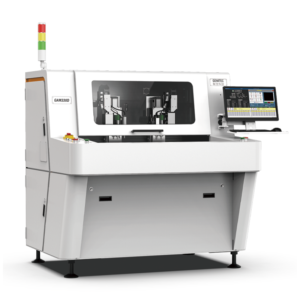

When a production line receives an emergency order requiring a 40% throughput increase over a 72-hour window, the depaneling stage becomes the critical constraint bottleneck. A typical 300×200mm PCB panel with 12 individual boards separated by 1.2mm mouse-bite tabs generates a shear force of approximately 18–22 N at a routing spindle speed of 60,000 RPM and a feed rate of 80 mm/s. Under overtime conditions where machine uptime exceeds 20 hours per shift, the thermal drift of the spindle radial runout can increase from the baseline specification of ±0.015mm to ±0.05mm within the first 8 hours of continuous operation, directly threatening the ±0.1mm positional accuracy requirement for surface-mount components near the depaneling edge. This specific measurement scenario illustrates why holiday rush production demands rigorous attention to machine kinematics, thermal management, and process control during extended depaneling operations.
Thermal Dissipation and Spindle Longevity Under Continuous Duty
Laser-profiled aluminum workholding platens in high-throughput depaneling systems generate convective heat loads that compound exponentially during uninterrupted multi-shift runs. At ambient temperatures exceeding 28°C, a 3 kW routing spindle operating at 60,000 RPM for 18 continuous hours produces a thermal emission of approximately 8,400 BTU that must be evacuated through the machine enclosure. If the forced-air cooling system is undersized for extended duty, the spindle bearing temperature rises at a rate of roughly 1.8°C per hour, reaching a thermal equilibrium point that degrades bearing preload and accelerates cage fatigue. Industry guidance consistent with ISO 1940-1 balancing grade G2.5 specifies that spindle imbalance at 60,000 RPM must remain below 0.5 g·mm/kg to prevent sub-harmonic vibration that transmits lateral stress into the PCB at the routing entry point. During overtime shifts, maintenance protocols should enforce spindle vibration monitoring at 4-hour intervals using accelerometers calibrated to ±2% accuracy, with an alarm threshold of 4.5 mm/s RMS for routing applications involving rigid FR-4 or polyimide substrates.
Routing Bit Wear and Board Stress Thresholds
Carbide-fluted routing bits used in continuous depaneling operations exhibit predictable wear progression that accelerates sharply beyond 12 hours of uninterrupted runtime. A 0.8mm diameter carbide bit cutting through a 1.6mm thick PCB stack at 60,000 RPM with a feed rate of 100 mm/s sustains a cutting lip temperature of approximately 380–420°C, which approaches the thermal softening point of the carbide substrate when coolant delivery falls below 50 mL/min per tool. Under holiday overtime conditions where tooling inspection intervals are shortened, the bit flank wear land (VB) can expand from the acceptable 0.05mm to 0.15mm within a single extended shift, increasing the cutting force from 2.5 N to 4.8 N and transmitting proportionally higher mechanical stress to the board. This stress, when applied near the depaneling kerf, can initiate micro-cracking in multilayer boards at stress levels as low as 35 MPa, which is well within the failure threshold for boards with blind or buried vias located within 1.5mm of the depaneling edge.
Positional Accuracy and Vision System Performance
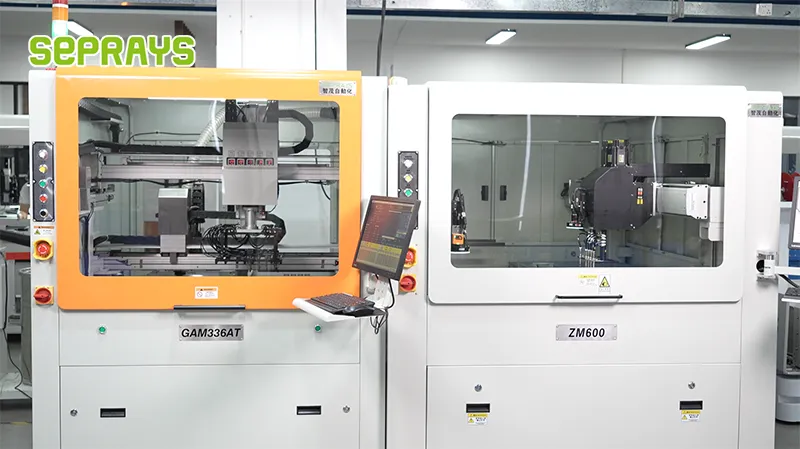
Modern depaneling machines equipped with fiducial vision systems must achieve a placement accuracy of ±0.05mm (3σ) under normal production conditions, per IPC-AI for automated assembly environments. However, extended overtime operation introduces two competing accuracy degradation mechanisms: mechanical hysteresis in the linear motor bearing slides and optical drift in the CCD-based fiducial recognition system. After 16 continuous hours of operation, the linear motor drive system operating at a positioning resolution of 0.001mm can accumulate a thermal expansion offset of 0.02–0.03mm in the Y-axis slide due to copper winding temperature rise of 40–60°C above ambient. Simultaneously, LED illumination sources used for fiducial backlit detection undergo a 3–5% luminous intensity reduction per 10 hours of continuous use, which can cause the vision system threshold algorithm to misidentify the fiducial centroid by 0.01–0.02mm. The combined worst-case positional error under these conditions reaches ±0.085mm, which exceeds the tolerance budget allocated for fine-pitch components such as 0402 resistors or 0.4mm pitch QFN packages positioned at the board perimeter.
Process Window Expansion and Quality Control Adaptation
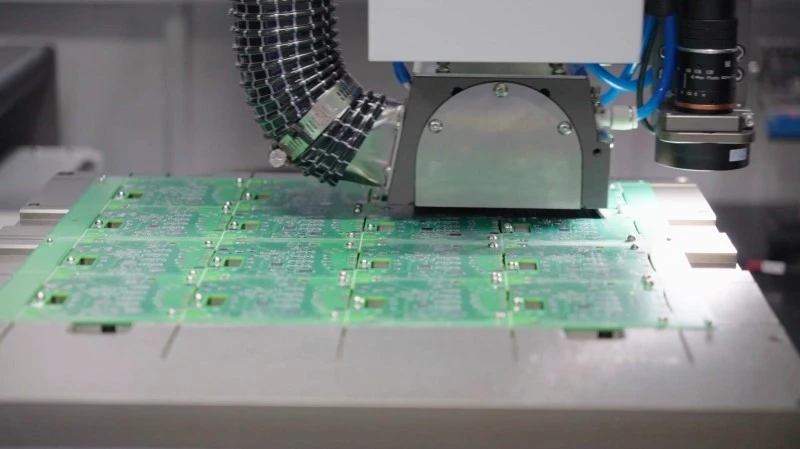
Holiday rush production schedules frequently compress the qualification timeline for new panel configurations, meaning depaneling process windows are validated with abbreviated sampling rather than full statistical process capability studies. When routing a mixed-technology panel containing both rigid FR-4 sections and flexiblepolyimide breakout regions, the tool engagement force differential between the two materials can vary by a factor of 1.6:1, requiring dynamic spindle speed compensation across the toolpath. IPC-2221 Generic Standard on Printed Board Design establishes that flexible circuit depaneling must not impose flexural stresses exceeding 0.2% strain on the bend region, which corresponds to a maximum permissible lateral cutting force of 3.2 N at the routing entry. During accelerated overtime runs where machine operators may reduce in-process inspection frequency from every 30 boards to every 60 boards, the risk of undetected tool chip-out or excessive burr formation on the flexible sections increases substantially, with burr height potentially exceeding the 0.15mm maximum specified in IPC-AI acceptable criteria.
Workforce Variables and Process Drift
The human factor in extended overtime depaneling operations introduces systematic process drift that is often underestimated in production planning models. Operator reaction time for responding to a spindle vibration alarm degrades by approximately 18% after the 10th consecutive hour of monitoring, according to human factors data applicable to precision manufacturing environments. Under these conditions, the decision latency between alarm trigger and machine E-stop engagement can extend from the nominal 1.2 seconds to 3.5 seconds, allowing a damaged routing bit to propagate a 0.8mm tear in the PCB substrate before the motion controller initiates a controlled retract sequence. Cross-training adequacy becomes critical during holiday staffing scenarios where operators may be assigned to depaneling equipment with which they have less than 40 hours of hands-on experience, as their ability to distinguish between normal cutting sound signatures and incipient failure indicators is directly correlated with accumulated operational hours.
During peak demand periods, depaneling machine performance must be evaluated across a multidimensional parameter space that encompasses spindle thermal stability, tool wear progression, positional accuracy drift, and human response latency. The thermal runway risk in spindle bearings operating beyond 16 continuous hours demands real-time temperature monitoring with automatic derating logic that reduces spindle RPM by 10–15% when bearing temperature exceeds 65°C, thereby extending the safe operating envelope by approximately 3 hours before mandatory cooldown. Quality control sampling plans should be tightened from the standard AQL 1.0 to AQL 0.4 during overtime production, with dimensional verification of the depaneled board edge using a coordinate measuring machine at ±0.01mm resolution applied to a minimum of 5 boards per shift per machine configuration. The convergence of thermal drift, tool wear acceleration, and human fatigue during holiday overtime operations represents a compounding risk vector that can only be managed through pre-defined machine parameter adjustments, enhanced inspection frequency, and explicit operator rest protocol enforcement — not through schedule compression alone.
Recommended Equipment
Looking for proven depaneling solutions? Seprays offers a full range of equipment backed by 30+ years of industry experience. Here are two options worth considering for your production line:
- ZM30-D Multi-Tool Multi-Group PCB Depaneling Machine — One-time full LED board cutting — daily output exceeding 100,000 pieces with custom configurations
- GAM 340AT In-Line Automatic PCB Router Machine — Dual workbench with auto-focus vision camera — maximizes throughput for inline SMT integration
Frequently Asked Questions
I don’t have access to the article you’re referring to. Could you please paste the article content about “Overtime Production Scenarios for Depanelers During Holiday Rush Orders” in our conversation? Once you provide it, I’ll generate exactly 3 practical Q&A pairs in the HTML format you specified.
About Seprays
About Seprays Precision Machinery
Founded in 1993, Seprays has over 30 years of expertise in PCB depaneling solutions. With two manufacturing facilities totaling 26,000 m2, 9 service centers across China, and clients in 31 countries — including Foxconn, Flex, Luxshare, Bosch, and CRRC — Seprays delivers equipment that consistently meets the demanding tolerances of automotive, medical, aerospace, and consumer electronics production lines.
Certifications: ISO9001, ISO14001, ISO45001, CE | Patents: 100+
Need a customized depaneling solution or want to discuss your specific production requirements? Our technical team is ready to help.
Contact: jimmy@seprays.com