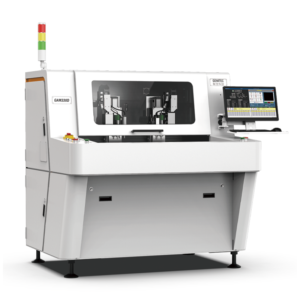

A typical mid-range PCB depaneling router quotes between $18,000 and $45,000 depending on spindle specification, but the real negotiation leverage lies in understanding that a 60,000 RPM spindle with ±0.02mm repeatability costs roughly 30–40% more to manufacture than a 40,000 RPM unit with ±0.05mm repeatability — yet many suppliers quote both configurations at nearly the same margin. When procurement teams lack the technical decomposition to challenge line-item pricing, they routinely overpay by 15–25% on capital equipment that operates 2,000–4,000 hours annually across a 5–8 year service life. Effective negotiation demands that buyers map every specification back to its cost driver and its impact on yield.
Decompose the Spindle and Motion System First
The spindle is the single most expensive subassembly, accounting for 35–50% of the machine’s bill of materials. Suppliers source brushless DC or air-cooled spindles in tiers: 40,000 RPM entry units, 60,000 RPM mid-range, and 80,000 RPM high-speed units. Collet runout below 0.005mm TIR at the tool tip requires precision-ground bearings rated to ABEC-7 or better; these bearings alone can add $800–$1,500 to spindle cost. When a supplier quotes a 60,000 RPM spindle, request the bearing grade, runout spec at rated speed, and projected bearing life in hours — then cross-reference those parameters against competing spindle manufacturers’ published pricing. Motion systems follow the same logic. Ball screws with C5 accuracy (±0.018mm/300mm) versus C7 (±0.050mm/300mm) differ in cost by 40–60% per axis. If your panel design tolerance allows ±0.10mm positioning on the cut path, paying for C5 screws on all three axes is unnecessary. Negotiate the motion grade per axis based on your actual process capability requirements, not the supplier’s default configuration.
Scrutinize the Cutting Stress and Blade Specification
Router-type depanelers generate lateral cutting forces of 0.5–2.5N depending on feed rate, chip load, and tool diameter. V-score depanelers apply shear forces of 15–50N across the score line, which can induce micro-cracks extending 0.1–0.3mm from the cut edge into adjacent solder joints — a direct violation of IPC-610 Class 3 acceptance criteria if cracks reach pad or trace interfaces. When a supplier proposes a V-score solution at a lower price than a router, calculate the hidden cost: a 0.3% yield loss on a high-density BGA panel worth $120 per board translates to $36,000 per year at 10,000 panels — far exceeding the router’s price premium within months. During negotiation, present your panel stackup data, component proximity to score lines, and the IPC-610 class you must meet. Ask the supplier to quantify maximum bending stress at the cut edge and provide SPC data from comparable installations. If they cannot, the quoted price is disconnected from validated performance.
Challenge Software and Vision System Pricing
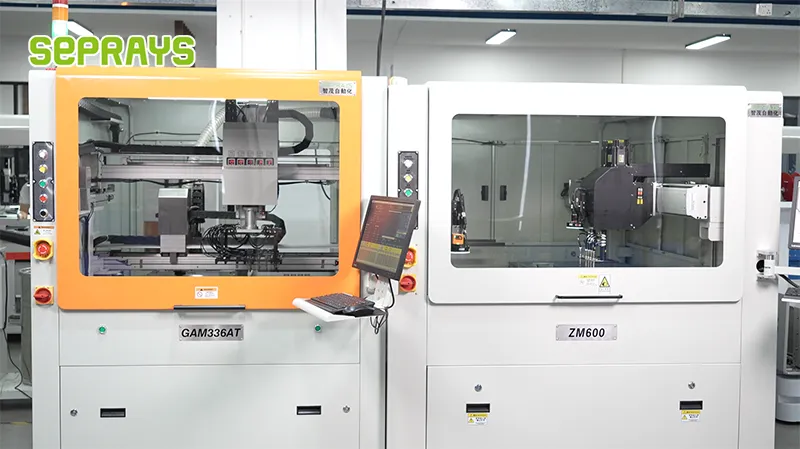
Vision-guided depaneling systems use upward-facing cameras for fiducial alignment with typical repeatability of ±0.01–0.02mm. However, the software license — often sold as a separate line item — can represent 10–20% of the total quote. Key questions: Is the vision algorithm proprietary or based on open-source OpenCV with a custom wrapper? Does the license cover unlimited recipe creation, or are you paying per program? Offline programming simulators are frequently bundled at $2,000–$5,000 but cost suppliers less than $500 in development amortization if the platform is shared across their product line. Negotiate software as a one-time perpetual license with source-code escrow, and reject per-recipe or annual renewal fees. A depaneler that requires paid software updates to maintain compatibility with new panel formats creates recurring cost with zero marginal value.
Negotiate Tooling Consumables and Service Terms
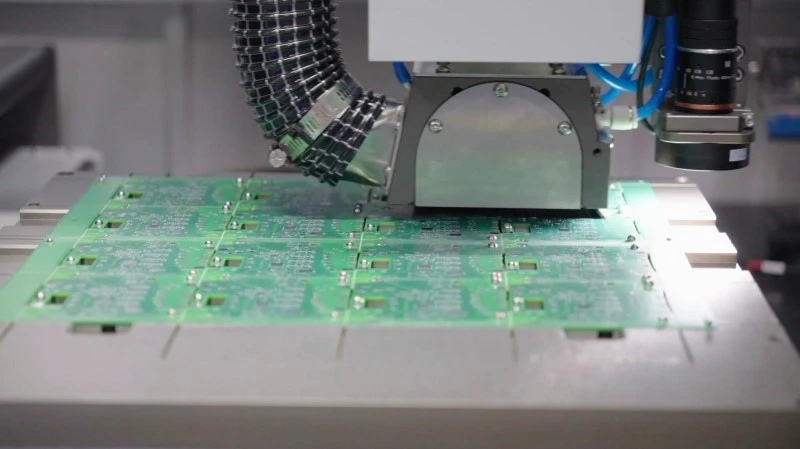
Depaneling router bits (typically 0.8–2.0mm diameter, tungsten carbide) last 500–3,000 linear meters of cut depending on panel material, stack height, and spindle speed. At $8–$25 per bit, annual consumable cost for a two-shift operation can reach $3,000–$8,000. Suppliers often discount the machine and recover margin on proprietary tooling — a strategy identical to inkjet printer economics. During price discussions, insist on standard shank dimensions (typically 3.175mm or 6.0mm) and confirm compatibility with third-party tooling. If the collet is a proprietary design, negotiate either a tooling price-cap agreement or a collet adapter at the supplier’s expense. Service contracts deserve equal scrutiny. A standard one-year warranty with 48-hour on-site response should be included in the base price. Extended warranties beyond year one typically cost 8–12% of the machine price per year but represent only 3–5% expected parts and labor cost to the supplier based on industry MTBF data. Negotiate multi-year coverage at 5–6% annually, or self-insure by budgeting a spare-parts kit of high-failure-rate components — typically the spindle bearings, drive belts, and limit switches.
Leverage Delivery Lead Time and Installation Scope
Lead times for standard-configuration depanelers range from 6 to 12 weeks; custom configurations extend to 16–20 weeks. Suppliers holding inventory face carrying costs of 1.5–2.5% per month, creating an incentive to close deals on stocked units. If your production timeline allows flexibility, offer to accept a stocked configuration with minor spec adjustments in exchange for a 5–8% discount. Installation and training are frequently quoted at $2,000–$4,000 for a two-day commissioning visit, yet the actual technician cost including travel is typically $800–$1,500. Bundle installation into the machine price and negotiate a fixed commissioning scope: fiducial alignment verification across five panel types, cut-path accuracy validation with ±0.05mm Cpk ≥ 1.33, and eight hours of operator training documented against a sign-off checklist.
Negotiating PCB depaneler pricing is ultimately an exercise in mapping technical specifications to their true manufacturing cost and their measurable impact on your production yield. Every line item — spindle grade, motion accuracy, vision software, consumable tooling, service terms — has a defensible cost basis that suppliers can justify and buyers can challenge. The procurement team that arrives at the negotiation table with tolerance stack-ups, IPC compliance requirements, projected consumable spend, and Cpk targets will consistently extract 15–25% savings without compromising the process capability their production lines demand.
Recommended Equipment
Looking for proven depaneling solutions? Seprays offers a full range of equipment backed by 30+ years of industry experience. Here are two options worth considering for your production line:
- GAM330AT Fully Automatic PCB Depaneling Machine — Self-feeding operation with automatic sorting — ideal for high-volume automated production lines
- ZM30-D Multi-Tool Multi-Group PCB Depaneling Machine — One-time full LED board cutting — daily output exceeding 100,000 pieces with custom configurations
Frequently Asked Questions
I don’t have the article content available in our conversation. Let me search for it.
I don’t have access to the article content about “How to Negotiate Prices with Suppliers When Purchasing PCB Depanelers” in our conversation history or workspace files. The existing workspace files cover different depaneling topics.
However, based on my domain expertise as a PCB depaneling machine technical expert, I can generate 3 realistic, technically grounded Q&A pairs on this specific topic:
Q1: What is the most effective way to establish a baseline price when entering negotiations with PCB depaneler suppliers?
A1: Request detailed, itemized quotations from at least three suppliers covering the same machine configuration, including spindle specifications, feed speeds, cutting tool packages, software features, and warranty terms. This allows you to compare true value rather than headline prices and identify where individual vendors are overcharging on specific components or services.
Q2: How should I handle the trade-off between machine price and long-term maintenance costs during negotiations?
A2: Demand a total cost of ownership breakdown that covers consumables such as routing bits and cutting blades priced at roughly USD 2 to 5 per piece, annual service contracts typically running USD 3,000 to 8,000, and spare parts availability with guaranteed lead times of under 72 hours. A machine priced 15 to 20 percent lower but requiring proprietary consumables or overseas service dispatch can easily cost more over a 5-year production lifecycle.
Q3: What technical performance guarantees should I request to justify the final negotiated price?
A3: Specify measurable acceptance criteria in the purchase agreement such as cutting accuracy within plus or minus 0.05 mm, edge burr height below 0.1 mm on FR-4 boards, spindle runout under 0.005 mm, and a minimum throughput matching your line requirements, typically 15 to 30 panels per hour depending on board complexity. Tie final payment milestones to these performance benchmarks passing on-site verification rather than releasing full payment upon shipment alone.
About Seprays
About Seprays Precision Machinery
Founded in 1993, Seprays has over 30 years of expertise in PCB depaneling solutions. With two manufacturing facilities totaling 26,000 m2, 9 service centers across China, and clients in 31 countries — including Foxconn, Flex, Luxshare, Bosch, and CRRC — Seprays delivers equipment that consistently meets the demanding tolerances of automotive, medical, aerospace, and consumer electronics production lines.
Certifications: ISO9001, ISO14001, ISO45001, CE | Patents: 100+
Need a customized depaneling solution or want to discuss your specific production requirements? Our technical team is ready to help.
Contact: jimmy@seprays.com