
High-volume PCB and PCBA production is not only about cutting faster. The real challenge is maintaining stable output over long periods while reducing waiting time, downtime, and unnecessary manual intervention.
If these four areas match your actual production rhythm, the machine is more likely to deliver reliable long-term output.
1. Start With These 4 Factors
For high-volume production, machine selection can be simplified into four key areas:
| Key Factor | What to Evaluate |
|---|---|
| Cycle Time | Is the complete production cycle fast enough? |
| Automation | Can the machine reduce manual handling and waiting time? |
| Stability | Can it run continuously with fewer interruptions? |
| Consistency | Can it maintain stable depaneling quality over long production runs? |
These factors are usually more meaningful than comparing only spindle speed or a single specification.
The goal is not to choose the machine with the highest specifications, but the one that can maintain stable output over continuous production.
2. Look at the Complete Cycle Time, Not Just Routing Speed
The actual production capacity of a PCB router is not determined by routing time alone.
A complete production cycle usually includes:
Loading → Positioning → Vision Alignment → Routing → Unloading
If one of these steps is significantly slower than the others, it can become the bottleneck of the entire process.
A machine may have a fast spindle and short routing time, but if loading, positioning, or unloading takes too long, the overall throughput may still be limited.
For high-volume production, the better question is not:
“How fast can the machine cut one PCB?”
It is:
“How fast and consistently can the machine complete one full production cycle?”
Fast routing does not automatically mean high overall throughput. The complete cycle determines actual production capacity.
3. Automation Should Reduce Waiting Time, Not Just Add More Functions
In high-volume production, repeated manual operations can gradually become a major source of lost production time.
The value of automation is mainly to reduce these repeated waiting periods and keep the process moving continuously.
| Automation Function | Main Value in High-Volume Production |
|---|---|
| Inline Integration | Reduces manual transport and connects upstream and downstream processes |
| Dual-table | Allows loading or unloading on one table while the other table is routing |
| Automatic Loading / Unloading | Reduces operator waiting and helps stabilize production rhythm |
| Barcode / Program Recall | Reduces manual program selection and setup errors |
| MES Connection | Supports production data and machine-status management |
Not every factory needs every automation function. The right configuration depends on which part of the production process is creating the most waiting time.
SEPRAYS GAM336AT In-Line Automatic PCB Router Machine
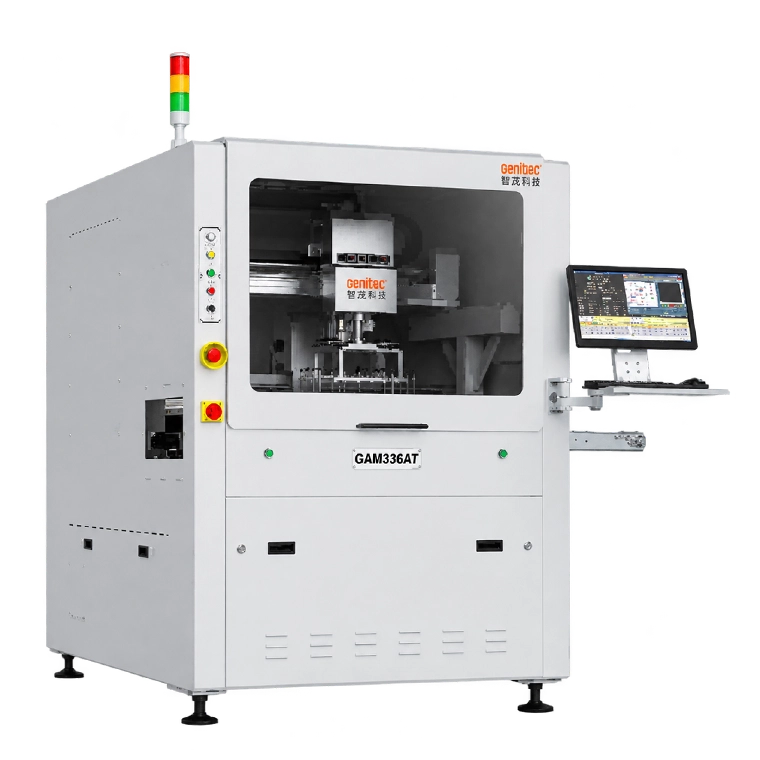
For production lines that require automatic PCB transfer and continuous depaneling, the GAM336AT is designed for inline production.
Its track delivery, dual-table structure, CCD vision positioning, and automatic tool change make it suitable for applications where reducing manual handling and keeping the routing process connected with the rest of the production line are important.
SEPRAYS ZM400ATP PCB Depaneling + Tray Handling Combined Machine
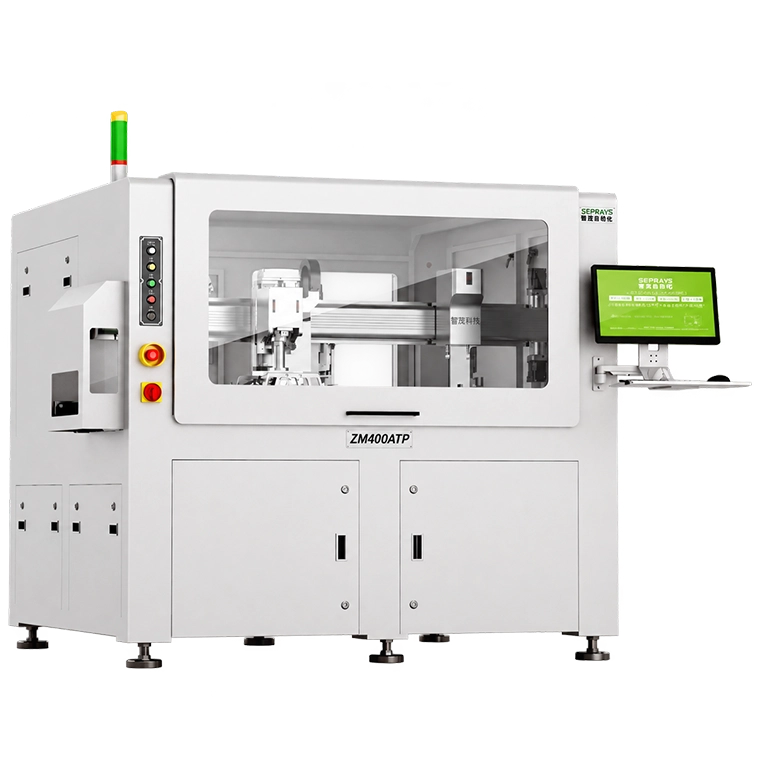
If the production process also requires automatic tray handling after depaneling, the ZM400ATP combines PCB routing and tray placement in one system.
This type of integrated solution can reduce manual transfer between depaneling and tray loading, helping simplify the downstream process and improve production continuity.
The purpose of automation is not to add more functions. It is to reduce waiting, handling, and repeated operator intervention.
4. Continuous Running Stability Matters More in High-Volume Production
A machine that performs well during a short test is not necessarily suitable for continuous high-volume production.
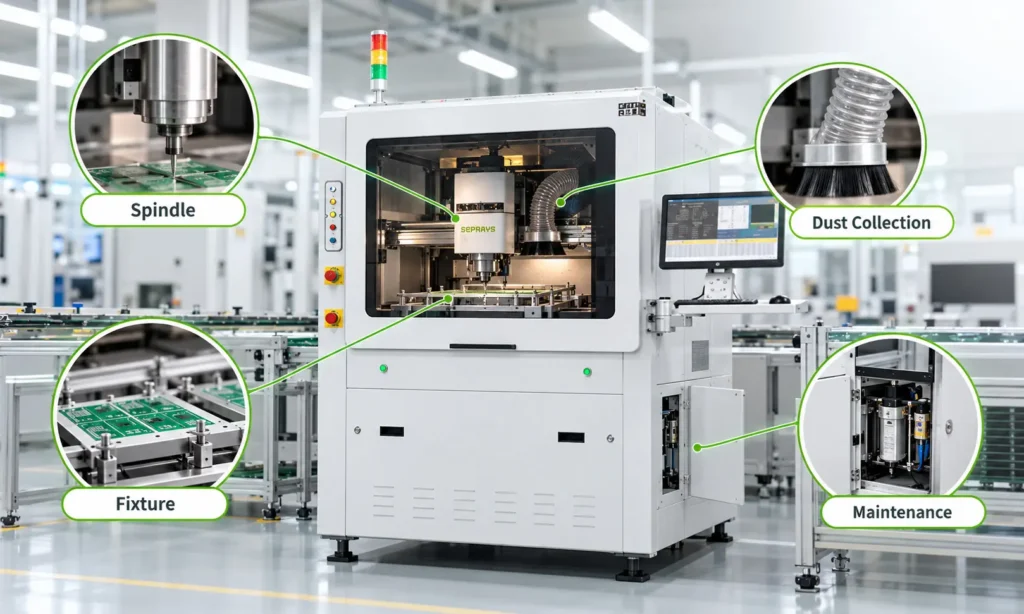
When the router operates for long periods, several areas become more important:
Spindle → Dust Collection → Fixture → Maintenance
The spindle and motion system need to remain stable during continuous operation. The dust collection system should keep the routing area clean. Fixtures should maintain reliable support after repeated use, and routine maintenance should be easy to perform.
Cutting tools are also consumable parts, so routine tool replacement and inspection should not create unnecessary production interruptions.
In high-volume production, frequent downtime usually has a greater impact than a small difference in maximum cutting speed.
For this reason, machine accessibility, maintenance convenience, and recovery after an interruption should also be considered during selection.
5. Verify Continuous Output, Not Just a Single Sample Cut
A single sample test can confirm whether the machine can depanel a PCB correctly.
For high-volume production, however, continuous production testing is more useful.
During the test, check whether:
- the actual Cycle Time remains stable;
- loading and unloading remain smooth;
- frequent operator intervention is required;
- edge quality remains consistent during continuous routing;
- dust collection continues to work effectively;
- machine performance remains stable after extended operation.
The goal is to confirm that the machine can produce stable results repeatedly, not just complete one successful sample.
SEPRAYS can evaluate PCB or PCBA samples, Gerber or DXF files, board thickness, component height, target output, and production-line requirements to help determine a suitable machine structure and automation configuration.
Conclusion
When choosing a PCB router machine for high-volume production, do not focus only on maximum cutting speed.
The better choice is a machine that can maintain stable Cycle Time, low downtime, smooth automation integration, and consistent depaneling quality during continuous production.
If you are evaluating a PCB router machine for high-volume production, SEPRAYS can help review your PCB / PCBA samples, production requirements, target output, and automation needs to recommend a suitable machine configuration.
For machine selection, sample testing, or more product details, contact us:
Email: millie@seprays.com
WhatsApp: +86 139 2552 7370