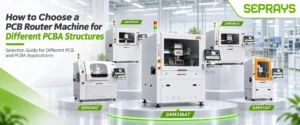

Different PCBA structures can require different routing conditions, machine configurations, and production methods.
This guide helps you combine these factors into a complete PCB router machine selection process.
1. Start by Identifying the PCBA Structure
The PCBA structure gives you the first direction for machine selection.
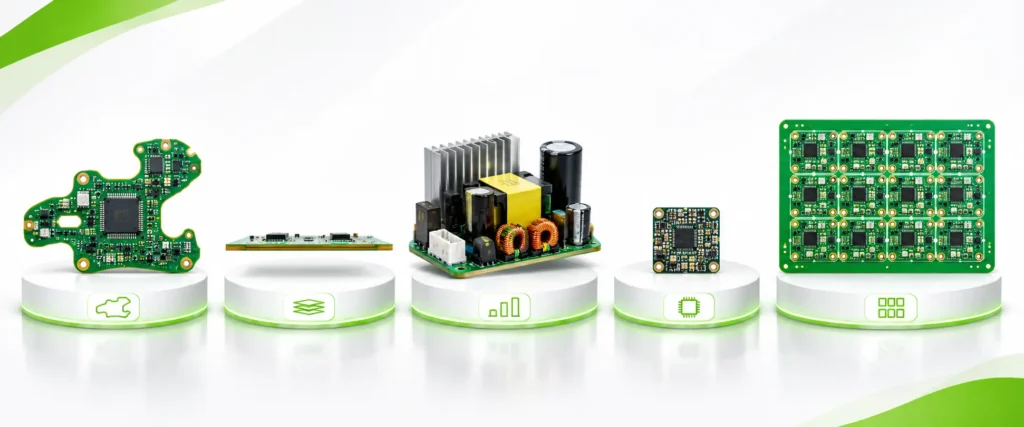
| PCBA Structure | Main Selection Focus | Detailed Guide |
|---|---|---|
| Irregular PCBAs | Cutting-path accessibility | How to Choose a Suitable Irregular PCB Router Machine |
| Thin PCBAs | Stable processing and positioning | How to Choose a Router Depaneling Machine for Thin PCBs |
| Tall-Component PCBAs | Routing clearance and Upcut / Downcut structure | How to Choose a Router Depaneling Machine for Tall-Component PCBAs |
| Miniaturized PCBAs | Small-board handling and positioning | How to Choose a PCB Router Machine for Miniaturized PCBAs |
| Large PCBAs | Valid cutting area and board support | How to Choose a Router Depaneling Machine for Large PCBAs |
These guides explain the structure-specific details in more depth.
For the final machine selection, however, you still need to consider broader factors such as routing feasibility, machine structure, production efficiency, maintenance, and operating cost.
2. First Confirm Whether Router Depaneling Fits the PCBA
Before comparing machine models, first confirm that router depaneling is suitable for the actual PCBA.
- whether there is enough space around the cutting path;
- whether the router bit can reach the complete contour;
- whether the required depaneling stress is acceptable;
- whether the board structure allows mechanical routing;
- whether the expected edge quality can be achieved.
Machine selection should begin only after confirming that router depaneling is suitable for the actual PCBA.
If the routing space is very limited or the product has special stress requirements, the depaneling process itself should be evaluated before selecting a machine.
3. Match the Machine Structure to the Actual Routing Process
Upcut vs Downcut
Use component height and available tool clearance to determine whether an Upcut PCB Router Machine or Downcut PCB Router Machine is more suitable.
A Downcut PCB Router Machine is often worth evaluating when tall upper-side components limit tool access from above.
Fixture vs Fixture-Free
A fixture-based machine can provide stable product positioning for specific products, while fixture-free solutions can reduce dependence on dedicated fixtures and make product changeover more flexible.
Single Table vs Dual Table
A single-table machine may be sufficient for lower-volume production or frequent product changes, while a dual-table machine can improve workflow because one table can be prepared while the other is processing.
Offline vs Inline
Offline machines provide more flexibility for independent production cells, while inline machines are more suitable when depaneling needs to be integrated into an automated production line.
The same PCBA may be processed by different machine structures depending on the required production flow.
4. Do Not Compare Machines Only by Cutting Area
Cutting area is important, but it should not be the only specification used for machine comparison.
| Specification | Why It Matters |
|---|---|
| Valid Cutting Area | Determines whether the complete PCB or panel can be processed |
| Repeat Precision | Affects consistency during repeated production |
| Cutting Precision | Important when the routing margin is small |
| CCD Vision | Helps compensate for board-position variation |
| Router Bit Range | Must match routing width and contour |
| Worktable Structure | Affects board support and production workflow |
The usable routing space, positioning system, worktable structure, and cutting accuracy should all match the actual PCBA.
5. Consider Production Efficiency, Not Just Cutting Speed
Cutting speed is only one part of the complete depaneling cycle.
Loading → Positioning → Cutting → Tool Change → Unloading
- a dual-table machine can reduce waiting time between cycles;
- an inline machine can reduce manual board transfer;
- automatic tool change can reduce production interruption;
- flexible programming can improve changeover between different PCBA models.
The fastest cutting speed does not always produce the shortest production cycle.
When comparing machines, evaluate the complete workflow instead of focusing only on spindle speed or cutting speed.
6. Check Dust Collection, Tool Management, and Maintenance
Dust Collection
Router depaneling produces PCB dust and cutting debris. The dust-collection system should match the cutting structure and help reduce residue around the PCB, worktable, and routing area.
Router Bit Management
Check whether the machine supports functions such as:
- automatic tool change;
- router-bit detection;
- tool-life monitoring or tool-use management.
Maintenance
Also consider spindle maintenance, dust collector maintenance, replacement-part availability, software and program backup, and ease of daily cleaning.
A machine that is easy to maintain can provide more value than one with only slightly higher nominal cutting speed.
7. Evaluate the Total Production Cost
The purchase price is only one part of the total depaneling cost.
- fixture cost;
- router-bit consumption;
- labor requirement;
- maintenance cost;
- product changeover time;
- downtime;
- automation compatibility.
A machine with a lower purchase price may require more manual handling or more dedicated fixtures, while another configuration may reduce labor, changeover time, or fixture dependence.
The lowest machine price does not always mean the lowest depaneling cost.
8. Use Sample Cutting Before Final Machine Selection
Sample cutting is one of the most reliable ways to confirm whether the proposed machine configuration is suitable.
- cutting-path accessibility;
- edge quality;
- routing accuracy;
- component clearance;
- cycle time;
- dust collection;
- repeated cutting consistency.
The test should reproduce the actual production conditions as closely as possible.
Sample cutting helps verify the process before machine purchase instead of relying only on specification sheets.
9. SEPRAYS PCB Router Machine Options
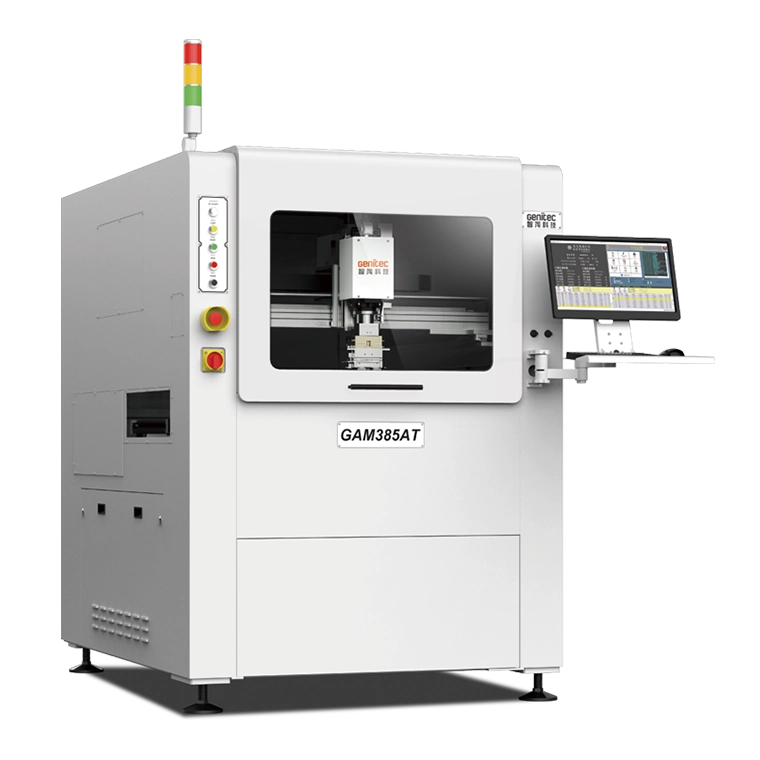
GAM385AT Downcut PCB Router Machine (without fixture)
Recommended for: Tall-component PCBAs requiring more upper-side clearance.
- Downcut routing structure
- Gripper-held cutting without dedicated fixture
- Upper-side component height up to 45 mm
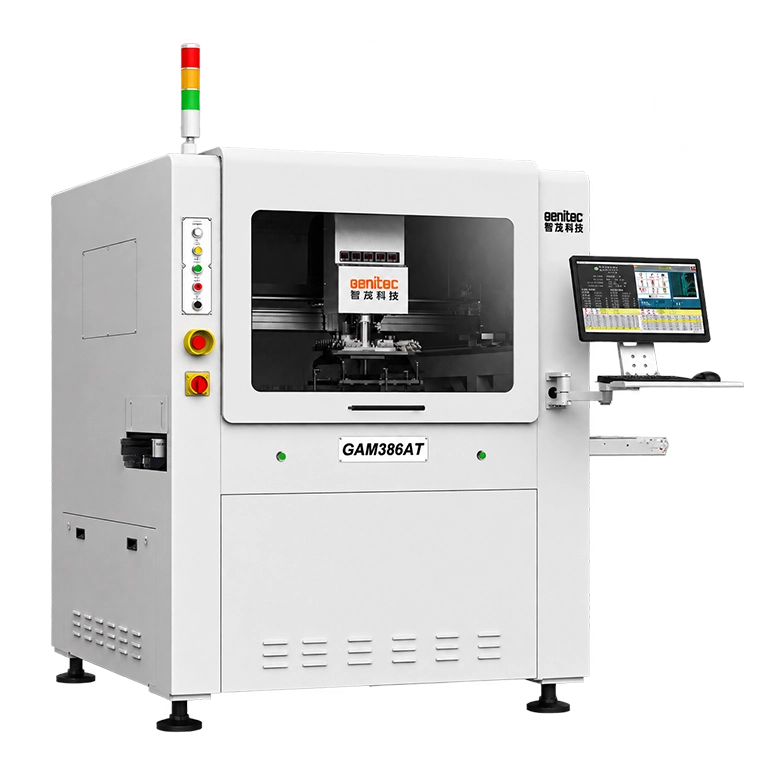
GAM386AT Downcut PCB Router Machine (with fixture)
Recommended for: PCBAs with taller upper-side components and fixture-based processing.
- Downcut routing structure
- Fixture-based cutting
- Upper-side component height up to 70 mm
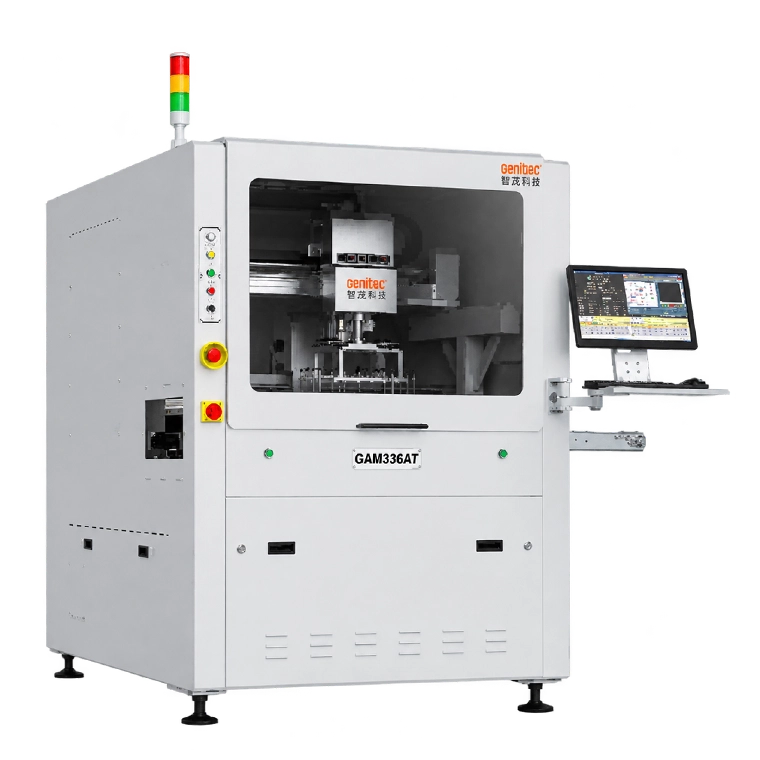
GAM336AT Inline Automatic PCB Router Machine
Recommended for: Automated PCB depaneling lines.
The GAM336AT is one of SEPRAYS’ best-selling inline PCB router machines.
- Inline automatic production
- Dual-table design for efficient routing
- CCD vision positioning with flexible cutting functions
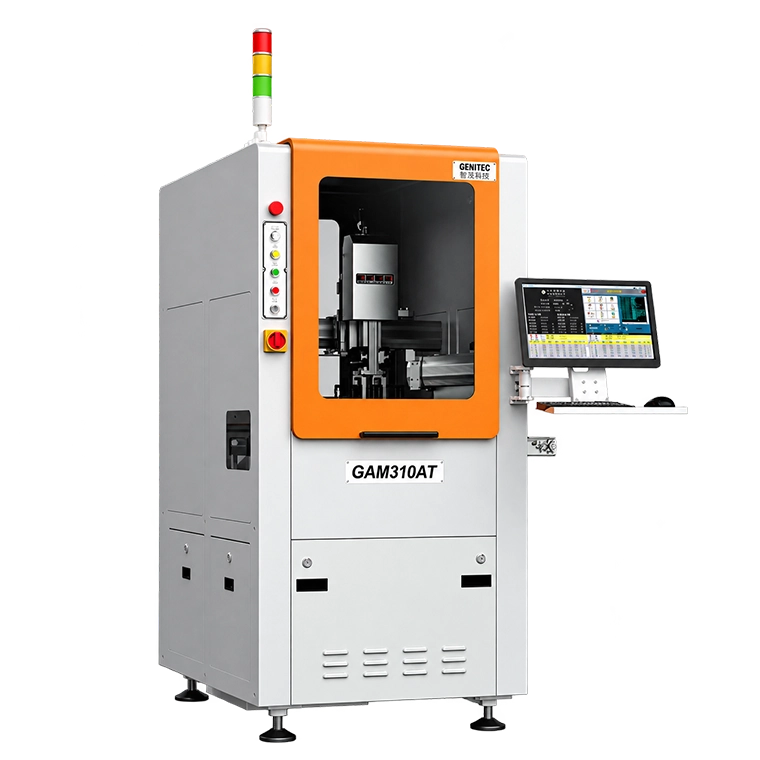
GAM310AT PCB Router Machine for Small PCBAs
Recommended for: Miniaturized and smaller PCB / PCBA products.
- Compact 200 × 180 mm cutting area
- Designed for smaller PCB and PCBA products
- Vacuum nozzle absorption with CCD vision positioning
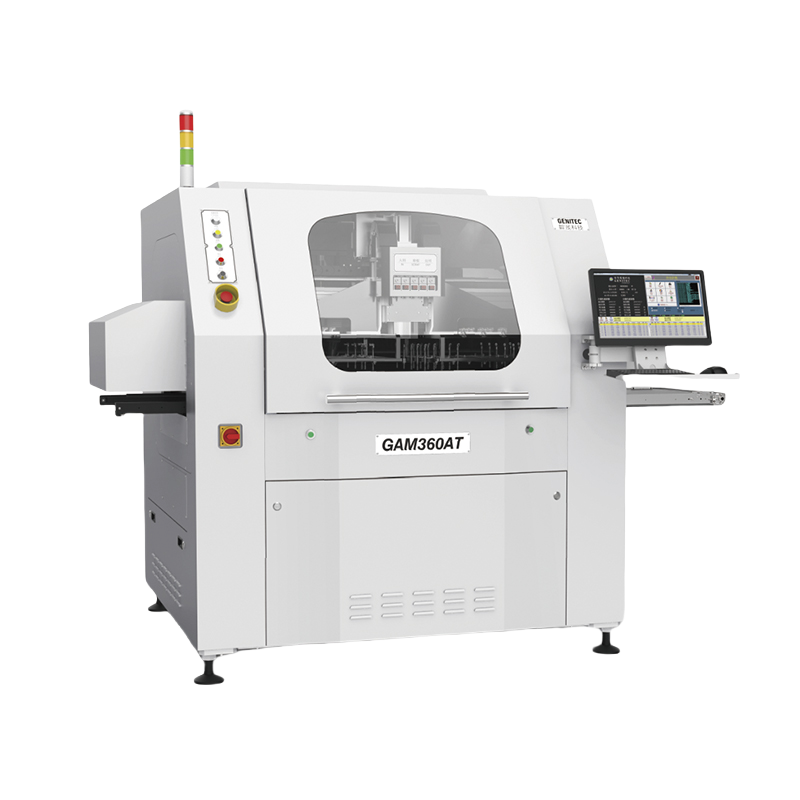
GAM360XL PCB Router Machine for Large PCBAs
Recommended for: Large PCB and PCBA applications.
- Designed for larger PCB / PCBA products
- Larger working range for large panels
- Suitable for automated large-board production
10. How to Choose Between These SEPRAYS Router Machines
| Main Requirement | Recommended Starting Point |
|---|---|
| Tall components + fixture-free processing | GAM385AT |
| Very tall components + fixture-based routing | GAM386AT |
| Inline automated production | GAM336AT |
| Small PCBAs | GAM310AT |
| Large PCBAs | GAM360XL |
This is only a first screening step. The final recommendation should still be based on the actual PCBA structure, cutting path, production volume, and automation requirements.
11. What Should You Send to SEPRAYS for Evaluation?
- PCBA dimensions;
- Gerber or DXF files;
- cutting path;
- component layout;
- component height;
- production volume;
- automation requirements;
- special stress or edge-quality requirements.
With this information, SEPRAYS can evaluate routing feasibility, recommend a suitable machine structure, and arrange sample cutting when necessary.
12. Conclusion
Choosing a PCB router machine should not depend on one specification or one PCBA feature alone.
Start with the PCBA structure, then evaluate routing feasibility, machine configuration, production efficiency, maintenance, and total operating cost.
Contact SEPRAYS for PCB depaneling machine selection, trial cutting, solution recommendations, or pricing.
Email: millie@seprays.com
WhatsApp: +86 139 2552 7370