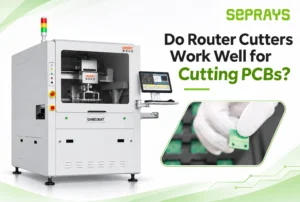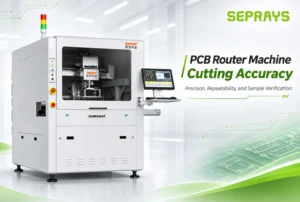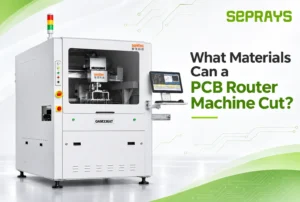

PCB router machines are currently one of the most common and widely used PCB depaneling solutions, especially for rigid PCBs and PCBAs.
The following sections explain what determines PCB cutting quality, which PCBs are suitable for router cutting, two SEPRAYS machine examples, and how to verify the cutting result before production.
1. Do Router Cutters Produce Good PCB Cutting Results?
Yes. Router cutters can provide reliable cutting results for many rigid PCB and PCBA applications.
Compared with manual separation or simple mechanical breaking, router depaneling provides better control over the cutting path and can handle straight lines, curves, arcs, circles, and irregular contours.
Clean Edge → Accurate Cutting Position → Low Burr → Controlled Dust → Stable Repeatability
The final cutting result depends on the machine, router bit, positioning method, PCB fixing, and process parameters.
2. What Determines PCB Cutting Quality?
PCB cutting quality is influenced by several factors during the routing process.
| Factor | Effect on Cutting Quality |
|---|---|
| Router Bit Condition | Worn tools can increase burrs and reduce edge quality. |
| Cutting Speed | Incorrect cutting speed can affect edge finish and processing stability. |
| Spindle Performance | Stable spindle operation helps maintain consistent cutting performance. |
| PCB Positioning | Accurate positioning keeps the actual cutting path aligned with the programmed contour. |
| PCB Fixing | Stable fixing prevents PCB movement during routing. |
| Cutting Path | Sufficient routing space allows the cutter to complete the contour smoothly. |
| Dust Collection | Effective dust extraction reduces residue on the PCB and inside the machine. |
3. Which PCBs Are Suitable for Router Cutting?
Router depaneling is mainly suitable for rigid PCBs and PCBAs.
Common applications include FR-4 / FR-5 boards, CEM-1 / CEM-3 boards, multilayer rigid PCBs, aluminum-backed PCBs, irregular PCBs, and PCBAs with curved or complex routing paths.
Router cutting is especially practical when the product requires flexible contour cutting and controlled mechanical separation.
For FPC and other flexible PCBs, laser depaneling is generally a more suitable option because it uses a non-contact cutting process.
4. SEPRAYS PCB Router Machine Examples
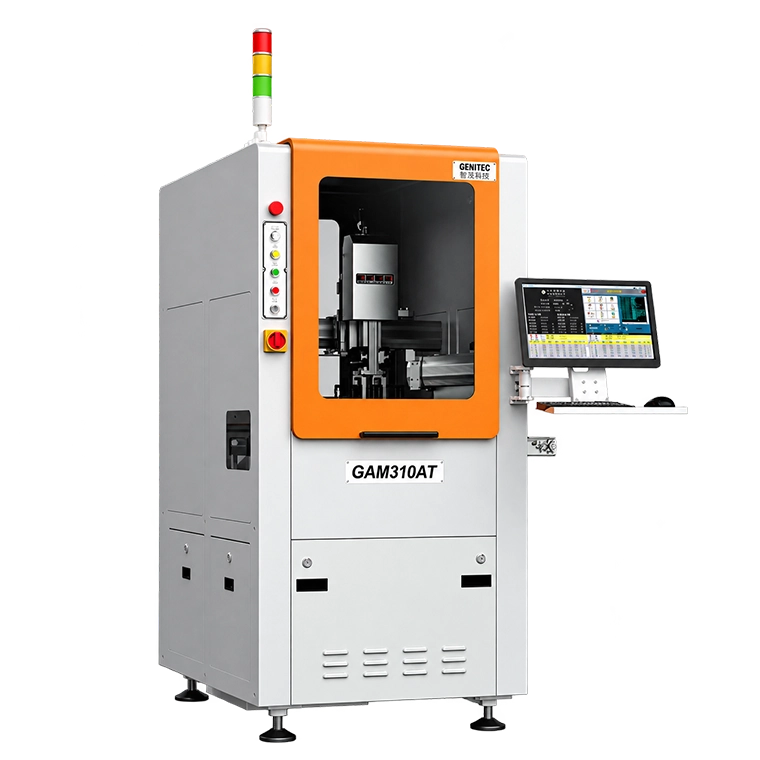
GAM310AT In-Line Automatic PCB Router Machine
The SEPRAYS GAM310AT is designed specifically for smaller PCB and PCBA depaneling applications.
- Valid cutting size: 200 × 180 mm
- Vacuum nozzle absorption for PCB transfer
- Dual-table structure
- Repeat accuracy: ±0.01 mm
- Cutting accuracy: ±0.05 mm
- CCD color vision positioning
- Router bit size: Ø0.8–3.0 mm
- Supports straight, L-shaped, U-shaped, circular, and arc cutting paths
For small PCB products, the compact cutting area and vision positioning system help maintain stable routing performance.
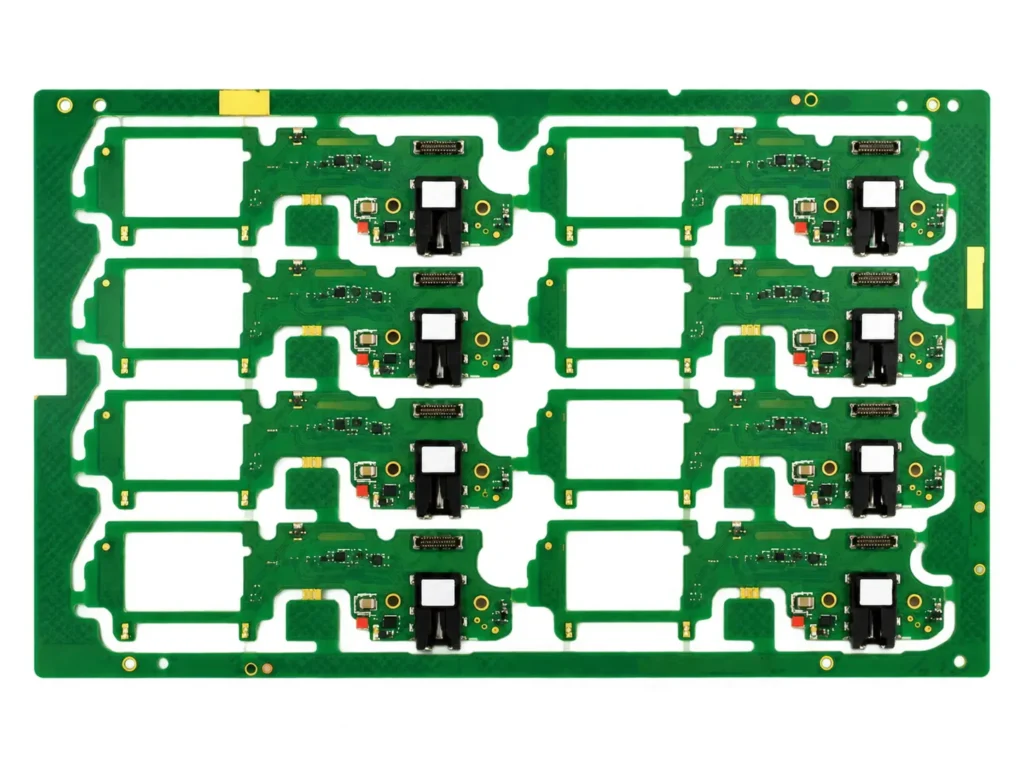
Actual PCB cutting sample images can be displayed here to show edge quality and cutting consistency.
GAM336AT In-Line Automatic PCB Router Machine
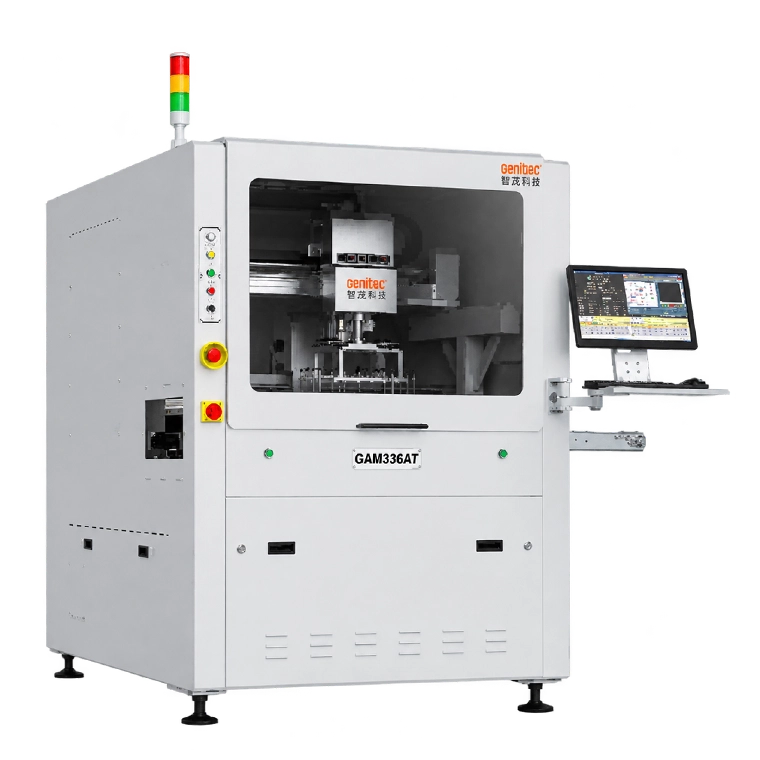
The SEPRAYS GAM336AT is designed for automated PCB and PCBA depaneling and supports larger cutting areas.
- Valid cutting size: 350 × 300 mm
- Dual-table structure
- Repeat accuracy: ±0.01 mm
- Cutting accuracy: ±0.05 mm
- CCD vision positioning
- AC servo motor control
- Router bit size: Ø0.8–3.0 mm
- Maximum spindle speed: 100,000 rpm
- Supports straight, L-shaped, U-shaped, circular, and arc cutting paths
The GAM336AT is suitable for manufacturers that require flexible cutting paths, higher automation, and stable cutting consistency.
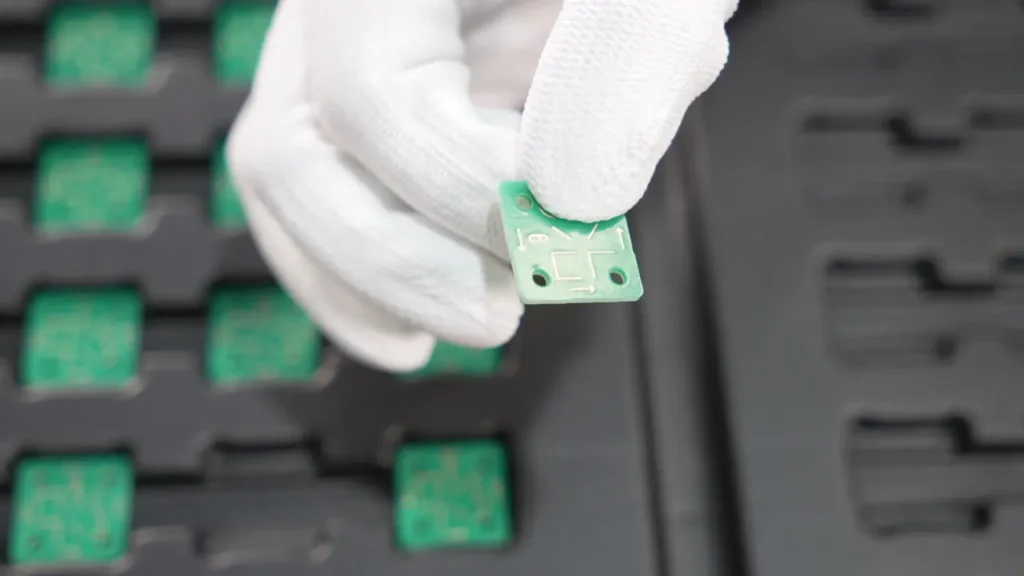
Actual PCB cutting sample images can also be added here to show the final routing result under real production conditions.
5. How to Verify PCB Cutting Results Before Production
Machine specifications can help with initial evaluation, but actual sample cutting is the most direct way to confirm whether the process is suitable for production.
- Edge Quality: Check for burrs, chipping, rough edges, or other damage.
- Cutting Position: Confirm that the actual routing path follows the programmed contour.
- Component Clearance: Make sure nearby components are not affected during cutting.
- Dust Residue: Check whether the PCB surface remains sufficiently clean.
- Repeat Consistency: Compare several identical PCB samples after cutting.
- Tool Condition: Confirm that the router bit can maintain stable cutting quality during repeated use.
- Production Stability: Check whether cutting quality remains consistent during continuous operation.
A successful sample test should confirm not only that the PCB can be cut, but also that the routing process can maintain stable quality during production.
6. Conclusion
Router cutters work well for rigid PCB and PCBA depaneling when the machine, router bit, positioning system, PCB fixing, and process parameters are properly matched.
A good PCB router machine should provide clean edges, accurate cutting positions, low burrs, controlled dust, and consistent results during continuous production.
If you want to verify the actual cutting result for your PCB, send SEPRAYS your Gerber / DXF files, PCB dimensions, cutting path, or physical PCBA samples. We can evaluate the process and perform sample cutting before machine selection.