
For years, production line supervisors at electronics manufacturing plants have grappled with a persistent challenge: the depaneling stage. Whether you’re managing a high-volume smartphone assembly line or handling smaller batches of industrial control boards, the moment when individual PCBs are separated from their panel arrays often becomes a bottleneck. Workers report hand fatigue from repetitive router operations, quality teams documentUnexpected failures traced back to stress fractures during manual separation, and floor managers watch production targets slip because depaneling simply cannot keep pace with upstream assembly speeds.
This challenge sits at the heart of modern PCBA post-process operations, and it is reshaping how manufacturers approach their depaneling workflows. The shift toward automation in this critical stage represents not merely a technological upgrade but a fundamental transformation in how quality, efficiency, and operator safety are balanced on the production floor.
Understanding the Depaneling Bottleneck
When individual printed circuit board assemblies must be separated from larger production panels, the method chosen directly impacts both product reliability and throughput. Traditional approaches—manual snap-breaking, hand-held router trimming, or basic guillotine-style cutters—share common limitations that become increasingly problematic as boards grow more complex.
Modern PCB designs frequently incorporate high-layer counts, sensitive components positioned near panel edges, and increasingly miniaturized form factors. A automotive control module with 0.5mm BGA packages near the depaneling boundary responds very differently to mechanical stress than a straightforward through-hole assembly from a decade ago. Components mounted close to score lines create stress concentration risks that manual or mechanical separation methods struggle to address consistently.
Industry veterans who have spent decades in electronics manufacturing observe that defect rates attributed to depaneling have risen proportionally with board complexity. “We noticed an uptick in field failures where solder joints appeared intact but microscopic cracks had developed,” noted one quality engineer at a contract manufacturer serving the consumer electronics sector. “Root cause analysis consistently pointed back to depaneling stress—the board had been functioning normally during in-circuit testing but degraded under thermal cycling in the field.” This pattern illustrates why the depaneling method matters far beyond simple production speed.
The Automation Imperative
Three converging pressures are accelerating adoption of automated depaneling solutions across the industry. First, labor costs have risen substantially in traditional electronics manufacturing hubs, making the economics of manual operations increasingly difficult to justify. Second, product quality expectations—particularly in automotive, medical, and aerospace applications—demand tighter process control than manual methods can provide. Third, competitive pressures require manufacturing operations to demonstrate continuous improvement in throughput without proportional increases in floor space or headcount.
Automated depaneling systems address these pressures through several mechanisms. Programming flexibility allows the same machine to handle multiple product types, eliminating the dedicated tooling approach that once required separate equipment for each board variant. Integrated vision systems can verify panel placement and detect anomalies before processing begins. Closed-loop force monitoring during routing operations provides documentation that quality auditors increasingly require. These capabilities transform depaneling from a simple cutting operation into a monitored, repeatable, and documentable manufacturing step.
Technical Approaches to Automated Depaneling
Contemporary automated depaneling encompasses several technological approaches, each with distinct operational characteristics. Understanding these differences helps manufacturing engineers match capabilities to their specific product requirements.
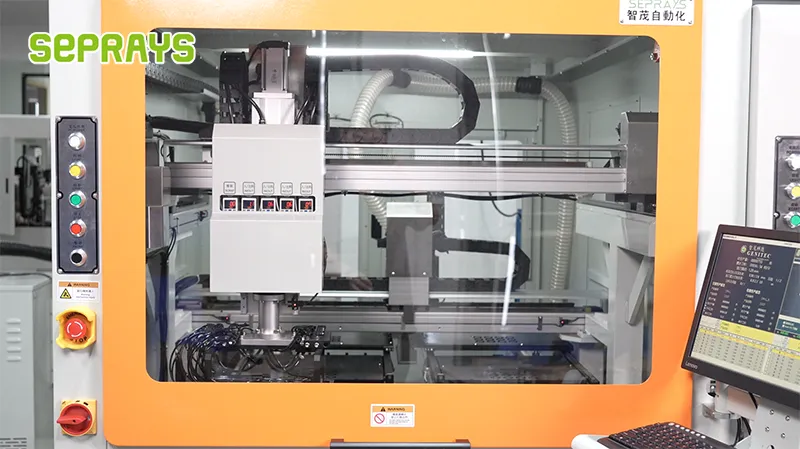
Computer numerical control routing represents the most widely deployed automated approach. Modern CNC routing systems employ high-speed spindles with tool diameters typically ranging from 0.8mm to 3.0mm, operating at speeds that minimize heat generation at the cut zone. Advanced systems incorporate dust collection at the point of cut rather than relying on facility exhaust systems, reducing airborne particulate exposure significantly. The programming interface allows operators to define complex cut paths including curved trajectories, which proves essential for non-rectangular board outlines that increasingly appear in compact consumer devices.
Laser depaneling has emerged as an alternative for applications requiring absolutely minimal thermal influence on surrounding materials. By using UV wavelength lasers, the system achieves ablation of substrate material with negligible heat transfer to adjacent areas. This approach proves particularly valuable for boards with thermally sensitive components positioned close to the cutting path. The trade-off involves slower processing speeds compared to mechanical routing and higher equipment investment costs.
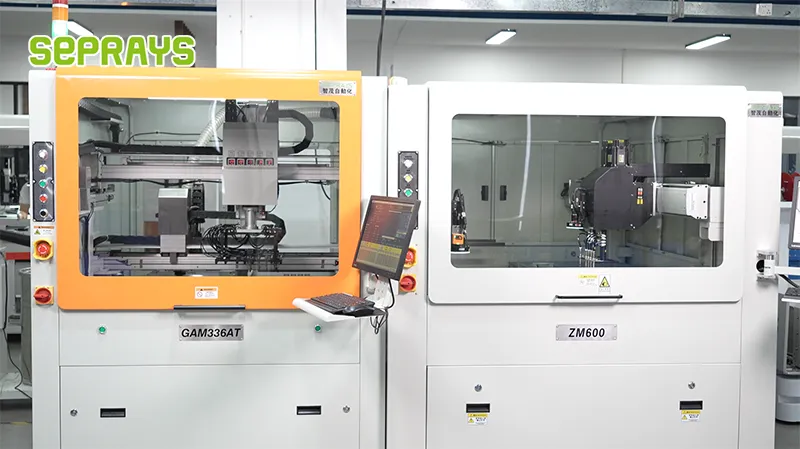
Fully integrated depaneling lines represent the highest level of automation, incorporating automatic panel feeding, depaneling operations, optical inspection, and finished board handling—typically into trays or tubes for downstream assembly. These systems eliminate manual handling entirely and provide complete traceability from panel input to finished unit output.
Real-World Implementation Considerations
Manufacturers evaluating depaneling automation should consider several practical factors that influence successful implementation. Floor space availability often constrains equipment selection, as some systems require significant clearance for panel loading and unloading operations. Integration with existing production management systems—whether through MES connectivity, SPC data collection, or barcode tracking—determines how effectively the depaneling operation contributes to overall manufacturing intelligence.
Changeover time between product types represents another practical consideration. While dedicated equipment for single high-volume products may offer optimization advantages, flexible equipment capable of quick changeover provides operational agility that proves valuable for contract manufacturers or companies with diverse product portfolios. Modern software interfaces allow operators to recall product-specific programs within seconds, minimizing the productivity loss traditionally associated with changeovers.
Training requirements for operators and maintenance personnel vary by equipment complexity. Simpler standalone systems can be mastered by experienced operators within days, while fully automated lines may require more extensive training covering software interfaces, preventive maintenance procedures, and basic troubleshooting protocols. Evaluating the support infrastructure available from equipment suppliers—including response time commitments, remote diagnostic capabilities, and on-site service availability—contributes significantly to long-term operational success.
Supporting Infrastructure for Automation Success
Automated depaneling equipment operates most effectively when supported by appropriate infrastructure. Consistent panel quality—dimensional stability, uniform fiducial placement, and appropriate panelization design—ensures that the precision built into automated equipment translates to actual production quality. Manufacturing engineers report that collaboration between PCB designers and production teams during the panelization design phase prevents many downstream challenges.
Environmental considerations extend beyond dust collection to encompass temperature stability and vibration isolation. Depaneling operations that incorporate precision measurement or vision systems may benefit from climate-controlled environments that prevent thermal expansion effects from introducing variability into positioning calculations. Vibration-damped machine bases protect cutting accuracy from facility-generated disturbances.
Material handling considerations often prove more complex than initially anticipated. Panel magazines must accommodate the specific dimensions and weights of products being processed. Finished board handling—whether into strip feeders, JEDEC trays, or custom carriers—requires integration planning to ensure the depaneling output flows smoothly into subsequent operations.
Evaluating Equipment Suppliers
The equipment supplier landscape includes both specialized manufacturers focused exclusively on depaneling technology and broader automation companies offering depaneling as one capability among many. Specialized equipment manufacturers typically bring deeper process expertise and more targeted product development, while larger automation suppliers may offer integration advantages across multiple production stages.
When evaluating suppliers, manufacturing teams benefit from requesting production-line validation demonstrations using actual product samples. This practical verification reveals how equipment handles specific board characteristics, component tolerances, and quality requirements. References from manufacturers operating similar production volumes and product types provide additional insight into real-world performance expectations.
Long-term support considerations deserve equal attention during the evaluation process. Spare parts availability, software update policies, and the supplier’s commitment to product development influence the total cost of ownership far beyond initial equipment pricing. Suppliers with established global service networks prove particularly valuable for organizations with distributed manufacturing operations or those serving international customer bases.
Making the Transition
For manufacturers currently operating manual or semi-automatic depaneling equipment, the transition to full automation need not happen in a single dramatic step. Many equipment suppliers offer staged migration paths that allow organizations to upgrade incrementally while protecting existing capital investments. Trade-in programs for older equipment reduce the financial burden of technology refresh while ensuring responsible equipment retirement.
Rental and lease arrangements provide flexibility for facilities managing capacity fluctuations, temporary production increases, or customer audits requiring demonstration of automation capabilities. Contract processing services offer an alternative for organizations evaluating automation benefits before committing to equipment ownership.
The decision ultimately reduces to understanding your specific production context: the types of boards being processed, quality requirements, volume characteristics, and operational constraints unique to your facility. Automation delivers its greatest value when matched carefully to application requirements rather than applied generically.
Conclusion
The evolution of depaneling from a manual operation to an automated, monitored, and documented manufacturing step reflects broader trends in electronics manufacturing toward precision, traceability, and operational efficiency. Manufacturers who address depaneling automation strategically—not merely as equipment replacement but as process transformation—position themselves to meet both current quality expectations and future competitive challenges.
Whether your operation handles high-volume consumer electronics, safety-critical automotive assemblies, or flexible batches for diverse industrial applications, the fundamental question remains the same: how can depaneling contribute more effectively to your overall manufacturing objectives? For organizations seeking experienced guidance on this transition, suppliers with decades of specialization in depaneling technology can provide insights grounded in thousands of installations across diverse manufacturing environments.