
The Pain Point Nobody Talks About: Manual Depaneling Is Killing Your Throughput
Walk into most PCBA assembly lines and you’ll still find operators hunched over workbenches, using handheld routers or manual presses to separate individual PCBs from their panel arrays. The sound of spinning bits, the white dust coating nearby equipment, the constant rhythm of operators loading and unloading boards — this scene plays out thousands of times daily across electronics manufacturing facilities worldwide.
For years, this was simply accepted as part of the post-process routine. But somewhere along the way, the gap between manual operations and modern production demands became undeniable. Factory managers started noticing the patterns: board damage rates climbing after routing operations, operators developing repetitive strain issues that increased absenteeism, quality inspectors spending hours documenting defects that originated at the depaneling stage.
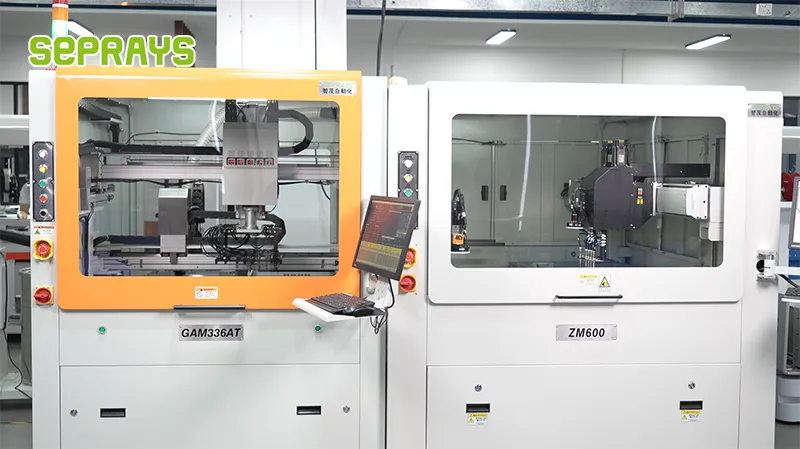
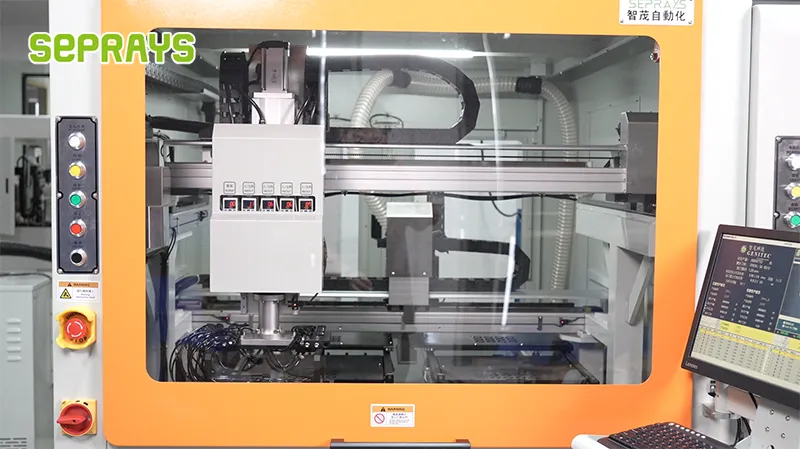
“We were running three shifts with manual depaneling and still couldn’t keep pace with our customer’s demand increases,” recalls a production supervisor at a contract manufacturer in Guangdong who asked to remain anonymous. “The final straw was when our defect rate spiked to 2.3% — and nearly 60% of those failures traced back to stress fractures from manual routing. We knew we had to make a change.”
That realization is becoming increasingly common across the electronics manufacturing landscape. The PCBA post-process — specifically depaneling — is emerging as one of the last significant manual bottlenecks in otherwise highly automated production environments. The consequences of ignoring this gap extend far beyond simple throughput concerns.
Understanding the Depaneling Challenge in Modern Electronics Manufacturing
PCB depaneling might seem like a straightforward operation: separate finished boards from their manufacturing panels. In practice, the process presents nuanced challenges that grow more complex with each product generation. Today’s boards feature increasingly dense component placements, tighter tolerances between sensitive parts and panel edges, and growing use of flexible or semi-flexible materials that demand precise, controlled separation.
Traditional separation methods each carry inherent limitations. V-scoring works adequately for simple geometries but struggles with complex board shapes and creates stress concentrations that can damage sensitive components. Manual routing generates significant dust requiring extensive ventilation and cleanup, while operator skill variance leads to inconsistent quality. Pushing or breaking panels — sometimes called “breakaway” depaneling — creates mechanical shock that frequently damages miniaturized components positioned near panel edges.
The electronics industry itself provides the clearest evidence of these limitations. Major OEMs increasingly specify depaneling requirements in their supplier quality standards, with many requiring documented evidence of controlled, low-stress separation processes. Automotive electronics manufacturers, operating under IATF 16949 quality frameworks, have largely moved away from manual depaneling due to the traceability and consistency requirements that automated solutions address far more effectively.
Core Technologies Driving Depaneling Automation
The automated depaneling landscape encompasses several distinct technological approaches, each suited to different production requirements and board characteristics. Understanding these options helps manufacturers identify the most appropriate solution for their specific context.
PCB Depaneling Routers
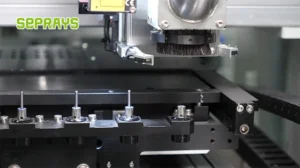
Computer-controlled routing systems represent the most widely adopted automated depaneling approach. These machines use high-speed rotating spindles guided by precise motion control systems to follow programmed cutting paths. Modern PCB depaneling routers incorporate features specifically designed to address previous limitations: integrated dust collection systems, real-time spindle monitoring, and adaptive cutting parameters that adjust based on board thickness and material composition.
The technical advantages extend to process control. A PCB router can maintain consistent cutting speed and feed rate regardless of operator skill, producing identical results across thousands of boards. Programming flexibility allows handling of complex panel geometries, including curved cutting paths that would be impossible with traditional straight-line separation methods.
Laser PCB Separators Technology
Laser-based separation represents the cutting edge of depaneling technology. By using focused laser energy to vaporize material along the separation line, laser separators eliminate mechanical contact entirely. This approach produces negligible cutting stress, generates no tool wear, and achieves remarkable precision — particularly valuable for boards with components positioned extremely close to panel edges.
However, laser systems carry higher initial investment and operating costs, and processing speeds generally lag behind mechanical routing for simple geometries. The technology excels in high-mix, high-precision applications where board quality outweighs pure throughput considerations.
Vision-Guided Depaneling Systems
The integration of machine vision represents a significant advancement in depaneling capability. Vision-guided systems use cameras and image processing algorithms to identify panel fiducials, verify component positions, and adjust cutting paths in real-time to account for panel variations. This approach proves particularly valuable when handling panels with inherent dimensional variations or when cutting paths must avoid specific components.
For manufacturers processing boards from multiple customers or handling frequent product changeovers, vision-guided flexibility reduces setup time and enables quick transitions between different board types without mechanical reconfiguration.
The Business Case: Calculating Real ROI Beyond Theory
Manufacturers considering depaneling automation naturally focus on return on investment timelines. While specific calculations depend heavily on current labor costs, production volumes, and defect rates, the general economics increasingly favor automation even for moderate-volume operations.
Direct labor reduction often provides the most immediately visible benefit. A single automated depaneling machine can typically replace two to four manual workstations, depending on board complexity and cycle time requirements. Beyond base labor costs, manufacturers capture savings from reduced rework and scrap, lower Workers’ Compensation claims related to repetitive motion injuries, and decreased quality inspection time spent addressing depaneling-induced defects.
Hidden costs frequently dwarf the obvious ones. Consider the operator who develops carpal tunnel syndrome after two years of continuous routing work — replacement training, lost productivity, potential liability. Or the batch of 500 boards rejected at final test because stress fractures from aggressive breakaway separation caused latent solder joint failures that only appeared during thermal cycling. These scenarios repeat across factories daily, rarely captured in formal cost analyses.
Production scalability presents another consideration often underweighted in initial assessments. Manual processes scale linearly with labor availability — double your output requires doubling your workforce. Automated systems handle volume increases more efficiently, with some manufacturers reporting 40-60% throughput improvements after implementing automated depaneling in previously manual-heavy operations.
Industry Applications: Where Automation Delivers Maximum Impact
Different market segments experience depaneling challenges with varying intensity. Understanding these application contexts helps identify where automation investment typically delivers the strongest returns.
Consumer Electronics Contract Manufacturing: High volumes, aggressive pricing pressure, and customer-mandated quality standards create strong automation drivers. Contract manufacturers serving smartphone, wearable device, or IoT product companies frequently cite depaneling quality as a key metric in supplier scorecards.
Automotive Electronics: The automotive industry’s zero-defect philosophy and stringent traceability requirements make manual depaneling difficult to justify. Safety-critical electronics modules, instrument clusters, and control units typically require documented, controlled separation processes that automated systems readily provide.
Medical Device Manufacturing: Medical electronics often feature boards with components extremely close to panel edges and require documentation proving manufacturing consistency. Automated depaneling with full process logging addresses these requirements while maintaining the cleanliness standards medical manufacturing demands.
Industrial and Power Electronics: Larger, thicker boards common in power conversion and industrial control applications present specific depaneling challenges. Materials like aluminum-backed substrates used in LED drivers and motor controllers require specialized cutting approaches that automated systems handle more consistently than manual methods.
Implementation Considerations: Moving from Concept to Production
Successful depaneling automation requires attention to factors beyond initial equipment selection. Manufacturers who achieve smooth transitions typically address several key considerations during planning.
Panel design collaboration proves essential. While automation can handle various panel formats, working with product design teams to optimize panelization for automated depaneling often yields significant quality and efficiency improvements. Rail widths, fiducial placement, and tool clearance around sensitive components all influence achievable outcomes.
Material handling integration deserves attention. Many automated depaneling systems operate most efficiently when integrated with upstream and downstream processes — automatic panel loading, post-separation inspection integration, and finished board collection or tray stacking. Evaluating the complete workflow rather than depaneling in isolation helps identify integration opportunities.
Operator training and change management significantly influence adoption success. Involving operators in the selection process, providing thorough training on system operation and basic maintenance, and clearly communicating productivity and quality improvements often determine whether new equipment reaches its potential or becomes shelf decoration.
Service and Support: The Often-Ignored Differentiator
Equipment performance ultimately depends on the support structure backing it. Manufacturers evaluating depaneling solutions should scrutinize vendor service capabilities as carefully as machine specifications.
Geographic service coverage matters enormously when production issues arise. A machine down for hours while waiting for service response translates directly to lost production. Vendors maintaining regional service offices with rapid response capabilities provide practical advantages that distant headquarters-based support cannot match.
Spare parts availability and lead times affect both planned maintenance and emergency repairs. Vendors with established parts inventory and local stocking programs minimize production interruption risks. Similarly, application engineering support during initial implementation and subsequent product changes helps manufacturers optimize equipment utilization over time.
Retrofit and upgrade pathways protect initial investments as technology evolves. Manufacturers occasionally find themselves with equipment that cannot accommodate product changes or technology improvements. Evaluating vendor approaches to system upgrades, software updates, and capability extensions helps future-proof automation investments.
Seprays: Three Decades of Depaneling Innovation
Since 1993, Seprays has focused exclusively on PCB depaneling technology development and manufacturing. This specialization shows in the breadth of solutions available — from compact benchtop routers suitable for smaller operations to fully automated inline systems handling high-volume production. The company’s product portfolio addresses various automation levels, allowing manufacturers to select solutions matched to their current needs while providing clear upgrade pathways.
With over 100 patents across depaneling technologies and certifications spanning ISO9001, ISO14001, ISO45001, and CE compliance, Seprays maintains documented quality systems appropriate for regulated industries. Manufacturing facilities totaling 26,000 square meters enable production capacity that supports both standard equipment and custom system requirements.
Client relationships across 31 countries demonstrate international applicability of the technology. From major electronics manufacturing services companies to specialized regional manufacturers, the customer base reflects capability to address diverse operational requirements and quality expectations. Service coverage extending to nine cities within China and established distributor networks internationally provides support infrastructure for global manufacturers.
The trade-in and upgrade programs Seprays offers address a practical reality many manufacturers face: existing equipment, regardless of brand, eventually reaches its capability limits or incurs excessive maintenance costs. These programs provide documented pathways for technology refresh without requiring complete equipment replacement.
Conclusion: The Direction of Travel Is Clear
The shift toward automated depaneling in PCBA post-process operations reflects broader manufacturing evolution toward consistent quality, documented processes, and efficient labor utilization. While manual methods persist in some applications, the economic and quality case for automation has strengthened considerably as technology matured and costs decreased.
Manufacturers considering depaneling automation benefit from honest assessment of their current operations — defect patterns, throughput constraints, labor challenges — and realistic evaluation of how automation addresses those specific pain points. The most successful implementations typically begin with clear problem identification, proceed through careful technology matching, and conclude with systematic change management that achieves intended benefits.
For manufacturers ready to explore automation options, engaging with equipment specialists who offer comprehensive evaluation — including assessment of current equipment value through trade-in programs and identification of integration requirements — provides practical starting points. The goal is not automation for its own sake, but measurable improvement in the specific outcomes that matter to your operation.