
Mobile phone PCB depaneling requires precise cutting to protect densely populated electronic assemblies from mechanical stress, component damage, and contamination.
This 2026 guide explains common cutting problems, suitable depaneling methods, machine selection, international standards, and practical production tips.
1. What Problems Might Be Encountered During Mobile Phone PCB Depaneling?
Smartphone PCBAs are compact, densely populated, and often irregularly shaped. Improper depaneling can damage solder joints or components even when visible cutting defects are minimal.
| Problem | Potential Impact | Recommended Solution |
|---|---|---|
| Excessive mechanical stress | Cracked solder joints or damaged MLCCs | Controlled, low-stress milling |
| Dense component placement | Damage to components near cutting paths | Precise routing and suitable fixtures |
| Complex PCB outlines | Edge defects or inaccurate cuts | CCD positioning and programmable paths |
| Cutting dust and debris | Contamination of electronic assemblies | Effective dust extraction |
| High-volume production | Inconsistent cutting quality and throughput | Automated inline depaneling |
Excessive bending during manual separation may damage ceramic capacitors or nearby solder joints. A suitable depaneling process should minimize board deformation, maintain cutting accuracy, and protect assembled components.
2. Which PCB Depaneling Methods Are Suitable for Mobile Phones?
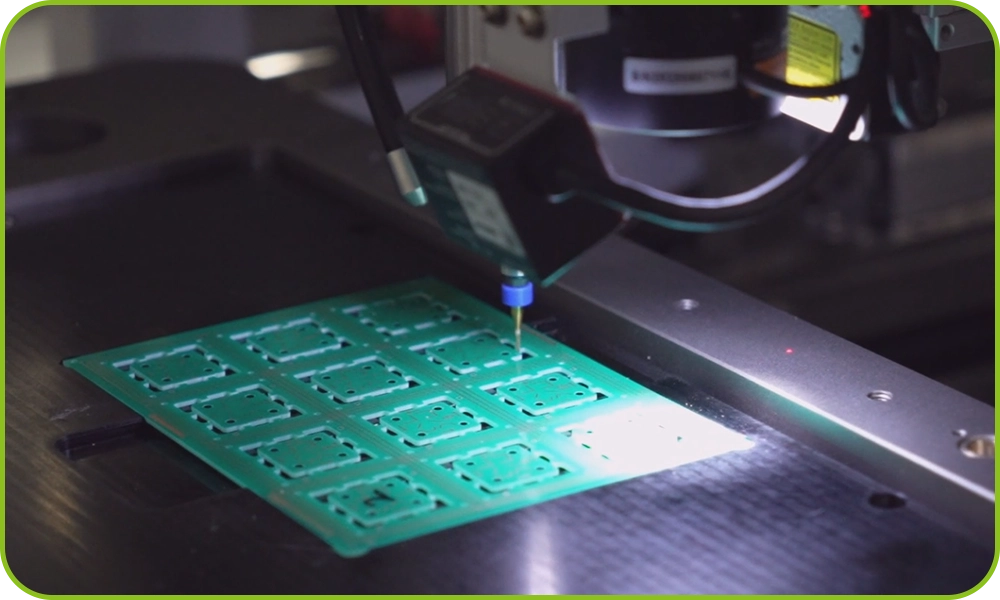
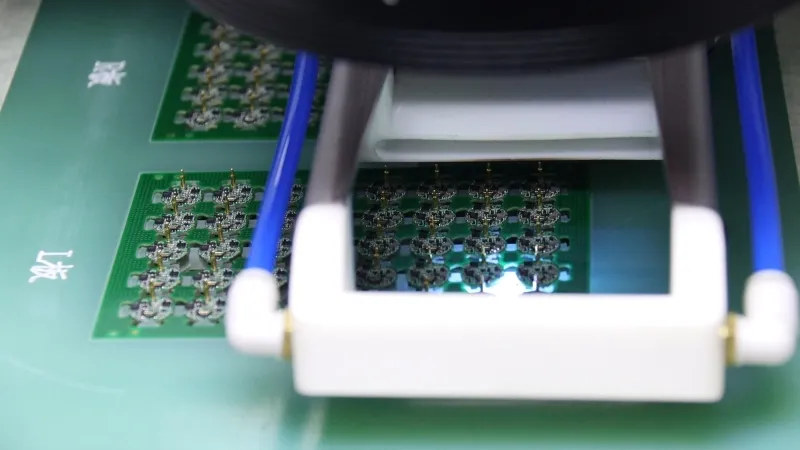
Milling Depaneling: Recommended for Rigid Smartphone PCBAs
Milling uses a high-speed router bit to separate PCBs along programmed paths. With suitable fixtures, it handles complex rigid PCB outlines while limiting bending compared with manual breaking. It also supports automated handling and CCD positioning.
Laser Depaneling: Suitable for Delicate PCBs
Laser depaneling uses non-contact cutting, making it suitable for thin FPCs and fine features. However, material compatibility, thermal effects, and cutting quality must be validated.
Why Manual Depaneling Is Not Recommended
Manual separation introduces uncontrolled bending stress and inconsistent cutting quality. It is generally unsuitable for densely populated smartphone PCBAs in high-volume production.
3. How to Choose the Right Mobile Phone PCB Depaneling Machine
Choose equipment based on PCB characteristics, cutting quality, and production requirements.
- PCB material and structure: Confirm board thickness, panel dimensions, cutting paths, and whether the material is rigid PCB, FPC, or rigid-flex.
- Cutting accuracy and stress: Evaluate positioning precision, component clearance, mechanical stress, and fixture stability.
- Production capacity: Choose inline automation for high-volume production and offline machines for smaller batches or frequent changeovers.
- Dust and ESD protection: Ensure effective dust extraction and appropriate electrostatic discharge protection.
Buying tip: Ask the equipment supplier to demonstrate the cutting process using your actual PCB panel and target cycle time.
4. What International Standards Apply to Mobile Phone PCB Depaneling?
There is no single mandatory global standard covering every mobile phone PCB depaneling process. Manufacturers typically follow internationally recognized IPC standards alongside customer-specific quality requirements.
As of November 2026, the following standards and regulations are particularly relevant to smartphone PCB manufacturing, depaneling quality, and equipment safety.
| Standard / Regulation | Scope | Latest Status and Relevance (2026) |
|---|---|---|
| IPC-A-610J | International industry standard | 2024 edition. Electronic assembly acceptance, including depanelization damage. Revision K is under development. |
| IPC-A-600M | International industry standard | 2025 edition. PCB acceptability, including edge defects, cracks, and laminate quality. Revision N is under development. |
| IPC-6013F | International industry standard | August 2026 edition. Performance requirements for flexible and rigid-flex printed boards. Replaces IPC-6013E. |
| EU Machinery Regulation 2023/1230 | European Union legislation | Consolidated July 2026 text. Generally applies from January 20, 2027. Covers machinery safety rather than PCB cutting quality. |
IPC standards provide industry guidance for PCB and electronic assembly quality, while EU machinery legislation establishes regional equipment safety requirements. Specific cutting accuracy and mechanical stress limits depend on product specifications and customer acceptance criteria.
Important: These are the latest editions or legislative texts identified as of November 2026. For subsequent updates, consult the official IPC Document Revision Table.
5. SEPRAYS Mobile Phone PCB Depaneling Solutions
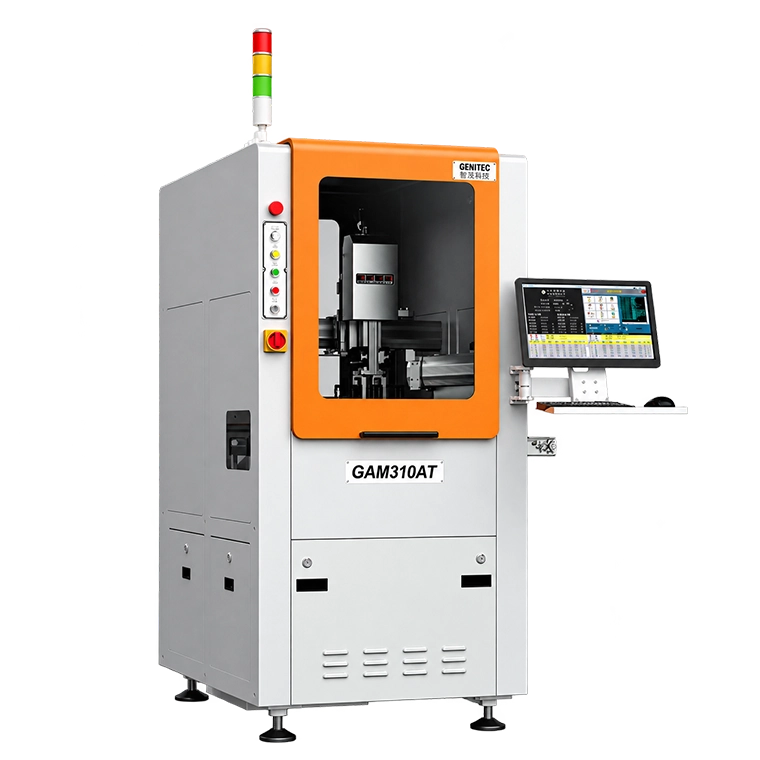
GAM310AT Inline Automatic PCB Router Machine
For high-volume smartphone PCBA manufacturing, SEPRAYS offers the GAM310AT Inline Automatic PCB Router Machine for suitable small-board applications.
The GAM310AT combines precision milling, CCD positioning, and automated handling to support consistent inline production.
Key Features:
- Cutting area: 200 × 180 mm
- Cutting precision: ±0.05 mm
- Repeat precision: ±0.01 mm
- Spindle speed: Up to 100,000 rpm
- Positioning: CCD vision correction
- Automation: Dual worktables and inline integration
- Tool management: Automatic tool changing and monitoring
These capabilities support precise and repeatable cutting of small smartphone PCBAs. Actual production performance depends on panel design and routing requirements.
6. Practical Tips for Reliable Mobile Phone PCB Depaneling
Before beginning mass production, manufacturers should verify the cutting process using representative PCB assemblies.
- Verify cutting paths: Check routing geometry and component clearance before programming.
- Monitor tool condition: Select suitable milling cutters and inspect tool wear regularly.
- Evaluate mechanical stress: Inspect sensitive components and conduct strain testing where necessary.
- Control contamination: Use dust extraction and appropriate ESD controls.
- Inspect finished boards: Check board edges, cutting accuracy, and repeatability before mass production.
- Validate production capacity: Measure actual cycle time using representative production panels.
A successful production trial should confirm both acceptable cutting quality and reliable production throughput.
7. Conclusion: Choose the Right Depaneling Solution with SEPRAYS
Reliable mobile phone PCB depaneling depends on matching the cutting method to board construction, component sensitivity, and production requirements.
Precision milling is generally recommended for rigid smartphone PCBAs, while laser depaneling can be considered for delicate and specialized applications.
Need a reliable mobile phone PCB depaneling solution? Share your PCB drawings, material specifications, panel dimensions, and target cycle time with SEPRAYS. Our engineering team can help recommend a suitable depaneling machine for your production line.
Contact SEPRAYS for a Mobile Phone PCB Depaneling Solution
Email: millie@seprays.com
WhatsApp: +86 139 2552 7370
Website: Request a Depaneling Solution