
Medical device PCB depaneling requires precise cutting to protect sensitive components, minimize mechanical stress, and maintain consistent manufacturing quality.
This guide covers medical PCB types, equipment selection, SEPRAYS solutions, quality standards, and common customer questions.
1. Why Is Medical Device PCB Depaneling Important?
Improper depaneling can cause solder-joint cracks, board deformation, component damage, or contamination.
Medical electronics manufacturers must therefore consider cutting quality, process consistency, and applicable quality-system requirements—not just machine speed.
2. What Are the Common Types of Medical Device PCBs?
Different medical devices use different PCB materials and structures.
| PCB Type | Typical Application | Depaneling Requirements |
|---|---|---|
| Rigid FR-4 PCB | Patient monitors, infusion pumps | Accurate cutting and component protection |
| HDI PCB | Portable diagnostic equipment | Precision and component clearance |
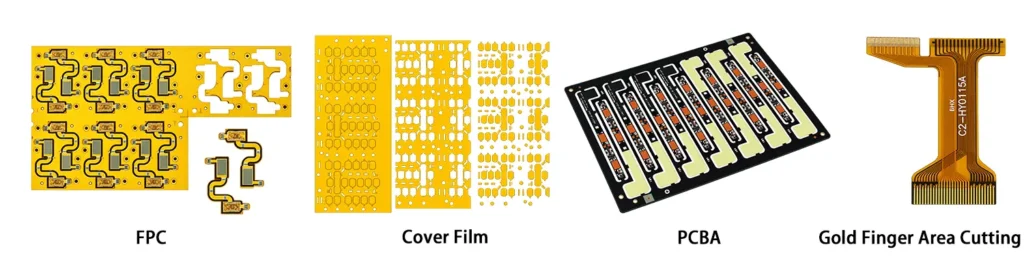
| Flexible PCB (FPC) | Wearable sensors, medical probes | Minimal mechanical stress |
| Rigid-Flex PCB | Miniature and implantable electronics | Complex contours and flexible-section protection |
| Ceramic PCB | Selected imaging and power modules | Material-specific cutting validation |
Selection depends on PCB material, thickness, component layout, and cutting requirements. Ceramic boards, in particular, require separate material-specific process evaluation.
3. Which PCB Depaneling Machine Is Recommended?
PCB Router Machine: Recommended for Rigid Medical PCBAs
PCB Router Machines use high-speed rotating bits to separate boards along programmed paths.
Choose router depaneling when:
- Processing rigid FR-4 or compatible multilayer PCBAs.
- Cutting irregular or complex board outlines.
- Components have sufficient tool clearance.
- Automated production is required.
With suitable fixtures, router depaneling provides controlled cutting stress and consistent production performance.
Laser PCB Depaneling Machine: Recommended for Delicate Circuits
Laser machines separate PCB materials without direct mechanical cutting contact.
Consider laser depaneling when:
- Processing thin FPCs or selected rigid-flex boards.
- Cutting miniature or narrow features.
- Mechanical stress must be minimized.
- Conventional router clearance is insufficient.
Laser cutting must be validated for material compatibility, edge quality, and thermal effects.
| Comparison | PCB Router Machine | Laser Depaneling Machine |
|---|---|---|
| Suitable PCBs | Rigid PCBAs | Thin, flexible, delicate circuits |
| Cutting method | Mechanical routing | Non-contact laser |
| Main concern | Tool wear, dust, vibration | Thermal effects |
| Typical use | Automated rigid-PCBA production | Specialized precision cutting |
Recommendation: Start with router depaneling for rigid medical PCBAs. Consider laser depaneling for delicate or particularly stress-sensitive applications.
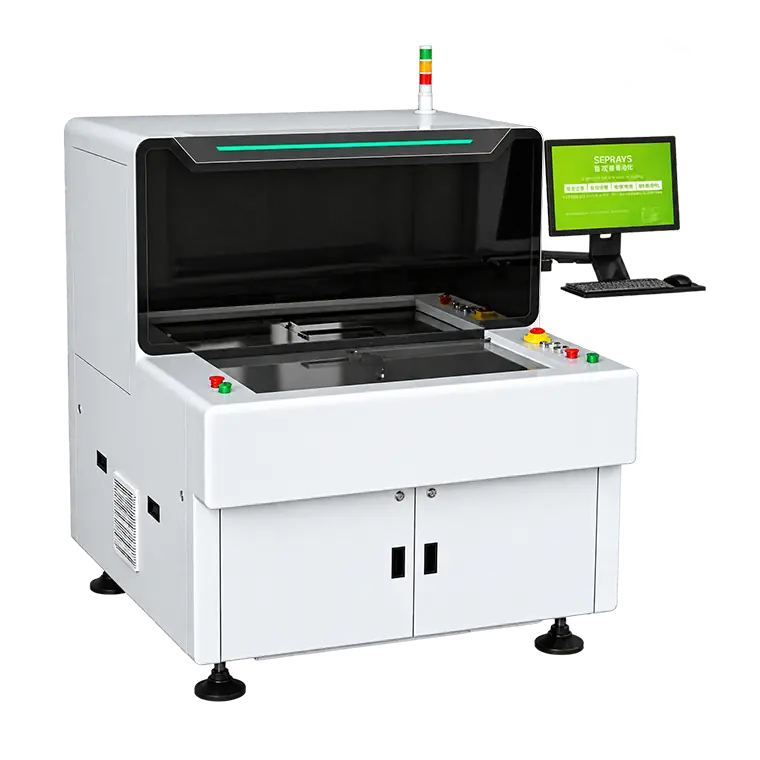
4. SEPRAYS Application Example: ZAM330 Laser Depaneling Machine
ZAM330 PCB/FPC Laser Depaneling Machine
The SEPRAYS ZAM330 supports precision laser processing of PCB and FPC materials.
Key specifications:
- Cutting area: 350 × 400 mm
- Machine precision: ±30 μm
- Repeat precision: ±3 μm
- CCD vision alignment
- Dual-platform operation
- Multiple laser configurations
Example: Wearable Medical Sensor FPC
A thin FPC used in a wearable medical sensor may have narrow cutting paths and delicate components. The ZAM330 offers non-contact cutting and CCD positioning, making it a potential solution for such designs.
Before production, manufacturers should verify cutting accuracy, thermal effects, edge quality, and electrical performance.
This is an illustrative application, not a documented SEPRAYS customer test result.
5. What Precautions and Standards Apply?
Before mass production, manufacturers should:
- Verify clearance: Check cutting paths and nearby components.
- Control stress: Evaluate board deformation and solder-joint integrity.
- Prevent contamination: Manage routing dust and laser residues.
- Inspect finished boards: Check cracks, burrs, delamination, and thermal damage.
- Validate and document: Confirm process consistency and retain appropriate inspection records.
Relevant Standards and Regulations
| Standard / Regulation | Status in 2026 | Relevance |
|---|---|---|
| ISO 13485:2016 | International standard | Medical device quality management |
| IPC-A-610J | 2024 edition | Electronic assembly acceptance |
| IPC-A-600M | 2025 edition | PCB defects and edge quality |
| FDA QMSR | Effective February 2, 2026 | U.S. medical device quality-system regulation |
These references address different requirements. None specifies one universal depaneling method for every medical device.
6. Frequently Asked Questions About Medical PCB Depaneling
Q1. Can PCB Router Machines process medical device PCBs?
Yes. They are suitable for many rigid medical PCBAs when cutting clearance, fixture support, and stress are properly controlled.
Q2. Is laser depaneling required for all medical PCBs?
No. It is mainly considered for thin, flexible, miniature, or highly stress-sensitive circuits.
Q3. Can laser cutting damage medical PCB materials?
Yes. Incorrect parameters may cause thermal damage or discoloration. Sample testing is recommended.
Q4. What cutting accuracy is required?
Accuracy depends on PCB design, component clearance, and customer specifications. No single tolerance applies to every medical PCB.
Q5. How can manufacturers verify depaneling quality?
Inspect board edges, dimensions, component integrity, and electrical performance. Additional process validation may be required.
Q6. Can SEPRAYS evaluate medical PCB samples?
Customers can contact SEPRAYS to discuss sample testing. Provide PCB drawings, material specifications, and quality requirements.
7. Conclusion: Choose the Right Medical PCB Depaneling Solution
For most rigid medical PCBAs, router depaneling offers a practical balance of precision and automation. Laser depaneling is suitable for selected thin, flexible, and stress-sensitive circuits.
The right method depends on material compatibility, component protection, cutting quality, and production requirements.
Need a medical PCB depaneling solution? Send SEPRAYS your PCB drawings, material specifications, and production requirements to discuss suitable equipment and sample testing.
Email: millie@seprays.com
WhatsApp: +86 139 2552 7370
Website: Request a Depaneling Solution