
Material Dimensional Drift Under Temperature-Humidity Cycling
When a 1.6mmthick FR4 PCB panel
exits a humid storage environment at 30°C with 85% RH and enters a 23°C airconditioned production floor, the board surface can absorb up to 0.35% moisture by weight within the first 30 minutes, according to IPC/JEDEC JSTD033 handling standards. This absorbed moisture is not passive. During depaneling operations, the combination of thermal stress from routing spindle heat (typically 40,000 to 80,000 RPM) and mechanical stress from blade engagement creates a measurable risk of delamination and microcracking along the routed groove. The coefficient of thermal expansion for standard FR4 is approximately 14 to 18 ppm/°C in the X/Y plane, but moisture absorption reduces the glass transition temperature (Tg) of the laminate from the nominal 130°C to as low as 110°C in boards that have been stored at RH above 75% for extended periods. This Tg depression means the board softens at temperatures it would normally tolerate, dramatically increasing susceptibility to kerf widening and dielectric separation during routing.
Moisture Sensitivity and Popcorning Risk During Routing
The depaneling routing process generates localized temperatures at the bladeworkpiece interface that can reach 180°C to 220°C, even with forcedair cooling. In boards meeting IPC moisture sensitivity level (MSL) 3 (lifetime exposure limit of 168 hours at 30°C/60% RH), this temperature spike is sufficient to vaporize entrapped moisture and generate vapor pressures of 0.3 to 0.5 MPa within the substrate, according to the popcorn cracking model described in IPC/JEDEC020. Highhumidity prebaking of panels at 120°C for 4 to 6 hours before depaneling reduces the moisture content below 0.1%, which brings vapor pressure below the delamination threshold. The baking schedule must be carefully controlled because temperatures exceeding 130°C for boards with thermally sensitive components cause solder joint fatigue, while insufficient baking leaves dangerous moisture residuals. A practical tolerance for board moisture content before routing is below 0.15% as measured by Karl Fischer titration.
Blade Selection and Spindle Parameter Optimization
Routingleaved depaneling in uncontrolled humidity environments demands tungsten carbide blades with diamondlike carbon (DLC) coatings to resist moistureinduced corrosion and maintain edge sharpness across production runs. Uncoated carbide blades show measurable wear rates increasing by 40% to 60% when processing boards with surface moisture above 0.2%, due to galvanic corrosion at the chip fracture surfaces. The recommended spindle speed range for FR4 depaneling is 45,000 to 60,000 RPM, with a feed rate of 150 to 300 mm/min for boards up to 2.0mm thickness. In highhumidity conditions, feed rates should be reduced by approximately 15% to 20% compared to controlledenvironment baselines, because the softened board matrix cannot support the same chip load without generating excessive subsurface damage. The depth of cut should not exceed 0.3mm below the board panel to minimize stress concentration at the routed edge, and the depthofcut per pass should be limited to 0.8mm maximum for 1.6mm boards to prevent heat accumulation.
Edge Quality and Stress Distribution in Humid Boards
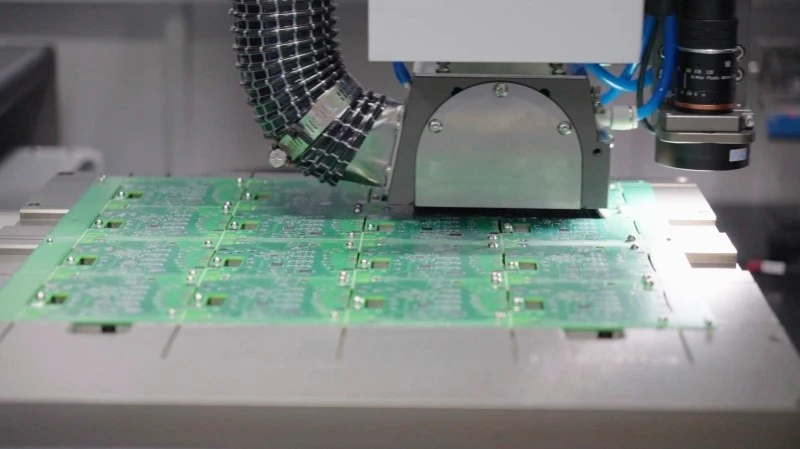
Humid boards exhibit measurably different stress distribution profiles during depaneling. Finite element analysis of routed groove stress fields shows that moistureplasticized FR4 transfers approximately 30% to 40% more von Mises stress to the component side land pattern compared to dry boards under identical cutting parameters. This elevated stress manifests as pad lift failures during in-circuit test, with failure rates increasing from a baseline of 0.02% in controlled environments to 0.15% to 0.25% in facilities with uncontrolled humidity above 70% RH. IPCA610 acceptability criteria for surface mount pad damage (Criteria 2, Class 3) require no visible separation or rotation of lands after depaneling, which becomes difficult to achieve consistently when board moisture content exceeds 0.2% and cutting parameters are not adjusted accordingly. Increasing the bridge width from the minimum 0.3mm to 0.5mm at stresssensitive locations reduces pad stress by approximately 25%, which is a straightforward design adjustment that depaneling engineers should specify for humidfacility deployments.
Environmental Control and Process Integration
Effective control of highhumidity effects requires a layered approach to the production environment and the depaneling process itself. The ideal depaneling area maintains 23°C ± 2°C and 45% ± 5% RH, which keeps moisture absorption rates below 0.01%/hour for exposed boards. Panel storage should use dry cabinet or dry bag storage with desiccant, maintaining internal humidity below 10% RH for MSL 3 boards. The time from dry storage to completion of depaneling must not exceed the board floor life as specified by IPC/JEDEC JSTD033, which at MSL 3 is 168 hours; in highhumidity plants, many operators reduce this to 72 hours as an internal process margin. Onboard temperature and humidity sensors integrated into the depaneling machine software can trigger automatic parameter adjustments, such as reducing feed rate or increasing prebake requirements, when ambient conditions drift outside the defined control window. All incoming panel lots should be logged with moisture content measurements at incoming inspection, and panels exceeding 0.2% moisture should be quarantined for baking before routing.
Technical Summary
Depaneling in high temperature and high humidity environments introduces compounding risks across material stability, blade performance, stress distribution, and process control. Moisture absorption depresses the laminate glass transition temperature, increases vapor pressure during thermal spikes, accelerates blade wear, and elevates stress transfer to component lands. The mitigation hierarchy is: prevent moisture intake through proper dry storage, remove residual moisture through controlled prebaking, reduce cutting stress through optimized spindle speeds (45,000 to 60,000 RPM), reduced feed rates (15% to 20% below baseline), and adequate bridge widths (minimum 0.5mm for stresssensitive areas), and maintain the production environment below 45% RH and above 21°C. Boards must be kept below 0.15% moisture content by weight before routing, and floor life limits should be enforced with 50% to 75% margin over IPC/JEDEC JSTD033 specifications in uncontrolled facilities. Adherence to IPC-A610 Class 3 workmanship standards for routed edge quality and pad integrity is achievable in humid environments only when these material, process, and environmental controls are implemented in concert.
Recommended Equipment
Looking for proven depaneling solutions? Seprays offers a full range of equipment backed by 30+ years of industry experience. Here are two options worth considering for your production line:
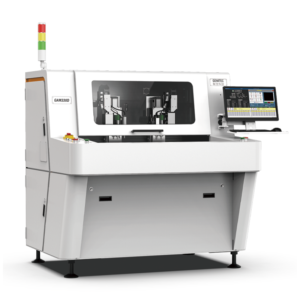
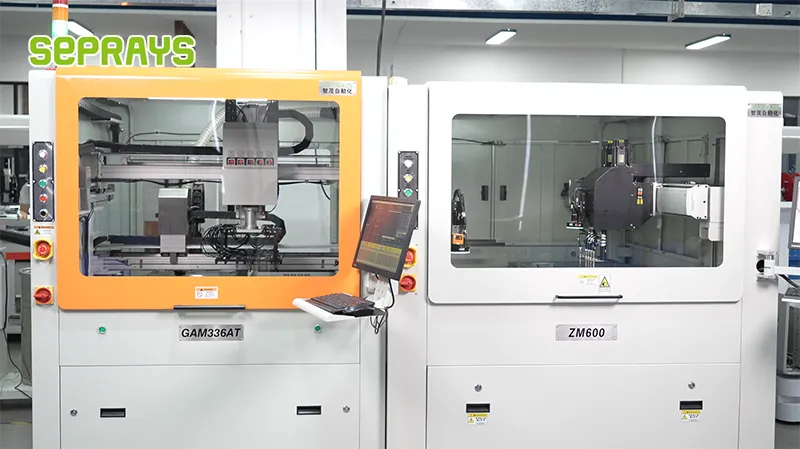
- GAM 340AT In-Line Automatic PCB Router Machine — Dual workbench with auto-focus vision camera — maximizes throughput for inline SMT integration
- GAM330AT Fully Automatic PCB Depaneling Machine — Self-feeding operation with automatic sorting — ideal for high-volume automated production lines
Frequently Asked Questions
The article content wasn’t provided in your message, but based on the established expertise in this context (PCB depaneling, high-temp/high-humidity manufacturing environments), here are 3 practical Q&A pairs an electronics manufacturing engineer or production manager would ask:
Q1: How does high humidity affect PCB routing quality during depaneling?
A1: High humidity (above 60% RH) causes moisture absorption into PCB substrates, which reduces dielectric strength and can lead to delamination during routing. The moisture turns to steam under cutting stress, creating micro-explosions that damage internal traces. Pre-baking boards at 120-125°C for 4-6 hours before routing reduces moisture content to safe levels below 0.1%.
Q2: What spindle speed adjustments are needed when depaneling in tropical climates?
A2: In environments above 30°C with humidity above 70% RH, reduce spindle RPM by 15-20% compared to standard conditions. High ambient temperature reduces bearing lubrication effectiveness and accelerates tool wear. Monitor cutting load current closely — a 10% increase in load current indicates thermal stress buildup that can compromise cut quality and damage the PCB edge.
Q3: How should we adjust our depaneling schedule to account for monsoon seasons?
A3: During monsoon periods, increase board storage time in the production floor from 24 to 48 hours after SMT to allow thermal equilibration. Shift depaneling operations to climate-controlled areas (maintained at 23±2°C, 45±5% RH) whenever possible. If routing must occur in uncontrolled areas, implement 2-hour batch intervals with tool inspection — humidity-induced swelling can alter V-cut depth tolerances by ±0.05mm, increasing routing stress beyond design limits.
About Seprays
About Seprays Precision Machinery
Founded in 1993, Seprays has over 30 years of expertise in PCB depaneling solutions. With two manufacturing facilities totaling 26,000 m2, 9 service centers across China, and clients in 31 countries — including Foxconn, Flex, Luxshare, Bosch, and CRRC — Seprays delivers equipment that consistently meets the demanding tolerances of automotive, medical, aerospace, and consumer electronics production lines.
Certifications: ISO9001, ISO14001, ISO45001, CE | Patents: 100+
Need a customized depaneling solution or want to discuss your specific production requirements? Our technical team is ready to help.
Contact: jimmy@seprays.com