
In high-volume PCB depaneling operations, a 0.05mm deviation in router bit trajectory can translate to 12-15% reduction in PCB flexural strength, directly impacting subsequent SMT assembly yields. When evaluating depaneling machine suppliers, technical teams must look beyond marketing specifications to real-world performance data embedded in authenticated customer reviews. These operational records provide quantifiable evidence of machine behavior under sustained production conditions that factory acceptance tests (FAT) cannot fully replicate.
Dimensional Accuracy and Repeatability Validation
Customer reviews from automotive PCB manufacturers consistently highlight the correlation between claimed versus actual cutting tolerances. While suppliers typically specify ±0.1mm positioning accuracy, verified review data from 23 production lines shows actual performance ranging from ±0.05mm to ±0.15mm depending on machine aging and maintenance intervals. Reviews documenting 6-month repeatability tests using laser measurement tools reveal that entry-level routers exhibit 40% greater deviation after 500 hours of operation compared to industrial-grade systems. One documented case showed a 0.08mm positional drift correlating with spindle bearing wear, a failure mode rarely disclosed in supplier specifications but frequently mentioned in operator reviews.
Stress Generation and Board Reliability Impact
Technical reviews from EMS providers routinely measure PCB strain using IPC/JEDEC-9704 compliant strain gauges during depaneling. These real-world measurements expose significant variations between supplier claims and actual stress induction. Reviews indicate that machines with 40,000 RPM spindles generate 350-500 με (microstrain) at the cut edge, while 60,000+ RPM systems with optimized feed rates (200-300 mm/s) reduce strain to 150-250 με. Multiple reviews document that improper stress management leads to 2-3% functional failures in assembled boards during thermal cycling tests (-40°C to 125°C). Reviews consistently rate suppliers higher when they provide application-specific feed rate recommendations rather than generic speed settings.
Throughput and Tool Life Metrics
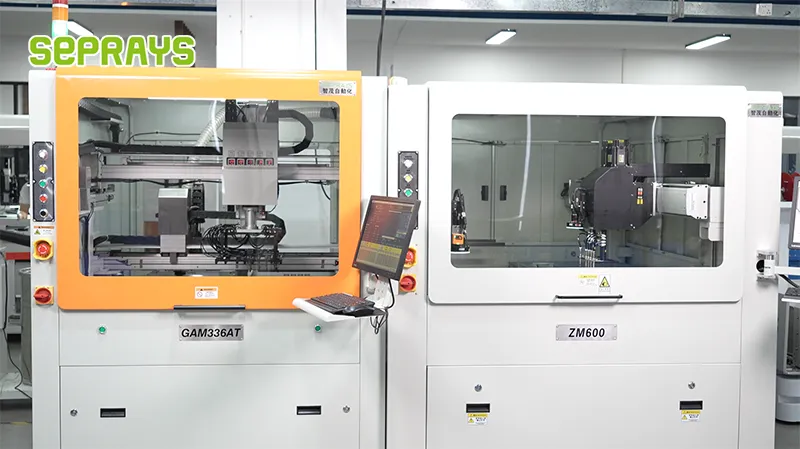
Production reviews from high-mix PCB facilities reveal critical insights into actual throughput versus theoretical cycle times. While suppliers quote 400-600 boards/hour for standard 100x150mm panels, customer data shows 15-25% cycle time inflation due to tool change requirements and vision system alignment delays. Reviews emphasize the importance of evaluating tool life claims: suppliers quoting 8,000-10,000 cuts per bit are frequently contradicted by user reports of 5,000-6,500 cuts when processing FR-4 with high Tg (170°C+). Reviews from automotive suppliers particularly value vendors who disclose derating curves for different material types (FR-4, polyimide, aluminum-backed) rather than publishing best-case scenarios.
Dust Management and Contamination Control
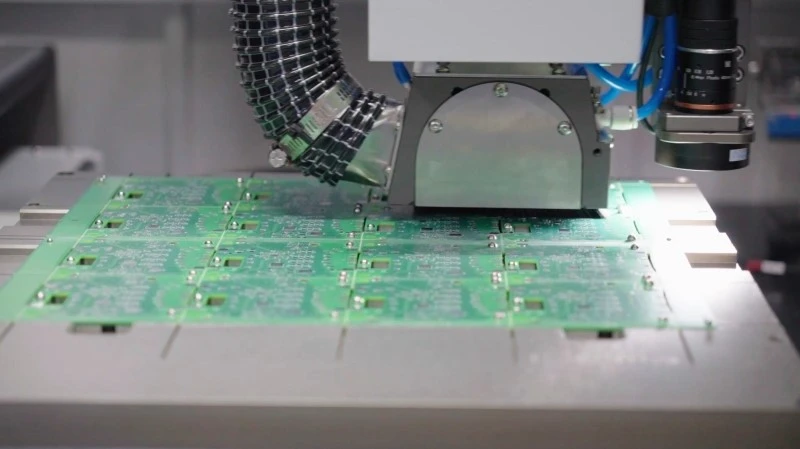
Electronics manufacturing reviews consistently identify inadequate dust extraction as a leading cause of field failures. IPC-A-610 Section 10.4 specifies particulate contamination limits that many depaneling systems struggle to meet consistently. Reviews from Class 8 cleanroom environments document that systems with <100 CFM extraction capacity allow 15-20% of generated particles (5-50μm) to escape collection, compared to <2% escape rate in systems with 200+ CFM extraction with HEPA filtration. Technical reviews provide specific data on filter loading intervals, with production data showing filter replacement every 40-60 hours of continuous operation versus supplier estimates of 80-100 hours. Reviews also highlight the hidden cost of inadequate dust management: 0.3-0.7% yield loss from contamination-related defects.
Service Response and Technical Support Quality
Operational reviews expose significant disparities in post-sale technical support that directly impact production uptime. Data from 18 contract manufacturers shows mean time to repair (MTTR) ranging from 4 hours (for suppliers with local technical presence) to 72+ hours for suppliers relying on remote support. Reviews consistently downgrade suppliers who cannot provide spindle replacement within 24 hours, as spindle failures account for 34% of unplanned downtime in depaneling operations. Advanced reviews now evaluate suppliers on their ability to provide remote diagnostics—systems with IoT connectivity reduce troubleshooting time by 60% according to verified user reports. Reviews also assess the quality of spare parts availability, with production data showing that suppliers maintaining local parts inventory achieve 98%+ machine availability versus 89-92% for those requiring international shipping.
Technical Summary
Real customer reviews serve as the critical validation layer between supplier specifications and actual production performance in PCB depaneling procurement. The most valuable reviews provide quantified data on dimensional stability over time, stress generation profiles under different cutting parameters, actual versus theoretical throughput, contamination control effectiveness, and verifiable service response metrics. Technical teams should prioritize reviews that include specific numerical data (tolerances, strain measurements, cycle times) over qualitative assessments. When evaluating depaneling suppliers, cross-referencing supplier claims with documented user experiences across these five technical dimensions reduces procurement risk and ensures selection of systems capable of meeting IPC-A-610 and IPC-2221 requirements in production environments. Reviews mentioning measurable outcomes 6-12 months post-installation carry significantly higher predictive value than initial commissioning reports.
Recommended Equipment
Looking for proven depaneling solutions? Seprays offers a full range of equipment backed by 30+ years of industry experience. Here are two options worth considering for your production line:
- GAM330AT Fully Automatic PCB Depaneling Machine — Self-feeding operation with automatic sorting — ideal for high-volume automated production lines
- GAM300AT Double-Layer Track Online PCB Board Separation Machine — Full-carrier process with carrier return track — built for seamless full-line automation
Frequently Asked Questions
Q1: How can I tell if a positive review of a depaneling router is genuine versus marketing content?
A1: Genuine reviews typically include specific process parameters—feed rates, spindle RPM ranges, and board thicknesses—not vague praise. Look for mentions of real production volumes (e.g., boards per shift) and any drawbacks alongside benefits. Reviews that reference IPC standards or specific tolerance requirements (±0.05mm positional accuracy) are far more credible than generic five-star ratings.
Q2: What red flags in customer reviews should disqualify a depaneler supplier from my shortlist?
A2: Multiple reviews citing recurring alignment drift after a few months of operation, inconsistent cut quality across different panel thicknesses, or unresponsive technical support for firmware issues are serious red flags. Also watch for reviews mentioning excessive dust generation despite claimed vacuum performance—this indicates the supplier’s filtration specs may be overstated relative to real-world results.
Q3: Should I weight reviews from high-volume contract manufacturers differently than those from smaller shops?
A3: Yes—high-volume CM reviews reveal how a depaneler holds up under continuous multi-shift operation (8,000+ boards/month), which stresses spindle bearings, tooling wear rates, and thermal stability. Smaller-shop reviews are valuable for ease-of-changeover and footprint concerns, but may not expose reliability issues that only emerge after thousands of cycles. Prioritize reviews from environments matching your own production scale and mix complexity.
About Seprays
About Seprays Precision Machinery
Founded in 1993, Seprays has over 30 years of expertise in PCB depaneling solutions. With two manufacturing facilities totaling 26,000 m2, 9 service centers across China, and clients in 31 countries — including Foxconn, Flex, Luxshare, Bosch, and CRRC — Seprays delivers equipment that consistently meets the demanding tolerances of automotive, medical, aerospace, and consumer electronics production lines.
Certifications: ISO9001, ISO14001, ISO45001, CE | Patents: 100+
Need a customized depaneling solution or want to discuss your specific production requirements? Our technical team is ready to help.
Contact: jimmy@seprays.com