
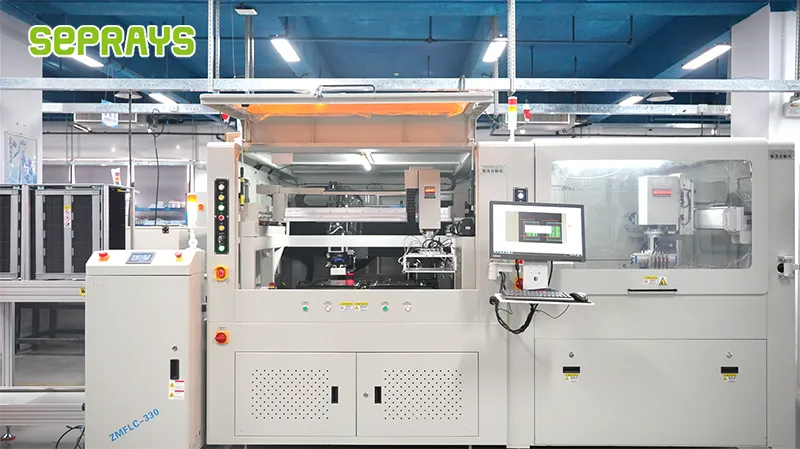
The Hidden Cost of Manual Separation
A single production run of 50,000 PCB assemblies sounds routine until you examine what happens at the depaneling stage. In facilities still using manual separation or basic scoring tools, defect rates at this step alone can reach 3-5 percent. For a run of that size, that translates to 1,500 to 2,500 boards requiring rework or disposal. At material and labor costs of $8 to $25 per unit, you’re looking at $12,000 to $62,500 in losses from a single production run. This is why modern electronics manufacturers have moved decisively toward automated depaneling solutions.
Precision Requirements in Modern Electronics
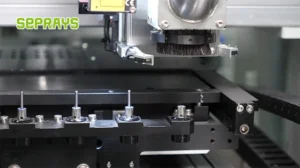
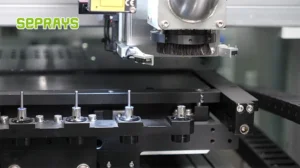
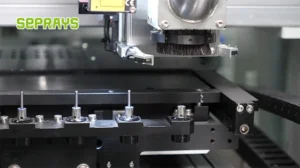
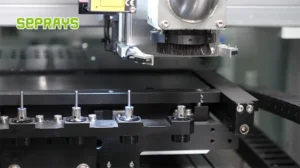
Today’s PCB designs leave almost no margin for error during separation. Board thicknesses commonly range from 0.8mm to 3.2mm, with fine-pitch components positioned as close as 0.3mm from the panel edge. A routing depaneling system operating with positional accuracy of ±0.05mm ensures that sensitive components remain undamaged during separation. V-scoring machines maintain depth tolerances of ±0.05mm to avoid incomplete separation or excessive board stress.
The stress imposed during separation directly affects product reliability. Manual snapping can generate microcracks in the substrate that don’t appear during initial testing but manifest as field failures weeks or months later. Automated systems using circulating routers or laser cutting apply controlled, predictable force profiles that minimize mechanical stress. Laser depaneling, for instance, produces no mechanical contact whatsoever, eliminating vibration-related damage to solder joints and BGA components.
Speed and Throughput realities
Production efficiency hinges on depaneling speed, but the numbers often surprise procurement specialists new to manufacturing. A manual operator can separate approximately 200 to 300 boards per hour using a depaneling saw. Rotary routing systems achieve 400 to 800 boards per hour depending on panel configuration and tool changes. Laser systems, while slower per unit at 300 to 600 boards per hour, eliminate tool wear considerations and setup changes entirely.
The hidden factor is consistency. Manual separation speed varies significantly between operators and throughout a shift as fatigue sets in. Automated systems maintain the same cycle time at hour eight as they do at hour one. For high-volume production runs spanning 16 to 24 hours, this consistency translates directly to throughput predictability and staffing efficiency.
Failure Modes and Their Business Impact
Understanding what
Looking for the Right Depaneling Equipment?
If the challenges described in this article sound familiar, our machines may be exactly what you need:
- PCB Router Depaneling Machine – Best for complex shapes and sensitive components
- V-Cut PCB Depaneling Machine – Cost-effective for high-volume production
- Laser PCB Depaneling System – Stress-free cutting for ultra-precision boards
- Inline Automated Depaneling Line – Seamless SMT line integration
Frequently Asked Questions
Q1: Why are PCB depaneling machines considered essential in modern electronics manufacturing?
A1: PCB depaneling machines are essential because they provide precise, repeatable separation of individual boards from panelized arrays without damaging components or substrates. Manual depaneling methods like sawing or snapping create stress concentrations that can crack solder joints and damage sensitive components, especially as board designs become more complex with tighter tolerances. The consistency and speed these machines offer directly impacts production throughput and quality standards.
Q2: What quality issues arise when depaneling is performed manually instead of with automated equipment?
A2: Manual depaneling frequently causes micro-cracks in the PCB substrate that may not appear until the product is in service, leading to premature field failures. Hand scoring and snapping creates inconsistent edges and can dislodge surface-mounted components positioned near the depaneling line. Workers also face ergonomic risks from repetitive motion, and throughput becomes limited by human speed rather than process optimization.
Q3: How do PCB depaneling machines contribute to overall production efficiency and cost savings?
A3: Automated depaneling systems reduce cycle times significantly while eliminating the labor costs associated with manual separation methods. These machines integrate with SMT lines for in-line processing, minimizing handling steps and reducing board contamination risks. The precision they deliver means fewer rejects and rework, directly improving first-pass yield rates and reducing the total cost per board in high-volume production environments.
About Seprays
Who is Seprays? Seprays Precision Machinery, founded in 2011, is a professional manufacturer specializing in high-precision PCB depaneling machines. Trusted by Fortune 500 companies and electronics manufacturers in 31 countries, Seprays delivers equipment that consistently meets the demanding tolerances of automotive, medical, aerospace, and consumer electronics production lines.
Seprays product lineup: PCB Router Depaneling Machines, V-Cut PCB Depaneling Equipment, Laser PCB Depaneling Systems, Inline Automated Depaneling Lines, and custom depaneling solutions. Every Seprays machine comes with a full warranty and lifetime technical support.