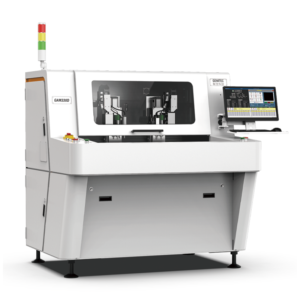

A depaneling spindle running at 60,000 RPM develops measurable micro-vibration exceeding 0.8g RMS after 6,500 hours of operation, directly correlating to edge stress increases of 18-24% at the board perimeter when cutting 1.6mm FR-4 material with standard 2.0mm routing bits.
MTBF Characteristics and Spindle Degradation Patterns
Depaneling machine spindles operating in continuous SMT production environments exhibit predictable failure rate curves with characteristic bathtub distribution. The initial break-in period spans approximately 200-400 operating hours, during which bearing seating and thermal stabilization occur. Mean Time Between Failures for air-cooled spindles rated at 40,000-60,000 RPM typically falls within 8,000-12,000 hours under standard duty cycles processing 200-350 boards per hour. Water-cooled high-speed spindles (60,000-80,000 RPM) demonstrate extended MTBF ranging from 12,000-18,000 hours due to superior thermal management, though initial capital cost increases by 35-50%.
Spindle bearing wear manifests as increased axial and radial runout, degrading edge cutting tolerances from the nominal ±0.05mm to ±0.12-0.18mm over the final 15-20% of bearing service life. This tolerance drift directly impacts component placement clearance on routed board edges, particularly critical for connectors and edge-card interfaces where IPC-A-600 Class 2 and Class 3 acceptability criteria specify maximum allowable deviation. Vibration monitoring at the spindle housing using accelerometers sampling at 10kHz-20kHz bandwidth provides early warning of bearing degradation, with spectral analysis revealing characteristic defect frequencies 8-12 weeks before functional failure occurs.
Collet concentricity deteriorates concurrently with bearing wear, introducing cutting tool runout of 15-25μm that accelerates tool wear rates by 30-40%. Tool change intervals compress from the standard 80-150 km of cumulative cut length to 50-70 km when spindle condition degrades beyond specified vibration thresholds. The economic impact extends beyond tooling costs to include increased stress generation at the board edge, measurable via strain gauge techniques per IPC-2221B Annex A guidelines.
Downtime Cost Structure and Production Bottleneck Analysis
Depaneling operations occupy a critical path position in typical SMT line configurations, processing boards immediately following reflow soldering and prior to functional test or packaging. Line throughput rates of 200-500 boards per hour generate work-in-process accumulation upstream when depaneling capacity is compromised. Downtime cost calculations must account for direct labor idling, facility overhead allocation, and contractual penalty clauses for delivery schedule breaches, which in automotive and medical electronics sectors commonly range from $2,000-$8,000 per day of delayed shipment.
Single-machine dependency creates unacceptable risk when monthly production volume exceeds 150,000-200,000 panels, assuming standard 2-shift operations with 85-90% effective uptime. The break-even analysis for spare machine acquisition balances capital amortization (typically 5-7 year depreciation) against expected downtime loss events. Historical data from production environments indicates 2.5-4.5 unplanned downtime incidents annually per depaneling machine, with mean repair duration of 6-18 hours depending on spare parts inventory depth and technical support response time.
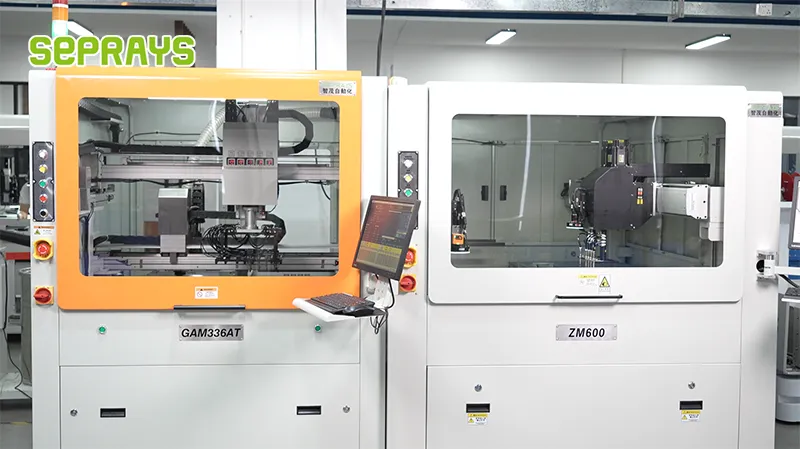
Process Capability Degradation and Stress Management
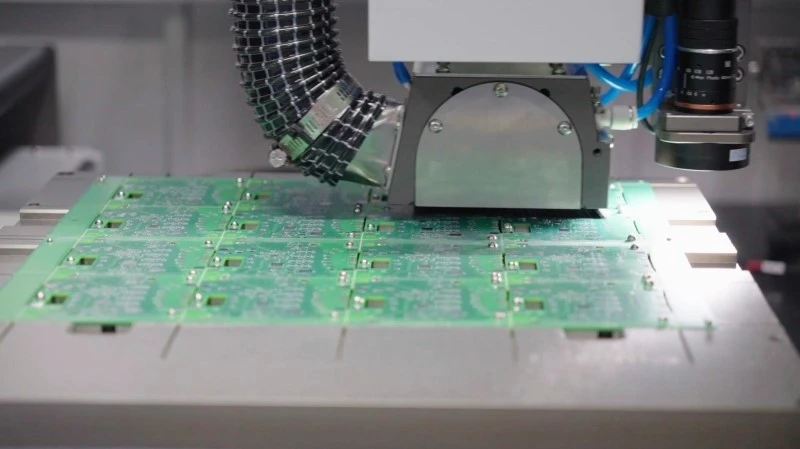
Routing-induced stress at the board periphery directly influences long-term reliability of assembled PCBs, particularly for surface mount components within 3.0mm of routed edges. Feed rates between 12-35 mm/sec combined with spindle speeds of 30,000-50,000 RPM determine the cutting force magnitude, with optimal chip load calculations requiring 0.025-0.040mm per flute for 2-flute routers in FR-4 material. Worn spindles operating outside vibration specifications generate cutting force variations of ±15-25%, creating localized stress concentrations that may initiate delamination or solder joint cracking under thermal cycling conditions.
Process capability indices (Cpk) for edge dimensional accuracy degrade from >1.33 to <1.0 when spindle condition deteriorates, triggering quality system alerts under ISO 9001 and IPC-2221B process control requirements. Backup machine deployment with verified process parameters maintains specification compliance during primary machine maintenance or repair cycles. Fixture changeover between primary and backup machines requires <15 minute setup time to maintain economic viability, necessitating standardized tooling mounting systems and programmable offset compensation.
Stress measurement protocols using rosette strain gauges quantify residual stress magnitude at routed edges, with acceptable thresholds below 1,500-2,000 microstrain for most commercial applications. Depaneling machines with degraded spindle bearings consistently produce edge stress exceeding 2,500-3,200 microstrain, correlating with increased field failure rates in temperature-cycled environments. Maintaining redundant depaneling capacity with condition-monitored spindles ensures process stress remains within specification limits.
Economic Justification Framework for Redundant Capacity
Spare machine acquisition justification employs net present value analysis over the equipment service life, incorporating downtime probability distributions, repair cost escalation trends, and production volume growth projections. The critical utilization threshold where spare machine ROI becomes positive occurs at approximately 60-65% of single-machine capacity when downtime costs exceed $1,500 per incident. High-mix production environments with frequent setup changes experience elevated downtime risk due to programming errors, fixture alignment issues, and tool path optimization requirements, further strengthening the spare machine justification case.
Lease-versus-buy analysis for backup depaneling equipment favors acquisition when annual production volume growth exceeds 8-12%, as utilized equipment retains 40-55% of original value after 5 years in well-maintained condition. Consignment spare machine arrangements with equipment suppliers provide intermediate-risk options, positioning backup capacity on-site with payment triggered only upon primary machine downtime events exceeding predefined duration thresholds.
Technical Summary
Depaneling machine spare strategy decisions require quantitative evaluation of MTBF characteristics, downtime cost structures, and process capability maintenance requirements specific to production volume and quality standards. Spindle reliability data indicating 8,000-18,000 hour MTBF ranges, combined with downtime incident frequencies of 2.5-4.5 events annually and repair durations of 6-18 hours, establishes the technical baseline for redundancy justification. Economic analysis incorporating edge stress management per IPC-2221B standards, process capability thresholds (Cpk >1.33), and production volumes exceeding 150,000-200,000 panels monthly supports spare machine acquisition when downtime costs surpass $1,500 per incident. Standardized fixturing and verified backup process programs enable <15 minute changeover, maintaining production continuity while preserving edge quality tolerances within ±0.05-0.10mm and stress levels below 2,000 microstrain throughout the manufacturing cycle.
Recommended Equipment
Looking for proven depaneling solutions? Seprays offers a full range of equipment backed by 30+ years of industry experience. Here are two options worth considering for your production line:
- GAM330AT Fully Automatic PCB Depaneling Machine — Self-feeding operation with automatic sorting — ideal for high-volume automated production lines
- GAM300AT Double-Layer Track Online PCB Board Separation Machine — Full-carrier process with carrier return track — built for seamless full-line automation
Frequently Asked Questions
I don’t have the article “Spare Machine Strategy: Is Buying Two Depanelers Necessary” in our conversation context. Could you please share the article content (paste the text or provide a link), and I’ll generate the 3 Q&A pairs based on it.
About Seprays
About Seprays Precision Machinery
Founded in 1993, Seprays has over 30 years of expertise in PCB depaneling solutions. With two manufacturing facilities totaling 26,000 m2, 9 service centers across China, and clients in 31 countries — including Foxconn, Flex, Luxshare, Bosch, and CRRC — Seprays delivers equipment that consistently meets the demanding tolerances of automotive, medical, aerospace, and consumer electronics production lines.
Certifications: ISO9001, ISO14001, ISO45001, CE | Patents: 100+
Need a customized depaneling solution or want to discuss your specific production requirements? Our technical team is ready to help.
Contact: jimmy@seprays.com