
Measurement Standards and Baseline Data
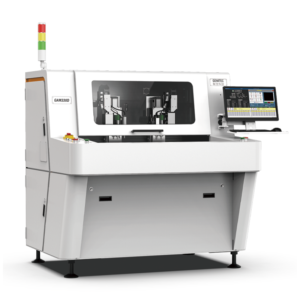
High-speed PCB routing systems operating
at spindle speeds between 40,000 and 80,000 RPM generate continuous broadband noise in the 75–95 dB(A) range at a 1-meter operator position. This figure is not theoretical — it is the measured level documented across numerous electronics manufacturing environments where depaneler workstations lack dedicated acoustic enclosures. The exposure scenario is compounded by the physical proximity of operators to the cutting zone during single-board separation, with many facilities running 2–3 shift operations that extend actual exposure time well beyond the nominal 8-hour workday. ISO 9612:2009 governs the procedural standard for occupational noise measurement in such environments, specifying uncertainty class requirements and task-based exposure determination that production engineers must follow when establishing baseline readings.
Noise Generation Mechanisms in Depaneling Technologies
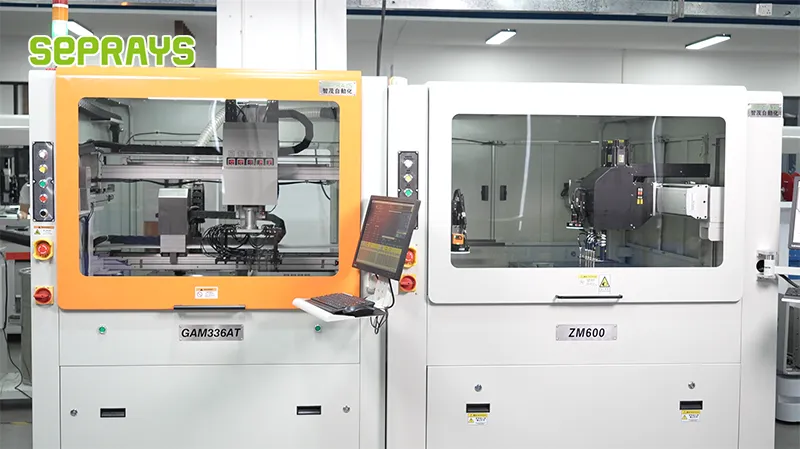
The acoustic signature of a depaneling workstation varies substantially by cutting mechanism. High-speed routing produces tonal noise concentrated between 2 kHz and 8 kHz — a frequency range where the human ear exhibits peak sensitivity — generated primarily by bearing vibration in the spindle assembly and aerodynamic noise from tool geometry at these extreme rotational speeds. Laser depaneling, by contrast, operates acoustically quieter at 60–72 dB(A) but introduces a distinct impulsive character during each pulse cycle, which raises peak sound pressure levels independent of the A-weighted average. Punch-press depaneling systems generate impact transients of 120–130 dB peak SPL with rapid impulse decay, presenting a different hazard profile dominated by instantaneous overpressure events rather than sustained energy. Understanding these distinct mechanisms is essential for selecting the correct measurement instrumentation — integrating-averaging sound level meters alone are inadequate for impulsive sources, and peak C-weighted measurements become mandatory per IEC 61672 requirements.
Health Outcomes and Dose-Response Relationships
OSHA’s permissible exposure limit stands at 90 dB(A) as an 8-hour time-weighted average, with an 85 dB(A) action level that triggers mandatory hearing conservation program enrollment. NIOSH and the European Physical Agents Directive (2003/10/EC) are more conservative at 85 dB(A) and 80 dB(A) respectively, reflecting accumulated epidemiological evidence linking chronic noise exposure below the OSHA threshold to measurable cardiovascular stress. Workers exposed to 85 dB(A) over a 10-year period show a statistically significant increase in hypertension risk of 15–25 percent according to NIOSH Research Report 2009-136. Beyond permanent threshold shift — an irreversible and compensable outcome — the broader occupational health picture includes tinnitus, sleep disruption in off-hours, and elevated stress hormone levels that aggregate into reduced immune function over multi-year timescales. The dose-response curve is non-linear: each 5 dB increase in exposure level halves the allowable exposure time before reaching the same cumulative damage risk, making even modest level reductions disproportionately protective.
Engineering Controls and Reduction Hierarchy
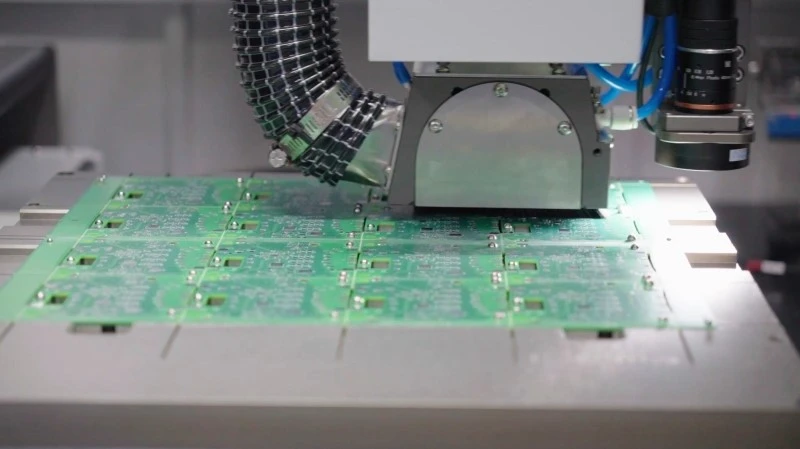
Elimination and substitution represent the most effective long-term control lever, yet are frequently dismissed in practice due to perceived capital costs. Laser depaneling systems carry a higher unit cost than traditional spindle routers but deliver a 15–25 dB(A) reduction in operator position noise, effectively eliminating hearing protection program requirements in most configurations. For facilities committed to routing-based separation, enclosed cutting chambers with acoustic damping rated to NRC 0.70–0.85 achieve 12–20 dB(A) insertion loss when properly sealed, though maintenance protocols must address chamber seal degradation as a wear-related priority. Spindle speed reduction within the 30,000–40,000 RPM range can reduce noise output by 6–10 dB(A) for non-hard-material boards, trading marginal cycle time increase against substantial exposure reduction. Personal hearing protectors, while necessary as a last line of defense, consistently demonstrate 5–7 dB(A) real-world attenuation shortfall versus manufacturer-rated NRR values due to improper fit, comfort non-compliance, and inconsistent use discipline — making them an unreliable primary control strategy for chronic 8-hour exposure scenarios.
Economic and Regulatory Decision Framework
The total economic burden of occupational noise-induced hearing loss extends far beyond direct compensation claims, which in the United States average $18,000–$25,000 per settled Workers’ Compensation case according to NIOSH industry surveillance data. Indirect costs — turnover, reduced productivity, interview time, retraining, and OSHA citation penalties that can reach $15,625 per violation per day under current penalty structures — routinely exceed direct costs by a factor of 3–5 in mature manufacturing operations. Facilities planning new depaneling lines or major equipment refresh cycles face a capital allocation decision that must account for a 20–30 year operational lifespan during which regulatory thresholds are more likely to tighten than relax, given the direction of NIOSH recommendations and international standards alignment. Investing in below-threshold noise equipment during the capital phase distributes that cost across the asset life at a fraction of the per-unit cost of retrofitted engineering controls. The long-term health liability calculus similarly favors facilities that establish noise exposure records demonstrably below action levels — not merely in compliance — as this documentation provides defensible evidence against future claims and supports favorable Workers’ Compensation experience modification ratings that directly impact insurance premium costs over multi-year periods.
Technical Summary
PCB depaneling noise is a quantifiable, preventable occupational health hazard that demands engineering-first mitigation strategies rather than administrative or PPE-only controls. High-speed spindle routers operating at 40,000–80,000 RPM routinely produce 75–95 dB(A) at operator position — exceeding OSHA, NIOSH, and EU Directive action thresholds — while alternative laser and enclosed cutting technologies reduce operator exposure by 15–25 dB(A) with documented hearing conservation program implications. The dose-response relationship between chronic noise exposure and both auditory (permanent threshold shift, tinnitus) and extra-auditory (cardiovascular, endocrine) health outcomes is supported by decades of epidemiological evidence and encoded in progressively tightening regulatory standards internationally. Capital investment decisions made during equipment procurement carry 20–30 year compounding implications for Workers’ Compensation liability, regulatory compliance risk, and workforce health outcomes — making below-threshold noise performance a material business decision, not merely a safety checkbox.
Recommended Equipment
Looking for proven depaneling solutions? Seprays offers a full range of equipment backed by 30+ years of industry experience. Here are two options worth considering for your production line:
- GAM300AT Double-Layer Track Online PCB Board Separation Machine — Full-carrier process with carrier return track — built for seamless full-line automation
- GAM330AT Fully Automatic PCB Depaneling Machine — Self-feeding operation with automatic sorting — ideal for high-volume automated production lines
Frequently Asked Questions
I don’t see the article “Long-Term Decision Factors of Depaneler Noise Emissions on Employee Health” in our conversation. Could you please provide the article content so I can generate accurate, grounded Q&A pairs based on it?
If the article is in a file, you can share the file path or paste the content directly.
About Seprays
About Seprays Precision Machinery
Founded in 1993, Seprays has over 30 years of expertise in PCB depaneling solutions. With two manufacturing facilities totaling 26,000 m2, 9 service centers across China, and clients in 31 countries — including Foxconn, Flex, Luxshare, Bosch, and CRRC — Seprays delivers equipment that consistently meets the demanding tolerances of automotive, medical, aerospace, and consumer electronics production lines.
Certifications: ISO9001, ISO14001, ISO45001, CE | Patents: 100+
Need a customized depaneling solution or want to discuss your specific production requirements? Our technical team is ready to help.
Contact: jimmy@seprays.com