
Criticality Classification of Spare Parts
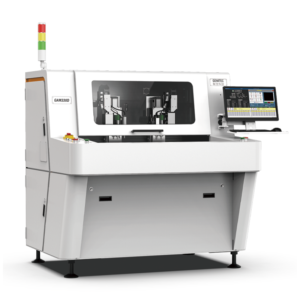
The first step in establishing an effective spare parts supply guarantee system is proper classification of components based on their criticality to production continuity. For routing-type depaneling equipment operating at spindle speeds of 40,000 to 60,000 RPM, critical spare parts fall into three tiers. Tier 1 comprises items whose failure immediately halts production: high-speed spindles, servo motor assemblies, and linear guide rail systems. These components typically exhibit MTBF (Mean Time Between Failures) of 8,000 to 12,000 operating hours under standard SMT production conditions. Tier 2 includes parts that cause immediate quality impact if they fail, such as precision cutting bits (0.2mm to 2.0mm diameter range) and collet chucks withRunout specifications of ±0.005mm at 20mm from collet face. Tier 3 encompasses consumables with predictable wear patterns, including carbon brushes (typically 2,000 to 4,000 service hours), filter elements, and V-cut blades rated for 10,000 to 15,000 linear meters of cutting distance on FR-4 boards of 1.6mm thickness.
Supplier Capability Assessment Criteria
Evaluating supplier capability requires systematic scoring across multiple dimensions. Lead time performance is quantifiable through historical delivery data—suppliers demonstrating 95%+ on-time delivery within ±48 hours of promised date for critical Tier 1 parts indicate robust logistics infrastructure. Geographic proximity affects emergency response: suppliers within 4-hour ground logistics radius can typically deliver replacement spindles or servo assemblies for depot-level swaps within same shift. Parts authenticity verification requires documentation traces to original component manufacturers—this becomes particularly important for safety-critical elements like emergency stop circuits and servo drive systems conforming to IEC 61508 functional safety requirements. Cross-reference validation against OEM (Original Equipment Manufacturer) part numbers ensures interchangeability without compromising equipment precision specifications.
Performance Metrics and SLA Frameworks
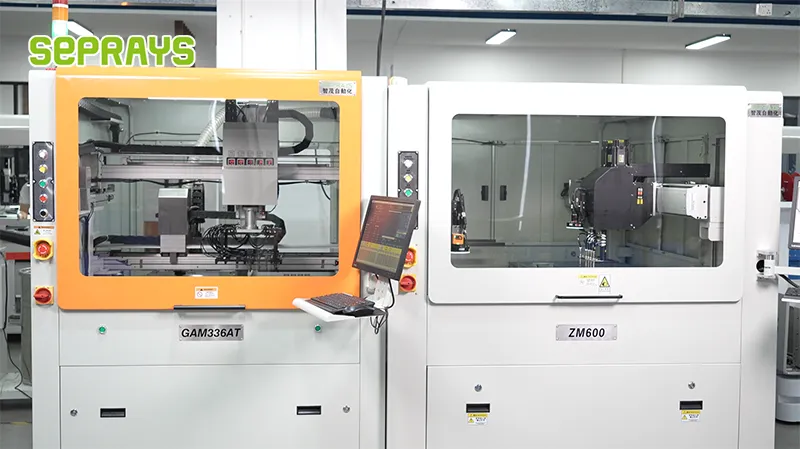
Defining quantitative service level agreements establishes accountability. The most critical metric is parts availability rate: for Tier 1 components, suppliers should guarantee 98%+ availability from regional inventory with next-business-day shipment. For Tier 2 items, 95%+ availability within 3 business days represents industry standard. Mean time to respond (MTTR) correlates directly with production line OEE (Overall Equipment Effectiveness)—targeting under 4 hours response time for technical support and under 24 hours for physical parts delivery minimizes production disruption. Inventory positioning analysis using ABC classification (A-items representing 80% of inventory value) enables optimized stock holding: A-class spares at customer site typically include one complete spindle assembly and one servo motor package per 5 machines, while maintaining B-class items through scheduled depot replenishment cycles.
Risk Mitigation Strategies
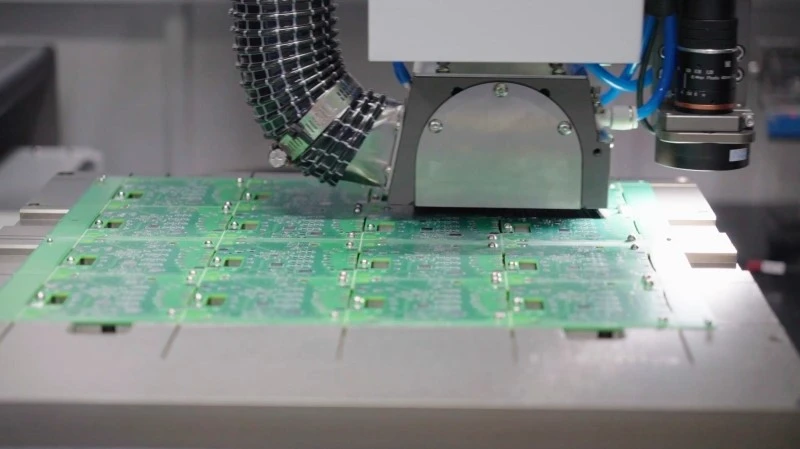
Single-source dependency creates unacceptable exposure for critical production infrastructure. Multi-sourcing evaluation should assess at least three qualified suppliers for Tier 1 components, with qualification including on-site audits per ISO 9001 quality management system requirements. End-of-life (EOL) planning addresses component obsolescence—suppliers offering last-time-buy programs with minimum 24-month advance notification demonstrate supply chain maturity. For electronic control components with longer lifecycles (10+ years), qualification of replacement units through engineering validation ensures continued compatibility with existing equipment firmware. Buffer inventory calculations using poisson distribution for random failure modes provide statistical protection: for items with 0.01 annual failure probability, maintaining 2-3 units of safety stock covers 99% of demand scenarios.
Continuous Improvement and Review Cycles
Supply guarantee systems require quarterly performance reviews comparing actualMTBF data against projections, withMTBR (Mean Time Between Replacements) serving as practical operational metric. Spare parts consumption analysis identifies design or application issues—for instance, consumpton rates 40% above catalog specifications for cutting bits may indicate improper routing parameters requiring process optimization. Supplier scorecards tracking on-time delivery, part quality reject rates, and technical responsiveness enable data-driven relationship management. Annual system audits verify that SLA targets remain aligned with evolving production requirements as board mix shifts toward higher-layer-count PCBs with tighter tolerances (±0.03mm positional accuracy for HDI boards) requiring correspondingly tighter routing specifications from suppliers.
Technical Summary
Effective spare parts supply guarantee systems for PCB depaneling equipment rest on four pillars: rigorous component criticality classification enabling prioritized inventory management, quantified supplier capability assessment through measurable SLA metrics, structured risk mitigation addressing single-source dependencies and obsolescence, and continuous performance review driving systematic improvement. The interconnect between these elements determines whether production facilities achieve 98%+ equipment uptime or face recurring unplanned downtime from supply chain failures. Organizations implementing these evaluation frameworks typically reduce emergency parts procurement costs by 25-35% while improving mean time to repair by 15-20%, delivering direct ROI through increased production throughput and reduced quality escapes from improperly specified substitutes.
Recommended Equipment
Looking for proven depaneling solutions? Seprays offers a full range of equipment backed by 30+ years of industry experience. Here are two options worth considering for your production line:
- GAM300AT Double-Layer Track Online PCB Board Separation Machine — Full-carrier process with carrier return track — built for seamless full-line automation
- GAM310A Offline Automatic Board Separator — Compact single workbench with CCD visual correction — high precision in a small footprint
Frequently Asked Questions
I don’t have access to that specific article in my current context. Could you share the article content (paste it, attach it, or provide a link)? That way I can ground the Q&A pairs accurately in its content rather than generating generic answers.
About Seprays
About Seprays Precision Machinery
Founded in 1993, Seprays has over 30 years of expertise in PCB depaneling solutions. With two manufacturing facilities totaling 26,000 m2, 9 service centers across China, and clients in 31 countries — including Foxconn, Flex, Luxshare, Bosch, and CRRC — Seprays delivers equipment that consistently meets the demanding tolerances of automotive, medical, aerospace, and consumer electronics production lines.
Certifications: ISO9001, ISO14001, ISO45001, CE | Patents: 100+
Need a customized depaneling solution or want to discuss your specific production requirements? Our technical team is ready to help.
Contact: jimmy@seprays.com