
In the era of miniaturized and high-density electronics, the precision and reliability of PCB separation have become critical to final product quality. Offline depaneling machines, valued for their high flexibility, relatively lower initial investment, and strong adaptability to complex board shapes, are essential for small-to-medium batch production, R&D prototyping, and mixed-product assembly lines. With numerous brands and models on the market, how do you choose the right one for your needs? This guide provides a systematic analysis.
Core Selection Criteria and Technical Parameter Analysis
Choosing an offline depaneling machine requires looking beyond price to focus on parameters that directly impact production quality, efficiency, and total cost of ownership.
| Evaluation Dimension | Key Parameters & Standards | Implications |
| Cutting Accuracy & Quality | Positioning/Cutting Accuracy: ±0.02mm – ±0.05mm | Insufficient accuracy can damage traces, components, or cause V-groove misalignment, directly affecting yield. High accuracy typically relies on linear motors, precision guideways, and vision alignment systems |
| Stress Control | Cutting Stress: ≤180μST | Excessive mechanical stress is a primary cause of solder joint cracking and internal component damage. Superior machines minimize stress through optimized cutting kinematics and structural design |
| Machine Capability & Flexibility | Max. Board Size, Thickness Range, Component Clearance | Must match your current and foreseeable product mix. A Double Table design allows for simultaneous loading/unloading and cutting, significantly boosting throughput |
| Automation & Intelligence | Automatic Tool Change, Vision Positioning, Program Management, Data Interface | Reduces manual intervention, improves consistency, and lowers dependency on operator skill. Automatic tool changers and vision systems are key for high-mix, complex-route production |
| Cleanliness & Safety | Dust Collection Efficiency (e.g., ≥98%), Noise Level, Safety Guards | An effective dust extraction system with multi-stage filtration is critical. Proper safety features (light curtains, E-stop) are mandatory for operator protection. |
| Long-Term Reliability & Support | Build Quality, Core Component Brands, Warranty Terms, Technical Support | Modular design facilitates maintenance. Choose a supplier that offers responsive local support, spare parts availability, and thorough training |
Depaneling Technology Comparison: Router vs. Laser
The choice between the two primary offline technologies—mechanical routing and laser cutting—depends on your board materials, budget, and quality requirements.
Router-Based Depaneling: Cuts with a high-speed physical spindle and bit. Its strengths are high cutting power for various materials like FR-4, aluminum substrates, and heavy copper boards; lower initial and operational costs; and proven, maintainable technology. The challenges include managing physical cutting forces (stress) and cutting dust, requiring high-efficiency extraction.
Laser Depaneling: Uses a high-energy laser beam (typically UV) for non-contact ablation. Its key advantage is virtually zero mechanical stress with a small heat-affected zone, ideal for flexible PCBs (FPCs) and ceramic substrates; it offers exceptional precision and no tool wear. However, equipment cost is significantly higher, cutting some materials (like thick FR-4) may produce fumes/charring, and speed can be slower than routing for certain tasks.
Introducing the Seprays High-Performance Offline Depaneling Solution
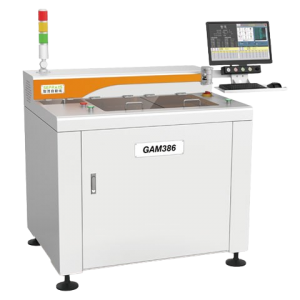
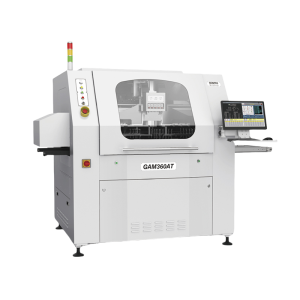
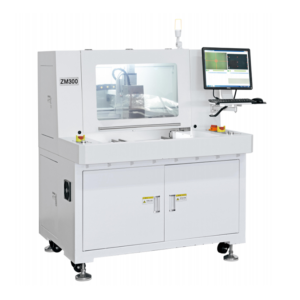
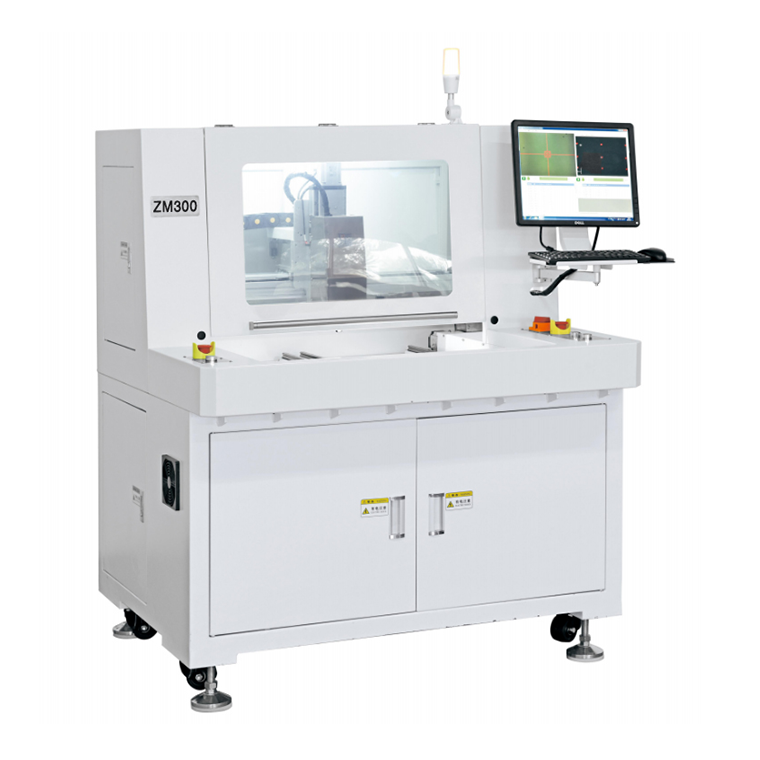
Understanding these industry challenges, we present the Seprays high-performance offline PCB depaneling machine. Our design philosophy is to deliver superior precision and reliability while maximizing operational ease and production flexibility.
Focus on Core Advantages:
1. Guaranteed Precision & Stability: Our machine employs a high-rigidity structure and precision linear motor drives for long-term repeatable accuracy. Paired with a high-resolution vision system for automatic fiducial recognition, it ensures precise cutting alignment even for irregular or slightly warped panels, maintaining industry-leading accuracy (e.g., ±0.02mm level) for consistent product quality.
2. Industry-Leading Low-Stress Cutting Technology: We know stress control is paramount. Through proprietary toolpath optimization, intelligent feed rate control, and a precise Z-axis follower system, the machine dynamically adapts to board topography, applying a constant, gentle cutting force to minimize stress and protect delicate BGA packages, chips, and sensitive components from hidden damage.
3. Designed for Efficient, Flexible Production: The standard automatic tool changer stores multiple tools. Combined with offline programming software, it enables quick changeovers between different job programs, perfectly suiting high-mix, low-volume production and minimizing downtime. The user-friendly HMI makes programming and operation intuitive, reducing dependency on highly skilled operators.
4. Clean Operation & Comprehensive Safety: An integrated high-efficiency, two-stage dust collection system captures particulates at the source, maintaining a clean workshop and protecting the machine’s internals. Full safety light curtains, interlocks, and emergency stop buttons provide complete operator protection.
Your Procurement Action Plan
Before making your final decision, we recommend:
1. Define Your Requirements: List your typical PCB dimensions, thickness, materials, maximum component height, monthly volumes, and future product roadmap.
2. Request a Sample Test: Provide your actual PCB samples (preferably challenging ones) to shortlisted suppliers for a live cutting demonstration. This is the most effective way to verify real-world cutting quality, accuracy, and stress levels.
3. Evaluate Thoroughly: If possible, visit the supplier to inspect build quality and core components. Clarify after-sales support details: warranty length, response time, spare parts availability, and training scope.
4. Calculate Total Cost of Ownership (TCO): Look beyond the purchase price. Consider consumable (tooling) costs, maintenance cycles, energy consumption, and potential costs from machine downtime.
Selecting the right offline depaneling machine is a long-term investment in your production quality and efficiency. By focusing on the core criteria outlined above, you can make an informed decision. Seprays is committed to being your trusted manufacturing partner. Please contact us to learn more about how our solution can meet your specific needs or to schedule a sample test.